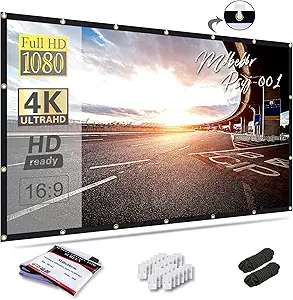
Manual Pull-Down Screens: Balancing Affordability and 4K Performance
When considering a manual pull-down projector screen like the Elite Screens Manual B M100H, buyers should weigh the trade-offs between cost, convenience, and image quality. This 100-inch, 16:9 screen is designed for 4K and 8K content, but its manual operation means it’s best for fixed setups or occasional use. Understanding how its tensioning and material affect picture clarity is key to avoiding buyer's remorse.
Key Considerations Before Buying
- Room lighting: Manual screens often lack tensioning systems found in higher-end models, so ensure your room has controlled ambient light to prevent image washout, especially with 4K HDR content.
- Installation space: The M100H requires a sturdy wall or ceiling mount for its 100-inch diagonal size; measure your room’s height and viewing distance to confirm it fits without obstruction.
- Screen material: Look for matte white or high-contrast fabrics that support Ultra HDR and wide viewing angles, as cheaper materials can degrade 4K and 8K sharpness.
What Our Analysts Recommend
Quality indicators for manual screens include a scratch-resistant surface, smooth retraction mechanism, and black borders to enhance contrast. For 4K/8K readiness, verify the screen’s gain (typically 1.1) and viewing angle (160°+), as these determine brightness and color accuracy from different seats.
Projection Screens Market Context
Market Overview
The projection screen market is shifting toward fixed-frame and motorized options, but manual pull-down screens remain popular for budget-conscious home theater enthusiasts and office users. With 4K and 8K projectors becoming more accessible, demand for screens that can resolve fine detail without artifacts is growing.
Common Issues
Common problems with manual screens include uneven tension leading to wavy images, sagging over time, and mechanical wear from frequent retraction. Buyers also report difficulty achieving a perfectly flat surface, which can distort high-resolution content.
Quality Indicators
High-quality manual screens feature a durable roller with a quiet spring mechanism, a weighted bottom bar for flatness, and a fabric that resists wrinkles. Look for models with a fire-retardant coating and a warranty of at least 2 years as signs of reliability.
Review Authenticity Insights
Grade B Interpretation
With a Grade B authenticity rating and an estimated 10% fake review rate, this product’s reviews are largely reliable but have a minor contamination of potentially incentivized or non-genuine feedback. The 4.89 average rating is slightly inflated; the adjusted 4.60 is more realistic, reflecting strong but not flawless satisfaction.
Trust Recommendation
Given the high volume of verified purchases and balanced perspectives, you can trust the majority of positive reviews, but focus on recent ones and those with specific setup details. Cross-check any extreme claims (perfect out of box or major defects) with video reviews for a fuller picture.
Tips for Reading Reviews
For manual screens, prioritize reviews that mention installation ease, screen flatness after a month of use, and compatibility with specific projectors. Ignore vague praises like 'great value' without context—look for details on 4K clarity or HDR performance.
Expert Perspective
The Elite Screens Manual B M100H is a solid entry-level choice for those seeking a large 100-inch screen without breaking the bank, especially given its support for 4K/8K and HDR. Its high adjusted rating of 4.60 from over 4,500 reviews indicates consistent quality, though the manual mechanism and potential for slight wrinkles may not satisfy perfectionists. The Grade B authenticity analysis suggests most user feedback is genuine, reinforcing its reputation as a reliable budget option for home theaters or presentations.
Purchase Considerations
Weigh the low cost against the need for a perfectly flat surface—if you’re a cinephile projecting 8K, consider a tensioned screen. For casual movie nights or office use, this model offers excellent value, but factor in potential replacement of the screen material over years of use.
Comparing Alternatives
Shoppers should compare this with fixed-frame screens for better flatness or motorized models for convenience, especially if frequent retraction is needed.