
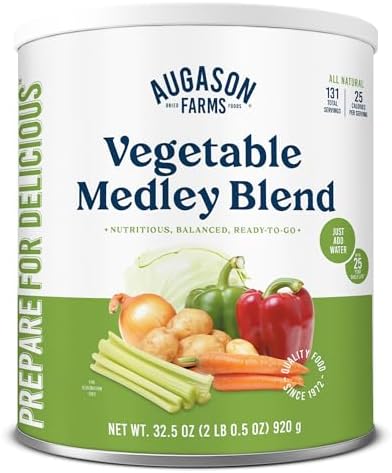
Dehydrated Vegetable Medley: Balancing Emergency Preparedness with Everyday Meal Utility
Augason Farms' Vegetable Medley Blend represents a specific niche within pantry staples: shelf-stable dehydrated vegetables designed for both emergency scenarios and regular cooking. Unlike canned soups or fresh produce, this product's value proposition hinges on its 30-year shelf life, concentrated 131-serving format, and versatility as a base ingredient rather than a ready-to-eat meal. Buyers should understand this is a rehydratable ingredient blend, not a pre-made soup.
Key Considerations Before Buying
- Rehydration time and texture are critical: The blend of carrots, corn, peas, green beans, and potatoes requires proper soaking (typically 15-20 minutes) and absorbs flavors from broths or stocks, making it better suited for stews, casseroles, and soups than standalone side dishes.
- Serving size realism is essential: The '131 servings' claim is based on a 1/4-cup dry measurement; actual meal portions will expand significantly when rehydrated, so calculate your needs based on planned recipes, not just the dry count.
- Storage logistics matter: This #10 can is large (approximately 4 lbs dry weight) and requires cool, dry storage; once opened, the contents must be transferred to an airtight container to maintain quality, which adds to long-term management.
What Our Analysts Recommend
High-quality dehydrated vegetable blends maintain distinct colors and shapes, not a uniform powder. Check for a mix that includes sturdy vegetables like carrots and potatoes that rehydrate well, avoiding blends heavy on leafy greens that become mushy. The ingredient list should be simple—just vegetables and possibly a preservative like sulfites for color retention—with no added sodium or MSG if you want flavor control.
Vegetable Soups Market Context
Market Overview
The dehydrated vegetable and soup mix category has expanded beyond traditional camping gear into mainstream pantry stocking, driven by increased interest in emergency preparedness and long-term food storage. Augason Farms competes with brands like Mountain House and Thrive Life in a market where product differentiation focuses on shelf life claims, serving density, and ingredient simplicity.
Common Issues
Common complaints in this category include inconsistent vegetable size leading to uneven rehydration, overly bland flavors requiring significant seasoning, and misleading serving calculations that don't account for post-rehydration volume. Some blends also develop off-flavors if stored improperly, despite long shelf-life claims.
Quality Indicators
Look for products with a clear 'packed on' date and a verifiable shelf-life testing method. Quality blends specify the vegetable varieties (e.g., 'diced carrots' vs. just 'carrots') and maintain separation between components in the can. Trustworthy brands provide detailed rehydration instructions and recipe suggestions specific to their blend.
Review Authenticity Insights
Grade B Interpretation
A Grade B authenticity rating with an estimated 11% fake review rate indicates generally reliable feedback with minor manipulation concerns. For this product, the high volume of reviews (9,610) and strong adjusted rating (4.40/5) suggest authentic satisfaction, though some reviews may overemphasize emergency uses without addressing everyday cooking realities.
Trust Recommendation
Focus on reviews that detail specific cooking applications like adding to pot pies or thickening stews, rather than generic 'great for emergencies' praise. The 0.27-point drop from the raw to adjusted rating (4.67 to 4.40) indicates some inflated positivity, so weigh critical reviews about texture and flavor balance carefully.
Tips for Reading Reviews
Prioritize reviews that mention using the product multiple times across different recipes, as they demonstrate real-world utility beyond initial storage. Look for discussions of rehydration techniques and seasoning adjustments, which indicate hands-on experience rather than speculative preparedness planning.
Expert Perspective
Augason Farms' Vegetable Medley stands out for its exceptional shelf life and serving density, making it a logical choice for serious preppers seeking calorie-dense vegetable options. The 4.40 adjusted rating from nearly 10,000 reviews reflects genuine satisfaction, particularly regarding storage reliability and gluten-free composition. However, this product requires culinary planning—it's an ingredient, not a convenience food, and performs best when integrated into recipes with adequate liquids and seasonings.
Purchase Considerations
Consider this product if you value long-term storage above all else and are willing to manage rehydration logistics. It's less ideal for those seeking quick-prep meals or who prefer the texture of freeze-dried vegetables. The large can format makes sense for family meal preparation or serious stockpiling but may be excessive for single-person households.
Comparing Alternatives
Shoppers should compare this dehydrated blend with freeze-dried alternatives (which often have better texture but higher cost) and smaller-pack options if they want to test usability before committing to 131 servings.


