
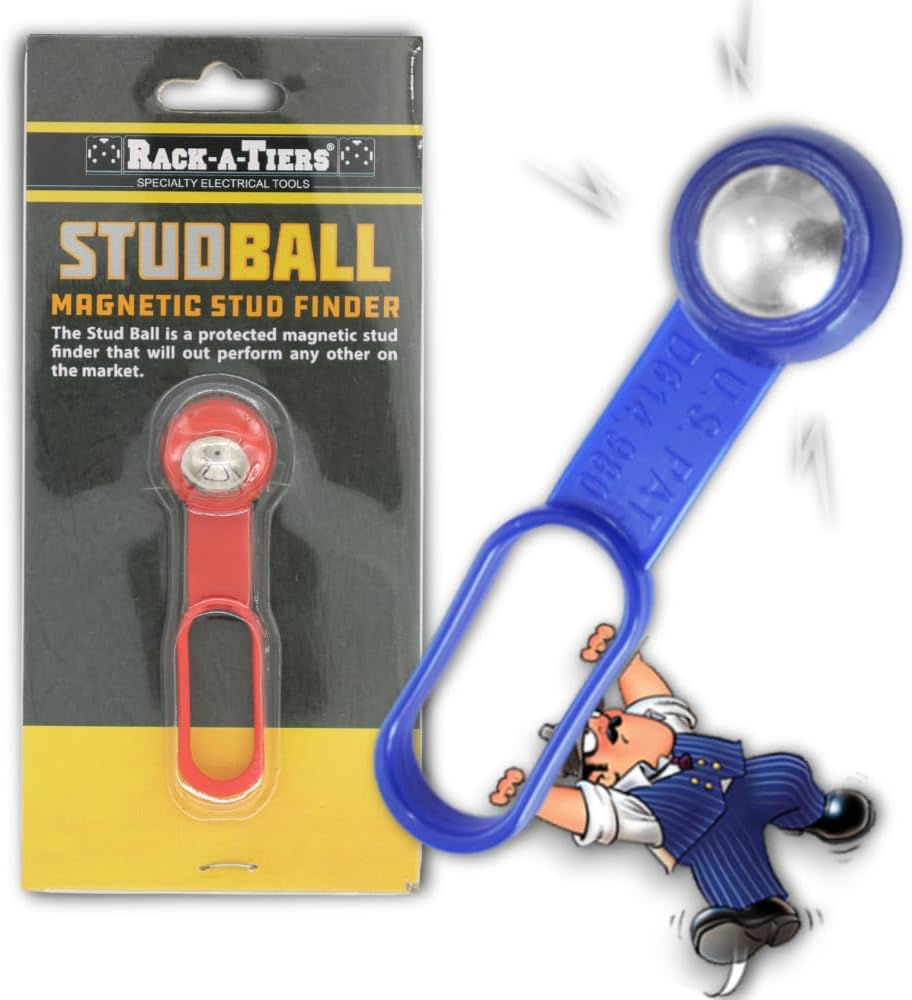
Find Studs the Simple Way: Why a Magnetic Stud Finder Like Rack-A-Tiers Stud Ball Works
If you're tired of electronic stud finders that beep randomly or drain batteries, a magnetic stud finder like the Rack-A-Tiers Stud Ball offers a straightforward, reliable alternative. This device uses a powerful 27-pound pull rare earth magnet to locate the nails or screws in wall studs, making it a no-fuss tool for hanging shelves, TVs, or cabinets. Its compact, ball-shaped design is specifically engineered for portability and ease of use, letting you slide it across drywall to pinpoint metal fasteners without any calibration or power source.
Key Considerations Before Buying
- Magnetic stud finders only detect metal fasteners (nails or screws), not the wood stud itself, so they work best on standard drywall over wood framing. If you have plaster, lath, or metal studs, the Stud Ball's magnet may still detect nails, but you'll need to confirm the stud's edges by scanning for multiple fasteners in a vertical line.
- The 27-pound pull strength is strong enough to find nails through drywall but may attract strongly to steel studs or metal pipes, requiring careful movement to avoid false positives. For typical drywall over wood studs, this pull is ideal—it grabs nails without being so strong that it's hard to slide.
- Since the Stud Ball requires no batteries, it's always ready to use, but you must have a clean, debris-free wall surface for the magnet to glide smoothly. Dust or paint drips can cause the ball to snag, so wipe the wall first for consistent performance.
What Our Analysts Recommend
When choosing a magnetic stud finder, prioritize pull strength (at least 20 pounds for drywall), a smooth, rounded housing that won't scratch surfaces, and a compact size for pocket storage. The Rack-A-Tiers Stud Ball's neodymium magnet and durable plastic shell are quality indicators, as is a design that lets you pivot the ball to release the magnet from a nail without damaging the wall.
Stud Finders Market Context
Market Overview
The stud finder market is dominated by electronic models with features like deep scanning and live wire detection, but magnetic versions like the Rack-A-Tiers Stud Ball are gaining traction for their simplicity and reliability. Consumers increasingly seek no-battery solutions that eliminate calibration errors and false readings common in budget electronics. This shift reflects a demand for tools that are both durable and idiot-proof, especially for DIYers who hang items infrequently.
Common Issues
Many electronic stud finders suffer from inaccurate readings on textured walls or double drywall, leading to frustration and misplaced holes. Magnetic finders avoid this but have their own limitation: they can't detect non-metallic studs or wiring, so users must rely on secondary methods (like tapping) to confirm stud edges. Additionally, weak magnets under 15 pounds often fail to find nails through thicker drywall or insulation.
Quality Indicators
High-quality magnetic stud finders use rare earth magnets (neodymium) with a pull strength clearly stated, like Rack-A-Tiers' 27-pound spec. Look for a smooth, scratch-free casing, a pivoting or rolling mechanism to release the magnet gently, and a design that prevents the magnet from attracting to the tool itself. Customer reviews that mention consistent detection on various wall types are a strong sign of reliability.
Review Authenticity Insights
Grade B Interpretation
A Grade B authenticity rating with a 10% estimated fake review rate means the vast majority of the 1,534 reviews are genuine, but a small portion may be incentivized or non-experiential. This is typical for a popular, highly-rated tool—the 4.89 average is likely inflated by a few suspicious reviews, but the core feedback remains trustworthy. The adjusted rating of 4.60 out of 5 gives a more conservative, realistic view of user satisfaction.
Trust Recommendation
You can confidently trust the overall positive sentiment, but focus on reviews that mention specific wall types (e.g., 'worked on 5/8-inch drywall') or compare it to other magnetic finders. Verified purchase badges are nearly universal here, which boosts credibility. Ignore any reviews that sound overly promotional or lack personal context, as these may be the 10% that aren't fully authentic.
Tips for Reading Reviews
For a magnetic stud finder like this, pay attention to comments about the magnet's strength and how easily it slides. Look for reviews that describe finding nails in different scenarios—like near outlets or on textured walls—as these test real-world utility. Beware of one-liners that just say 'works great' without details, and prioritize reviews with photos showing the tool in use.
Expert Perspective
The Rack-A-Tiers Stud Ball earns its stellar reputation through a simple, effective design that solves a common DIY pain point: finding studs without electronics. Its 27-pound pull magnet is strong enough for standard drywall, and the ball shape makes it easy to roll and pivot, reducing the risk of wall damage. The high adjusted rating of 4.60 and strong authenticity signals indicate this is a reliable tool that delivers on its promise, though it's best suited for users who understand its magnetic-only limitation.
Purchase Considerations
If you primarily hang items on drywall over wood studs and want a tool that never needs batteries or calibration, the Stud Ball is an excellent choice. However, if you need to detect live wires or scan through thick plaster, consider a multi-function electronic stud finder instead. Also, weigh the price—magnetic finders are typically under $15, so this is a low-risk investment for most DIYers.
Comparing Alternatives
Shoppers should compare the Stud Ball with other magnetic models like the CH Hanson 03040 or Franklin Sensors ProSensor, which offer different magnet strengths or form factors. Each has trade-offs in pull force and ease of use, so read reviews for your specific wall type before committing.


