
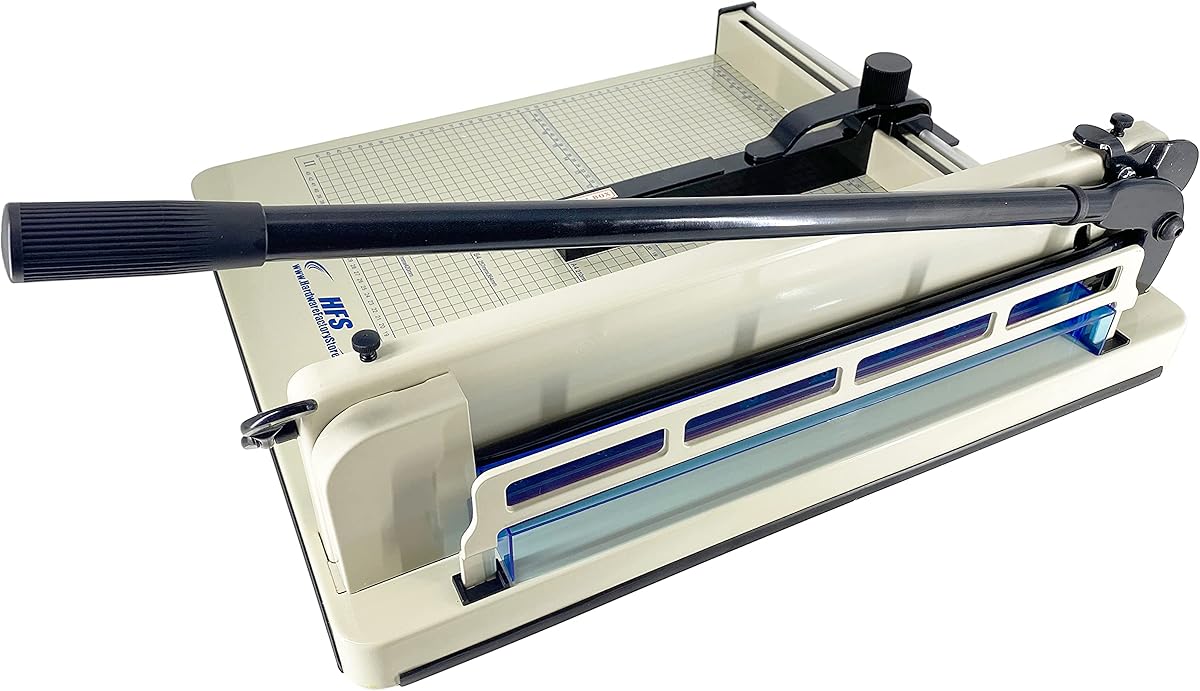
Choosing a Guillotine Cutter: Capacity, Construction, and Cutting Precision
When selecting a guillotine paper cutter like the HFS(R) Heavy Duty model, focus on three critical factors: the 400-sheet capacity rating, solid steel construction, and the 17-inch cutting width. This specific combination positions it as a professional-grade tool rather than a light-duty office accessory, with the A3 format capability distinguishing it from smaller 12-inch or 15-inch models.
Key Considerations Before Buying
- The 400-sheet capacity rating indicates this cutter is designed for bulk trimming tasks, but real-world performance depends on paper weight—expect optimal results with 20-24 lb paper rather than cardstock at full capacity.
- Solid steel construction in the blade mechanism and base plate is essential for maintaining alignment over thousands of cuts, preventing the wobble and drift common in aluminum or plastic-frame competitors.
- The 17-inch cutting width accommodates A3 paper (11.7x16.5 inches) with margin, making it suitable for architectural prints, presentation materials, and oversize documents that smaller trimmers cannot handle.
What Our Analysts Recommend
Examine the blade locking mechanism and safety features—quality guillotine cutters include positive blade locks and finger guards. Check for reinforced pivot points where the blade arm meets the base, as this is the primary stress area during cutting. The cutting grid should be deeply etched rather than printed, ensuring long-term visibility as you align materials.
Stack & Guillotine Trimmers Market Context
Market Overview
The guillotine trimmer market divides sharply between lightweight plastic models for occasional use and heavy-duty steel units like this HFS(R) for production environments. Professional users increasingly seek cutters that handle both standard office paper and thicker materials without requiring multiple tools, driving demand for 15-inch+ models with enhanced capacity ratings.
Common Issues
Lower-quality guillotine cutters develop blade play over time, resulting in angled cuts and torn edges. Many units claim high sheet capacities but struggle with paper feed alignment when stacking approaches their maximum rating. Safety mechanisms often fail first on budget models, with blade guards becoming loose or locking mechanisms wearing out prematurely.
Quality Indicators
Premium guillotine cutters feature ground steel blades rather than stamped metal, evidenced by uniform beveling and mirror finishes. Look for dual measurement systems (inches and centimeters) with precision markings. The base should have non-slip rubber feet substantial enough to prevent movement during operation, especially important with 400-sheet loads.
Review Authenticity Insights
Grade B Interpretation
A Grade B authenticity rating with 11% estimated fake reviews suggests mostly reliable feedback with some promotional content. The 0.28-point drop from the displayed 4.78 to adjusted 4.50 rating indicates minor review inflation, but the core satisfaction metrics remain strong for this category.
Trust Recommendation
Focus on reviews discussing long-term use (6+ months) and specific cutting projects, as these demonstrate genuine experience. Be slightly skeptical of reviews emphasizing only packaging or delivery speed without detailing performance characteristics like cut consistency or blade sharpness retention.
Tips for Reading Reviews
Prioritize reviews mentioning actual sheet counts cut (e.g., 'trimmed 500 brochures') over vague praise. Look for discussions of safety features in use, particularly how the blade guard functions during repetitive cutting. Reviews noting alignment maintenance after months of use provide the most valuable durability insights.
Expert Perspective
The HFS(R) guillotine cutter represents a serious investment in paper processing capability, with its 400-sheet rating and solid steel construction targeting users who regularly process document batches. The maintained 4.50 adjusted rating across 725 reviews indicates consistent performance delivery, though the 11% fake review percentage warrants careful review scrutiny. This unit occupies a middle ground between industrial hydraulic cutters and light-duty office trimmers, making it appropriate for print shops, schools, or offices with substantial trimming needs.
Purchase Considerations
Evaluate your actual volume needs—if you regularly cut stacks exceeding 200 sheets, this cutter's capacity justifies its footprint and price. Consider the workspace required for the 17-inch cutting arm swing and the weight (approximately 25-30 lbs for steel construction) if mobility matters. The A3 capability provides flexibility but may be underutilized if you primarily handle letter-size documents.
Comparing Alternatives
Compare blade replacement availability and cost with similar heavy-duty models from Swingline or Dahle, as long-term ownership costs depend on serviceable components.


