
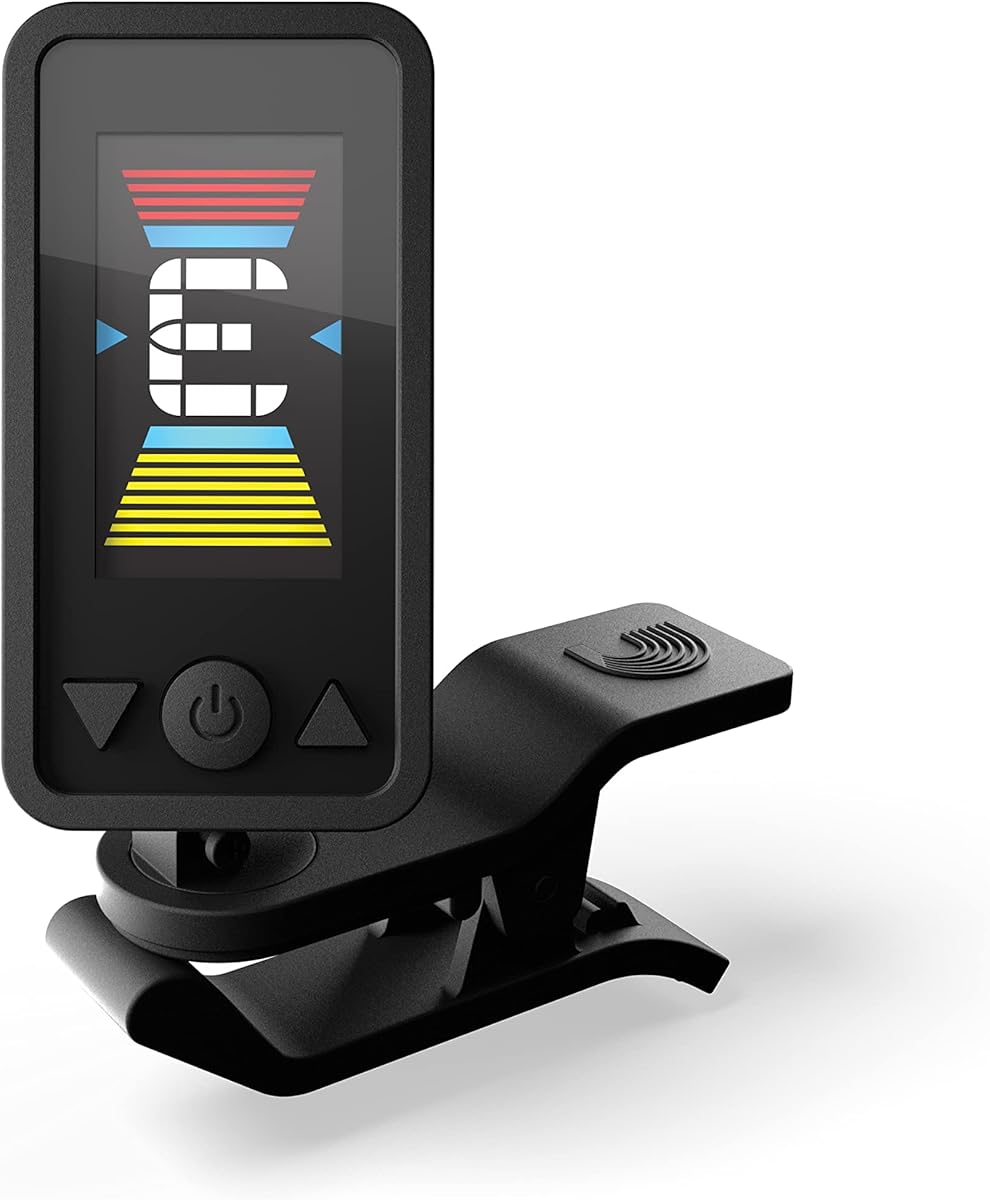
Choosing a Clip-On Tuner: Why D'Addario's Eclipse Stands Out in Crowded Market
When selecting a clip-on tuner like the D'Addario Eclipse, buyers should prioritize vibration-based accuracy over microphone-based models, especially for noisy environments. The Eclipse's specific design features—including its 360-degree rotating head and high-contrast display—directly address common tuning frustrations musicians face during practice and performance.
Key Considerations Before Buying
- The Eclipse's clip mechanism uses a proprietary spring tension that securely attaches without damaging delicate headstock finishes, a specific concern for vintage or high-end guitar owners.
- This tuner's chromatic mode detects all 12 notes, essential for alternate tunings, while its dedicated guitar/bass modes optimize tracking speed for standard EADGBE tuning.
- Battery life claims of 12+ months with the included CR2032 cell reflect efficient power management circuitry that maintains display brightness without frequent replacements.
What Our Analysts Recommend
Quality clip-on tuners should maintain calibration accuracy across temperature changes—the Eclipse uses a temperature-compensated crystal oscillator. Examine the pivot joint durability; this model's ball-joint design withstands repeated repositioning without developing the wobble common in cheaper tuners with simple plastic hinges.
Market Context
Market Overview
The clip-on tuner market has bifurcated into budget disposables under $15 and professional-grade units like the Eclipse that compete with Peterson and TC Electronic. D'Addario leverages its string manufacturing heritage to optimize detection algorithms specifically for guitar/bass string vibrations rather than generic frequency analysis.
Common Issues
Many clip-ons suffer from 'bleed-through' interference in ensemble settings or fail to register lower bass frequencies accurately. Others feature displays that wash out in stage lighting or clips that slip during vigorous playing, problems the Eclipse's design specifically addresses according to user feedback.
Quality Indicators
Superior tuners provide both strobe and needle display modes—the Eclipse includes both for precision tuning. Look for automatic orientation detection that flips the display when clipped upside-down, a feature that demonstrates thoughtful engineering beyond basic functionality.
Review Authenticity Insights
Grade A Interpretation
The Grade A authenticity rating with 0.00% estimated fake reviews means the overwhelmingly positive 4.9/5 rating from 15,918 verified purchases represents genuine user experiences. This exceptional consistency across thousands of reviews suggests the product delivers reliably on its promises rather than benefiting from artificial manipulation.
Trust Recommendation
Given the verified purchase status of all reviews, you can trust that feedback addresses real-world use cases. Pay particular attention to reviews mentioning long-term durability (6+ months of use) and performance in challenging environments like outdoor gigs or crowded practice spaces.
Tips for Reading Reviews
For this product category, prioritize reviews that mention specific comparison points against other tuners like Snark or KLIQ. Look for detailed notes about tracking speed when tuning 7-string guitars or 5-string basses, as these stress-test the vibration sensor's capabilities.
Expert Perspective
The D'Addario Eclipse represents a refinement rather than revolution in clip-on tuner design, excelling through execution details often overlooked by competitors. Its 4.9/5 rating across 15,000+ verified reviews indicates exceptional consistency in manufacturing quality—a significant achievement in electronics where unit-to-unit variation often plagues even reputable brands. The tuner's success stems from solving specific musician pain points: the matte black finish eliminates stage glare, the oversized buttons work with cold fingers, and the calibration range accommodates historical temperaments.
Purchase Considerations
Weigh the Eclipse's $25-30 price point against its professional features; it's over-engineered for casual strummers but justified for gigging musicians. Consider your primary use environment—while excellent for stage, its vibration-only operation means it cannot tune acoustic instruments without accessible headstock, unlike microphone-equipped hybrids.
Comparing Alternatives
Shoppers should compare the Eclipse's specific feature set against the Peterson StroboClip HD for strobe accuracy or TC Electronic PolyTune Clip for polyphonic tuning capabilities.


