
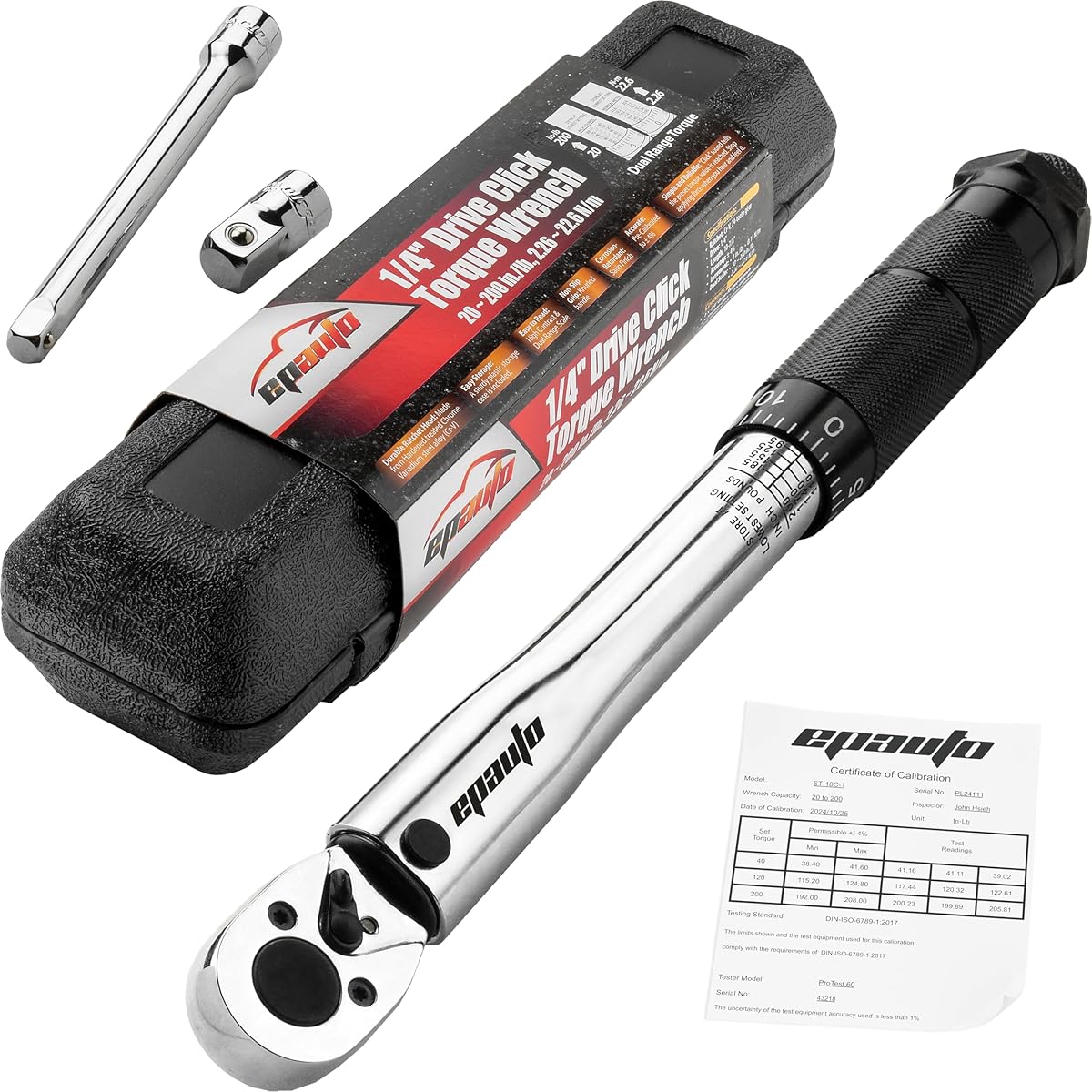
Choosing a 1/4-inch click torque wrench for precision small fastener applications
The EPAuto 20-200 in.-lb. torque wrench targets users needing precise torque for delicate applications like electronics, small engines, or bicycle components. Its 1/4-inch drive and click-type mechanism make it suitable for tasks where over-tightening could cause damage, distinguishing it from larger automotive-focused models.
Key Considerations Before Buying
- Verify your required torque range falls within 20-200 in.-lb. (2.26-22.6 Nm), as this tool cannot handle higher-torque applications like lug nuts or cylinder heads.
- Consider the click-type mechanism's audible/tactile feedback versus digital readouts; this EPAuto model requires proper calibration and user attention to the 'click' signal.
- Evaluate storage needs since this 1/4-inch drive wrench requires separate sockets and proper case storage to maintain calibration accuracy between uses.
What Our Analysts Recommend
Quality indicators include a clear, accurate scale with both inch-pound and Newton-meter markings, a smooth ratcheting head with minimal backdrag, and a sturdy locking collar to prevent accidental adjustment. The reversible ratchet mechanism should operate cleanly without slipping under load.
Torque Wrenches Market Context
Market Overview
The budget 1/4-inch click torque wrench market is crowded with imported tools, creating significant price competition but variable quality control. EPAuto competes directly with brands like Tekton and Neiko in the sub-$50 segment where calibration accuracy is the primary differentiator.
Common Issues
Common problems include calibration drift after minimal use, inconsistent 'click' feedback at lower torque settings, and plastic components in the adjustment mechanism that wear quickly. Many budget models struggle with maintaining accuracy across their entire torque range.
Quality Indicators
Look for all-metal construction in the adjustment mechanism, a knurled handle for secure grip, and clear warranty terms covering recalibration. Quality wrenches maintain consistent click point accuracy within ±4% across multiple cycles, not just when new.
Review Authenticity Insights
Grade B Interpretation
A Grade B with 11% estimated fake reviews suggests generally authentic feedback but warrants scrutiny of extreme 5-star reviews. The adjusted 4.60 rating (from 4.89) indicates some review inflation but still reflects strong genuine satisfaction.
Trust Recommendation
Focus on reviews mentioning specific applications like mountain bike maintenance, motorcycle carburetors, or 3D printer assembly rather than generic praise. Verified purchase reviews discussing long-term calibration stability are particularly valuable for this product type.
Tips for Reading Reviews
Prioritize reviews that mention using a torque tester or comparing readings with another wrench, as these demonstrate actual verification. Be skeptical of reviews that don't mention specific torque values or applications, as genuine users typically reference both.
Expert Perspective
The EPAuto wrench's exceptional 4.60 adjusted rating across 44,932 reviews indicates it delivers reliable performance for its price point, particularly for hobbyists and DIYers needing occasional precision torque. The 1/4-inch drive limitation makes it specialized rather than general-purpose, but within its 20-200 in.-lb. range, it appears to satisfy most users' accuracy expectations. The high review volume with maintained authenticity suggests consistent manufacturing quality rather than occasional 'good units.'
Purchase Considerations
Weigh whether your applications consistently require torque values within this specific range, as using any torque wrench near its minimum or maximum limits reduces accuracy. Consider investing in a calibration checker if you'll use this for safety-critical applications, as even quality budget wrenches require periodic verification.
Comparing Alternatives
Compare with similarly priced 3/8-inch drive wrenches if you need higher torque capacity, or digital models if you require exact readings without interpreting click feedback.


