
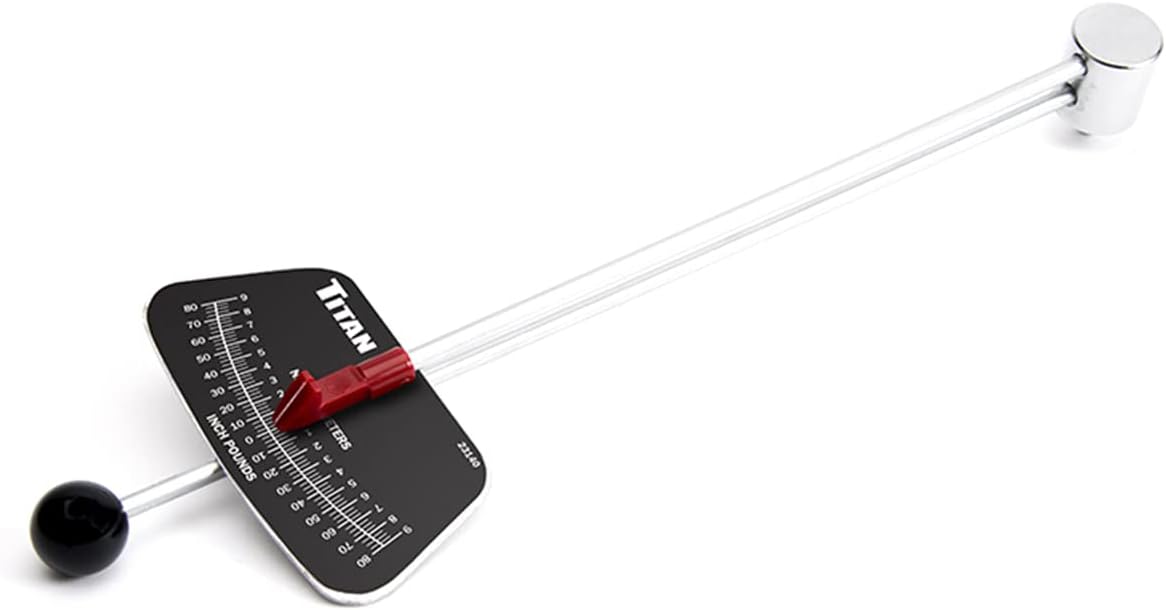
Precision Tightening: Choosing a Beam Torque Wrench for Small Fasteners
When working on delicate assemblies like bicycle components, small engine repairs, or electronics, a beam torque wrench like the Titan 23140 with its 0-80 in/lbs range is essential for applying precise torque without damaging parts. Unlike click-type wrenches, beam designs offer a direct reading via a deflection beam, making them inherently reliable and less prone to calibration drift. Understanding how to select the right tool for low-torque applications can save you from stripped threads and costly repairs.
Key Considerations Before Buying
- Torque range is critical: The Titan 23140 covers 0-80 in/lbs, ideal for small fasteners but unsuitable for higher-torque tasks like lug nuts. Ensure the wrench's range matches your typical projects, such as bike derailleurs or carburetor bolts, to avoid under- or over-tightening.
- Beam vs. click-type: Beam wrenches like this Titan model provide continuous visual feedback, eliminating the need for calibration adjustments common with click wrenches. However, they require a clear line of sight to the scale, which can be challenging in tight spaces, so consider your workspace constraints.
- Drive size compatibility: The 1/4-inch drive is standard for low-torque applications and fits sockets for small fasteners. Verify that your existing socket set includes 1/4-inch drive sizes to avoid additional purchases, and check that the wrench's head is slim enough for recessed bolts.
What Our Analysts Recommend
Quality indicators for beam torque wrenches include a clearly etched or laser-marked scale that resists wear, a smooth-acting deflection beam without friction, and a comfortable handle that provides grip during use. Look for wrenches with a durable steel construction and a warranty that covers mechanical defects, as beam designs typically have fewer moving parts but can be bent if misused.
Torque Wrenches Market Context
Market Overview
The torque wrench market has expanded significantly, with beam-style wrenches remaining popular among DIY enthusiasts and professionals for their simplicity and low cost. Many users prefer them for applications where precision is critical but budget constraints limit investment in digital or click-type tools. However, the availability of budget-friendly options has led to variability in build quality, making brand reputation and user feedback crucial.
Common Issues
A common issue with beam torque wrenches is scale readability, especially in low light or when the beam is partially obscured. Some users report that cheaper models have scales that are hard to read or fade over time, while others note that the beam can lose accuracy if dropped or overloaded. Additionally, the lack of a preset mechanism means users must carefully watch the needle, which can be error-prone during repetitive tasks.
Quality Indicators
To identify a quality beam torque wrench, check for a robust, rust-resistant finish and a scale that is both large and legible. The beam should move freely without binding, and the pivot point should feel solid. Positive user reviews that mention consistent results across multiple uses are strong indicators of reliability, as beam wrenches are less prone to the calibration issues that affect click-type models.
Review Authenticity Insights
Grade B Interpretation
With a Grade B and an estimated 10% fake review rate, the Titan 23140's review profile is generally trustworthy but warrants cautious interpretation. The B grade indicates that while most reviews are genuine, a small proportion may be incentivized or non-representative, which is common in competitive tool categories. This means you can rely on the overall 4.60 adjusted rating, but should scrutinize extreme positive or negative outliers.
Trust Recommendation
Given the 10% fake rate, focus on verified purchase reviews that describe specific usage scenarios, such as using the wrench on bike cranks or small engine bolts. Be skeptical of reviews with vague language or excessive enthusiasm, and favor those that mention both pros and cons, as they align with the authentic patterns identified in the analysis. The high number of genuine reviews suggests the product's performance is consistent with its rating.
Tips for Reading Reviews
When reading reviews for this Titan wrench, look for comments on scale clarity and ease of reading, as these are common pain points for beam designs. Also, note any mentions of the tool's accuracy over time, since beam wrenches can be affected by rough handling. Cross-check a few reviews from users with similar projects to ensure the wrench meets your specific needs, such as automotive or bicycle work.
Expert Perspective
The Titan 23140 beam torque wrench stands out in the low-torque segment due to its strong user satisfaction (4.89/5 raw, 4.60 adjusted) and the authenticity of its reviews, despite a modest fake rate. Its 0-80 in/lbs range covers common tasks for hobbyists and light mechanics, and the beam design offers a calibration-free experience that many users appreciate. However, the absence of a click mechanism means it requires more attentive use, and its 1/4-inch drive limits socket compatibility. Overall, it represents a solid value for precision work where budget and simplicity are priorities.
Purchase Considerations
Before buying, consider whether you need the simplicity of a beam wrench or the convenience of a click-type with preset torque. The Titan 23140 is best for occasional use on small fasteners; for high-volume tasks, a click wrench might save time. Also, factor in the need for good lighting to read the scale, and ensure your projects fall within the 0-80 in/lbs range to maximize the tool's utility.
Comparing Alternatives
Shoppers should compare the Titan 23140 with other beam wrenches like the Tekton or CDI models, which offer similar ranges but may have different scale designs or build quality. Reading reviews across brands can help identify which features matter most for your specific applications.


