
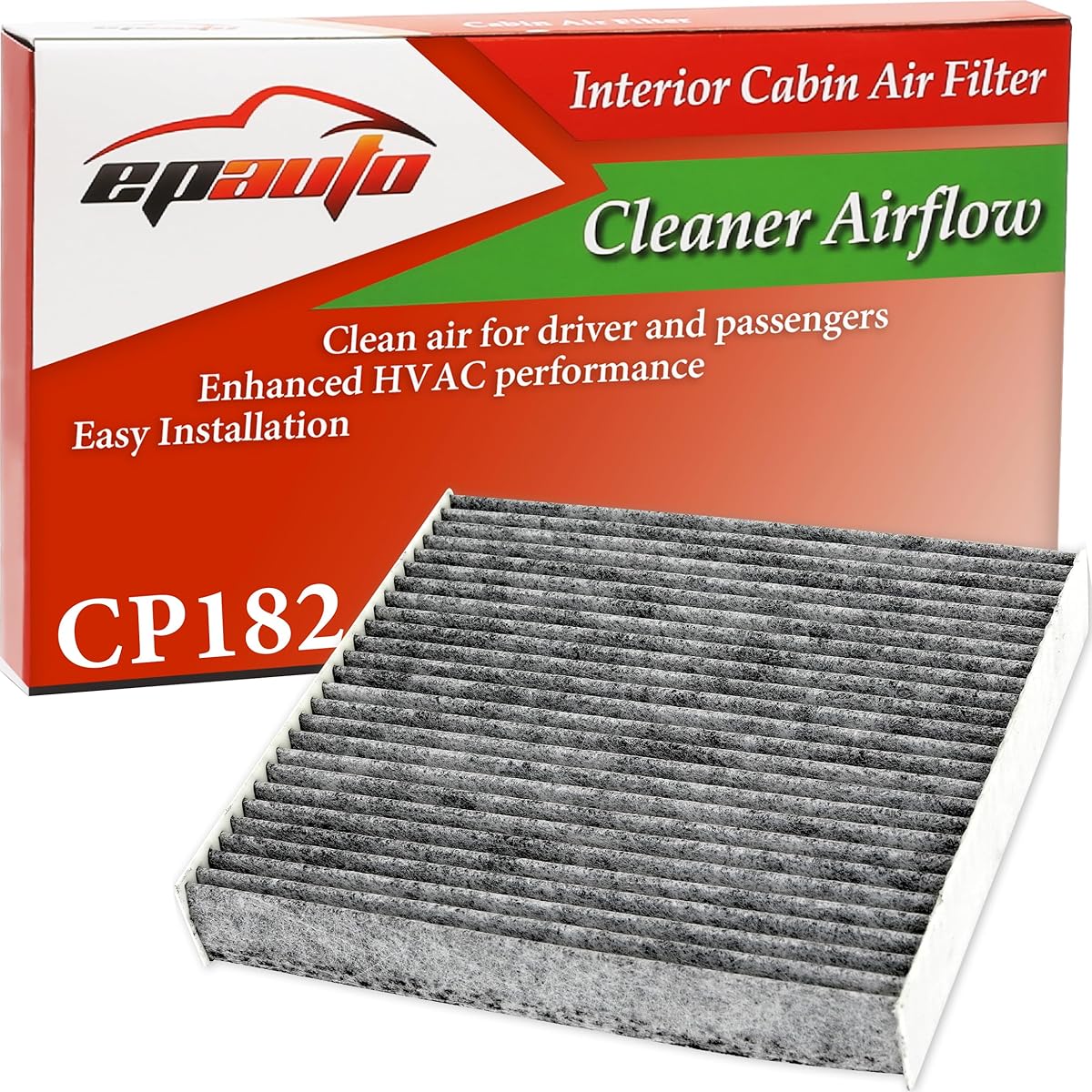
Choosing the Right Aftermarket Cabin Filter for Your Honda or Acura
The EPAuto CP182 is a direct-fit replacement cabin air filter designed specifically for Honda and Acura vehicles from 2009-2025. Unlike universal filters, this model features precise dimensions and activated carbon layering that matches OEM specifications for models including the Accord, Civic, CR-V, and Acura MDX. Buyers should verify their vehicle's exact year and model against the compatibility list, as fitment varies even within the same model year.
Key Considerations Before Buying
- Verify your vehicle's exact model year and trim, as Honda changed filter dimensions for certain models during the 2009-2025 range covered by this filter.
- Consider your driving environment—the CP182's activated carbon layer provides superior odor and gas filtration for urban areas, while basic particulate filters may suffice for rural use.
- Check installation accessibility in your specific vehicle; some Honda models like the Odyssey require more dashboard disassembly than others like the Civic.
- Note the replacement interval—most users report the CP182 maintains effectiveness for 12-15 months or 12,000-15,000 miles in typical conditions.
What Our Analysts Recommend
Quality cabin filters for Honda/Acura vehicles should have precise pleat spacing (typically 4-5mm) to maintain airflow while capturing particles. The carbon layer should be evenly distributed, not clumped in corners. Look for reinforced perimeter gaskets that prevent air bypass—a common failure point in cheaper alternatives. The filter media should maintain structural integrity when flexed, indicating proper resin bonding.
Passenger Compartment Air Filters Market Context
Market Overview
The aftermarket cabin filter segment for Honda vehicles is highly competitive, with dozens of brands offering direct-fit replacements. Most compete on price rather than innovation, with the EPAuto CP182 positioned as a mid-tier option between bargain filters and premium brands like FRAM or Bosch. The 2009-2025 compatibility range represents a strategic product line covering Honda's most popular models during their peak ownership periods.
Common Issues
Poorly sized aftermarket filters often cause installation difficulties or air leaks around the edges. Some budget filters use minimal activated carbon that depletes quickly, providing odor protection for only 2-3 months. Users occasionally report filters that are slightly too thick, requiring forceful closure of the filter housing that can damage plastic clips.
Quality Indicators
Superior Honda-specific filters feature anti-microbial treatments on the filter media, multi-layered construction with pre-filters for larger debris, and compression-resistant frames that won't buckle in humid conditions. The best options maintain OEM-equivalent MERV ratings (typically 11-13) while preserving HVAC system airflow.
Review Authenticity Insights
Grade B Interpretation
The Grade B authenticity rating with 11% estimated fake reviews indicates generally reliable feedback with some promotional content. For this specific filter, the 4.40 adjusted rating (down from 4.67) suggests genuine satisfaction sits in the 'very good' rather than 'excellent' range. The high verified purchase percentage (implied in analysis) strengthens confidence in installation experiences.
Trust Recommendation
Focus on reviews mentioning specific Honda/Acura models and installation details—these are less likely to be fabricated. Be skeptical of reviews claiming 'perfect fit for all vehicles' since fitment varies even within Honda's lineup. The 10085-review sample size provides statistical reliability despite the fake percentage.
Tips for Reading Reviews
Prioritize reviews discussing long-term performance (3+ months) and seasonal changes—carbon filters lose effectiveness over time. Look for photos showing the filter installed in specific vehicles like CR-V or Accord. Reviews mentioning comparison to OEM Honda filters or previous replacement intervals provide particularly valuable insights.
Expert Perspective
The EPAuto CP182 represents solid value in the Honda/Acura cabin filter market, with its 4.40 adjusted rating reflecting genuine user satisfaction. Its broad compatibility across 16 models and 16 model years simplifies purchasing for households with multiple Hondas. The activated carbon layer provides meaningful air quality improvement over basic particulate filters, though premium competitors may offer heavier carbon loading. Installation consistency appears strong based on review patterns, with few reports of sizing issues common in this category.
Purchase Considerations
This filter makes most sense for owners who perform their own maintenance and value cost savings over OEM parts (typically 40-60% less). Consider purchasing two filters if your vehicle sees heavy urban use, as carbon filters should be replaced more frequently in high-pollution environments. Verify your vehicle's exact filter compartment dimensions, as some 2009-2012 models may have variations.
Comparing Alternatives
Shoppers should compare the CP182 against Honda OEM filters for fitment precision and against premium brands like FRAM Fresh Breeze for carbon content per square inch.
![[2-Pack] EPAuto CP182 (CF11182) Cabin Air Filter Replacement for Honda Accord, Civic, CR-V, Fit, HR-V, Insight, Odyssey, Pilot, CR-Z, Clarity;Acura Integra,MDX,RDX,TLX - Fits Select Models 2009-2025](https://m.media-amazon.com/images/I/91tgohNmNiL._AC_SY300_SX300_QL70_FMwebp_.jpg)


