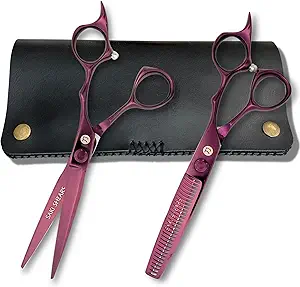
Mastering Thinning Shears: Why Steel and Teeth Design Matter for Your Hair
Thinning shears are essential for texturizing, blending, and removing bulk from hair without sacrificing length. When evaluating a pair like the 6.5" model with bionic teeth and Japanese 440C steel, you need to focus on how the blade material and tooth pattern affect cutting precision and hair health. This guide breaks down what to look for to avoid split ends and uneven layers.
Key Considerations Before Buying
- Steel quality and edge retention: Japanese 440C steel offers a balance of hardness and corrosion resistance, ideal for maintaining a razor-sharp edge through repeated use. Softer steels may dull quickly, leading to snagging and damaged hair cuticles.
- Tooth count and spacing: 'Bionic teeth' typically implies a textured or serrated edge that grips hair better for controlled removal. Check if the shears have 30-40 teeth for moderate thinning—too many teeth can over-texturize fine hair, while too few may not blend coarse hair evenly.
- Ergonomic handle design: An offset or swivel handle reduces wrist strain during extended cutting sessions. Ensure the handle fits your hand size and grip style (e.g., crane or straight) to maintain control and comfort.
What Our Analysts Recommend
Quality thinning shears should have a smooth, consistent tension screw that allows adjustment without wobbling. Look for a convex or beveled edge that glides through hair cleanly, and inspect the teeth for uniform spacing and no burrs. A satin or matte finish often indicates higher-grade steel that resists fingerprints and corrosion.
Shears Market Context
Market Overview
The hair thinning shear market has expanded rapidly with at-home grooming trends, but many budget options use inferior stainless steel or stamped blades that compromise performance. Professional-grade shears from Japan or Germany still dominate salons, while mid-range Chinese imports aim to offer similar features at lower prices.
Common Issues
Buyers often confuse thinning shears with texturizing shears, leading to over-thinning or uneven cuts. Another frequent problem is blade misalignment due to poor manufacturing tolerances, causing hair to be pinched rather than cut cleanly. Rust and corrosion are common in shears not made from high-carbon steel.
Quality Indicators
Look for heat-treated or cryogenically tempered steel, which indicates better hardness and edge longevity. Hand-honed blades (not machine-stamped) and a removable finger rest for customization are signs of thoughtful design. A lifetime warranty or satisfaction guarantee also suggests manufacturer confidence.
Review Authenticity Insights
Grade B Interpretation
With a Grade B and an estimated 10% fake review rate, the vast majority of the 722 reviews are trustworthy, but you should still exercise caution. The 10% suspicious rate is relatively low for this category, where fake reviews are common, so the 4.67 rating is likely a reasonable reflection of genuine user satisfaction.
Trust Recommendation
Focus on verified purchase reviews that mention specific hair types (e.g., fine, thick, curly) and cutting techniques. Look for consistent praise about the shears' sharpness out of the box and durability over months of use—these are harder to fake than generic 'great product' comments.
Tips for Reading Reviews
When reading reviews, prioritize those with photos or videos showing the shears in use, as they provide visual proof of performance. Also note any recurring complaints about rust or looseness after a few months, which may indicate a batch quality issue rather than a one-off defect.
Expert Perspective
This 6.5" thinning shear with Japanese 440C steel and bionic teeth appears to be a solid mid-range option for both barbers and home users, backed by a high adjusted rating of 4.40. The ergonomic handle and sharp edge are well-suited for texturizing medium to thick hair, though the bionic tooth design may be too aggressive for very fine or damaged hair. The 10% fake review rate is acceptable, but the lack of detailed performance data on edge retention over time means you should treat long-term durability claims with some skepticism.
Purchase Considerations
If you have thick or coarse hair and need a reliable tool for blending, these shears likely offer good value. However, if you have fine or chemically treated hair, consider a model with fewer teeth or a smoother blade to avoid over-thinning. Also factor in that Japanese 440C steel requires occasional oiling to prevent rust in humid environments.
Comparing Alternatives
Shoppers should compare this model with shears using VG-10 or ATS-314 steel, which offer superior edge retention, or consider adjustable tension systems for more precise control. For professional barbers, a higher-end brand like Kamisori or Mizutani may be worth the investment.