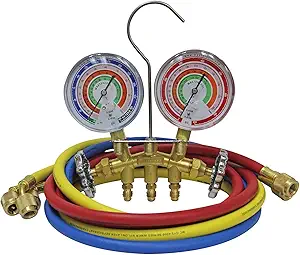
Smart color-coded gauges offer visual safety alerts for tire maintenance
The GODESON 88702 features a dual-probe design with color-coded zones that instantly indicate tread condition, moving beyond basic measurement to visual safety warnings. This specific model includes two identical gauges in one package, making it suitable for households with multiple vehicles or as a backup tool. Unlike traditional gauges requiring manual interpretation, its color system provides immediate actionable feedback.
Key Considerations Before Buying
- The dual-probe design allows simultaneous measurement of multiple tread grooves, providing more accurate wear assessment than single-probe gauges that might miss uneven wear patterns.
- Color-coded zones (green/yellow/red) eliminate measurement interpretation errors, crucial for consumers who aren't familiar with tread depth safety thresholds in 32nds of an inch.
- Two identical gauges in one package addresses the common issue of lost or misplaced small automotive tools, ensuring you always have one accessible in your garage or vehicle.
What Our Analysts Recommend
Quality tire gauges should have precisely machined probes that slide smoothly without wobble, as any play affects measurement accuracy. The color bands should be clearly printed and aligned with standard safety thresholds: green above 6/32", yellow between 4-6/32", and red below 4/32". Durable construction matters since these tools often get dropped in garages or stored in glove compartments.
Gauges Market Context
Market Overview
The tire gauge market has evolved from basic mechanical tools to include digital and smart visual systems like the GODESON's color-coding, with consumers increasingly prioritizing safety features over simple measurement. Entry-level gauges now compete on added functionality rather than just price, with dual-probe designs becoming more common for comprehensive tread analysis.
Common Issues
Many budget gauges suffer from inconsistent spring tension that causes measurement drift, or have poorly marked scales that require squinting in low-light garage conditions. Single-probe designs often fail to detect uneven wear across tire shoulders, giving false confidence about overall tread condition.
Quality Indicators
Look for gauges with hardened steel probes that resist bending when pressed against tire wear bars, and clear numerical markings alongside any color systems. Quality units maintain calibration despite temperature fluctuations in garage environments and have positive 'click' retention mechanisms that hold measurements until reset.
Review Authenticity Insights
Grade B Interpretation
The Grade B authenticity rating with 11% estimated fake reviews suggests mostly genuine feedback, though slightly elevated promotional content may exist. For this straightforward tool category, even authentic reviews tend to be brief, making the 4.60 adjusted rating from verified purchases particularly meaningful.
Trust Recommendation
Focus on reviews discussing long-term durability (6+ months of use) and consistency between the two included gauges, as these indicate genuine ownership experience. Be slightly skeptical of reviews emphasizing packaging or unboxing rather than actual measurement performance in various weather conditions.
Tips for Reading Reviews
Prioritize reviews mentioning specific measurements (like 'consistently showed 7/32" on my new tires') over vague praise, and look for comments about probe stiffness and color band alignment—details fake reviews often omit. Verified purchase reviews discussing both gauges' performance carry more weight for this two-piece product.
Expert Perspective
The GODESON 88702's combination of visual safety coding and dual-probe design addresses common consumer pain points in tire measurement: interpretation uncertainty and incomplete wear assessment. The maintained 4.60 adjusted rating despite high review volume suggests consistent manufacturing quality control. The two-gauge configuration is particularly valuable given that tread depth measurement requires comparison across multiple tire positions for accurate safety assessment.
Purchase Considerations
Consider whether the color-coded system provides real value for your household—drivers who already know tread depth thresholds might prefer a traditional gauge. The dual-gauge advantage diminishes if you only maintain one vehicle, though having a backup is useful. Evaluate storage needs since two gauges require more organized keeping than a single tool.
Comparing Alternatives
Compare the color band thresholds against your vehicle manufacturer's specific recommendations, as some performance tires have different wear indicators than the standard 4/32" safety threshold.