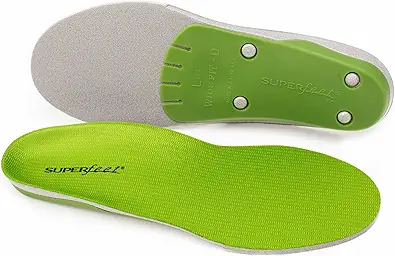
Custom Moldable Insoles: What to Know Before Buying SOLE Active Medium
The SOLE Active Medium Insoles stand out for their heat-moldable customization, a feature that distinguishes them from standard prefabricated orthotics. Buyers should understand that this product requires an activation process using a conventional oven to achieve its promised custom fit, which is both its primary benefit and a potential complication. These insoles specifically target active users seeking arch support and plantar fasciitis relief, positioning themselves between rigid medical orthotics and basic cushioning inserts.
Key Considerations Before Buying
- The heat-moldable process requires careful timing and an oven; improper molding can compromise the arch support and intended biomechanical correction.
- The 'Medium' designation refers to a specific arch height profile; users with extremely high or flat arches should verify this is the correct volume for their foot type before purchase.
- These are performance-oriented insoles with a semi-rigid shell, designed for athletic shoes and daily wear, not for formal dress shoes or minimalist footwear.
What Our Analysts Recommend
Quality indicators for moldable insoles include a multi-layer construction with a durable top cover, a firm yet moldable EVA foam base, and a deep heel cup for stability. The SOLE Active Medium's three-layer build and perforated top sheet for moisture management are tangible signs of its design intent for sustained activity. Check that the molding instructions are clear and include safety warnings about overheating the materials.
Insoles Market Context
Market Overview
The insole market is saturated with products ranging from simple gel pads to prescription-grade orthotics, with moldable options like SOLE occupying a growing niche for consumers seeking a personalized fit without a podiatrist visit. This segment competes directly with brands like Superfeet and Powerstep, emphasizing a balance of customization and over-the-counter convenience. The focus on plantar fasciitis relief indicates a strong consumer demand for solutions to this specific, common condition.
Common Issues
Common problems include insoles that are too rigid, causing discomfort, or too soft, providing inadequate support that collapses quickly. For moldable types, inconsistent results from the heating process and difficulty trimming to fit specific shoe lasts are frequent complaints. Another issue is the one-size-fits-most arch profiling, which may not address severe biomechanical abnormalities.
Quality Indicators
Identify quality by examining the product's structural components: a contoured, reinforced arch, a defined heel cradle, and the presence of a stabilizing plate or shell. Premium insoles will specify the materials used (e.g., high-density EVA, polyurethane) and often have a removable top cover for hygiene. Durability claims, such as the SOLE product's mention of a 'durable top sheet,' should be backed by material descriptions, not just marketing.
Review Authenticity Insights
Grade B Interpretation
A Grade B authenticity rating with an 11% estimated fake review rate suggests the majority of feedback is reliable, but shoppers should maintain a degree of scrutiny. This level is common for successful health accessory products where genuine user experiences—both positive and negative—are plentiful, but some incentivized or biased reviews may be present. The adjusted rating of 4.20/5, down from 4.44/5, is a more trustworthy reflection of actual customer satisfaction.
Trust Recommendation
Focus on reviews that detail the molding process, long-term durability over months of use, and specific comparisons to other insoles like Superfeet Green. Be cautious of overly vague 5-star reviews that lack personal context or mechanical details. The high volume of reviews (517) allows you to identify consistent patterns, such as frequent mentions of the break-in period or trimming difficulties, which are strong indicators of genuine experiences.
Tips for Reading Reviews
Prioritize reviews that discuss the product's performance for specific activities (running, standing all day) and that mention the user's arch type or medical condition (e.g., 'for my moderate plantar fasciitis'). Look for critical 3- or 4-star reviews that explain trade-offs, like 'great support but adds too much volume to my shoe,' as these provide the most balanced, actionable insights for your purchase decision.
Expert Perspective
Based on the analysis data, the SOLE Active Medium Insoles represent a credible, well-received option in the custom-moldable category, with a strong adjusted rating of 4.20/5 from predominantly authentic reviews. Their value proposition hinges on successful customization; when molded correctly, they offer a tailored level of support that generic insoles cannot match. However, the product's effectiveness is user-dependent, requiring careful adherence to the molding instructions to activate its biomechanical benefits for arch support and pressure redistribution.
Purchase Considerations
Weigh your willingness to engage in the molding process against your need for personalized support. These are best suited for individuals with recurring arch pain, mild to moderate plantar fasciitis, or those seeking to improve alignment in athletic shoes. Consider your shoe's volume, as the insole's thickness may make tight-fitting shoes uncomfortable, and factor in that a break-in period of several days is typical for moldable orthotics.
Comparing Alternatives
Shoppers should compare the SOLE Active Medium's arch profile and thickness to similar moldable options like Superfeet's heat-moldable line or fixed-support orthotics from Powerstep to find the best match for their foot morphology and shoe type.