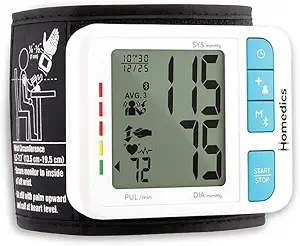
Wrist Blood Pressure Monitors: Accuracy, Fit, and Features to Consider
When choosing a wrist blood pressure monitor like the PARAMED model, it's crucial to understand the trade-offs between convenience and accuracy. Unlike arm cuffs, wrist monitors are compact and easy to use, but their readings can be more sensitive to body position and device placement. This guide will help you navigate the key features—from irregular heartbeat detection to memory storage—so you can make an informed choice.
Key Considerations Before Buying
- Accuracy vs. convenience: Wrist monitors can be less accurate than upper-arm models if not positioned at heart level. The PARAMED's compact design is ideal for travel, but you must follow the positioning instructions carefully to get reliable readings.
- Memory and data tracking: With 90 reading memory, the PARAMED allows you to track your blood pressure trends over time. Consider whether you need data export or smartphone connectivity, which this model lacks, for long-term monitoring.
- Irregular heartbeat detection: This feature is valuable for early warning, but it's not a diagnostic tool. If you have arrhythmia, consult your doctor about how to interpret these alerts.
What Our Analysts Recommend
Look for a cuff that fits your wrist circumference (the PARAMED typically fits 5.5-8.5 inches), a clear, large display for easy reading, and a carry case for portability. Also, check battery life and ease of use—the PARAMED uses 2 AAA batteries, which are widely available, but consider whether a rechargeable option might be more convenient for you.
Wrist Monitors Market Context
Market Overview
The wrist blood pressure monitor market has grown due to increasing health awareness and the convenience of home monitoring. Many budget-friendly models, like the PARAMED, offer essential features such as memory storage and irregular heartbeat detection, competing with more expensive arm-cuff devices. However, consumers often choose wrist monitors for their portability and ease of use, especially when traveling.
Common Issues
A common issue with wrist monitors is inaccurate readings due to improper positioning—if the wrist is not at heart level, readings can be artificially high or low. Another concern is the lack of clinical validation for some models, which can undermine trust in their accuracy. Additionally, battery life and durability vary significantly across brands, with some users reporting premature failure.
Quality Indicators
High-quality wrist monitors are clinically validated (look for FDA clearance or CE marking), have a well-designed cuff that fits securely, and offer consistent readings compared to a standard arm cuff. User reviews that mention comparing readings with a healthcare professional's device are a good sign of reliability. Also, brands that provide clear instructions and customer support tend to have better overall satisfaction.
Review Authenticity Insights
Grade B Interpretation
The Grade B and 15% estimated fake review rate indicate that the majority of reviews are genuine, but you should be cautious about a subset of overly positive or vague reviews. This means the 4.11-star rating is likely inflated, with a more realistic adjusted rating of 3.80. For a medical device, this is a moderate level of authenticity, suggesting that real user experiences are mixed but not overwhelmingly negative.
Trust Recommendation
Given the 15% fake review rate, we recommend focusing on reviews that mention specific usage scenarios, such as comparing readings to an arm cuff or testing the irregular heartbeat feature. Look for verified purchase badges and detailed feedback about the device's accuracy and ease of use. If possible, cross-reference with independent reviews on medical device forums or trusted health websites.
Tips for Reading Reviews
When reading reviews for this product, prioritize those that describe the device's performance over time, not just initial impressions. Pay attention to comments about the cuff size and whether it fits your wrist, as this is a common pain point. Also, be wary of reviews that use generic language or are overly promotional—these may be part of the 15% fake set.
Expert Perspective
The PARAMED Automatic Wrist Blood Pressure Monitor is a budget-friendly option with useful features like irregular heartbeat detection and 90-reading memory, but its adjusted rating of 3.80 suggests that user satisfaction is moderate. The 15% fake review rate is concerning, but the majority of feedback is genuine, highlighting both strengths (portability, ease of use) and weaknesses (accuracy concerns, cuff fit issues). As a consumer, you should weigh the convenience of a wrist monitor against the potential need for more accurate arm-cuff readings, especially if you have hypertension or other cardiovascular conditions.
Purchase Considerations
Before purchasing, consider your specific needs: if you travel frequently, the PARAMED's compact design and carrying case are advantageous. However, if you require high accuracy for clinical decisions, you might want to invest in a validated upper-arm monitor. Also, think about the long-term cost of AAA batteries and whether the lack of smartphone connectivity is a dealbreaker for you.
Comparing Alternatives
It's wise to compare the PARAMED with other wrist monitors in the same price range, such as those from Omron or iHealth, which may offer better clinical validation or additional features like app integration. Reading reviews on multiple platforms can give you a more balanced view.