
Choosing a manual citrus press: Why construction and leverage matter most
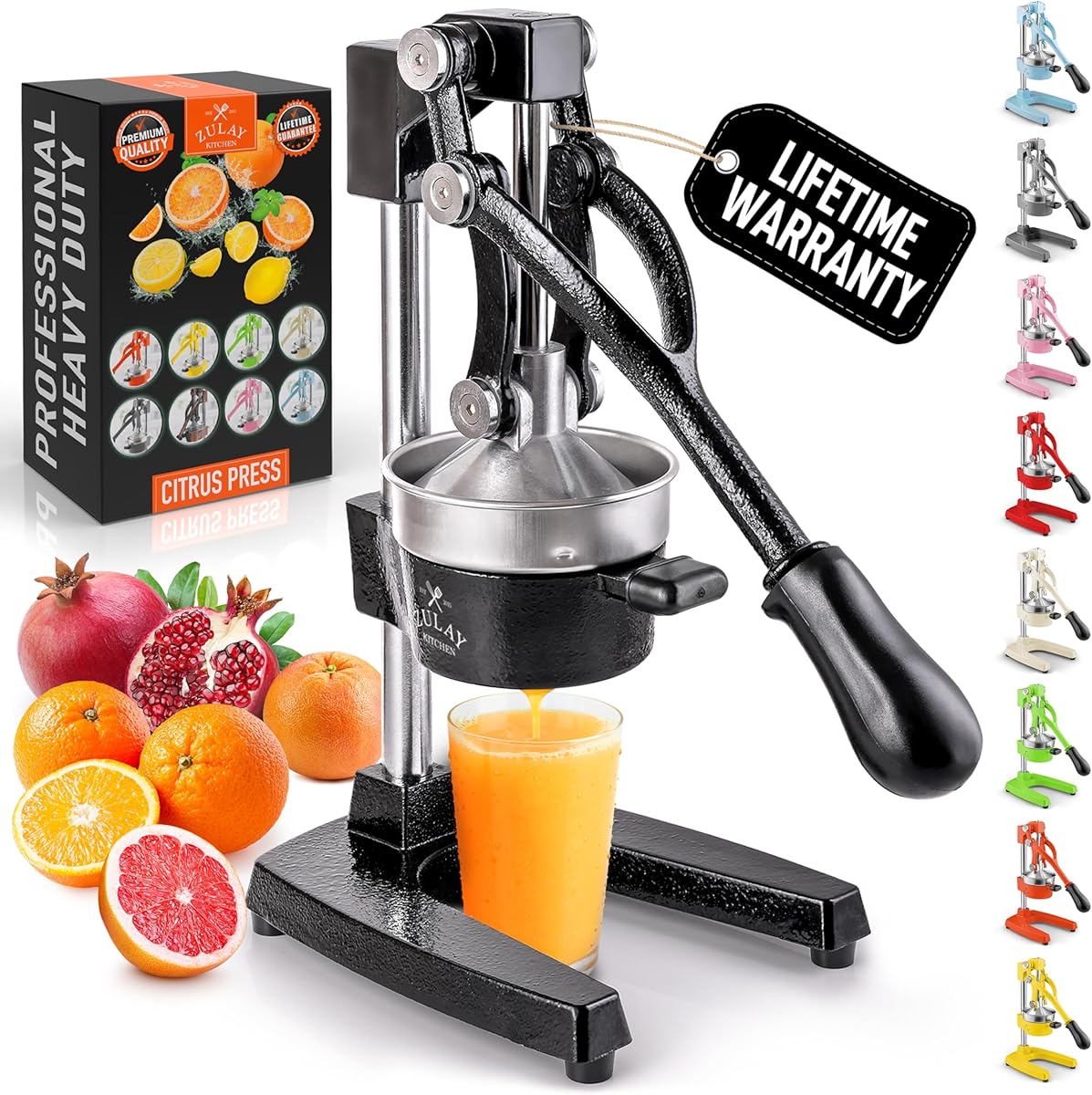
When selecting a manual juicer like the Zulay Kitchen Cast Iron model, focus on the mechanical advantage and durability of the press mechanism. This specific product combines a cast iron frame with a stainless steel reamer, creating a hybrid construction that prioritizes stability during the high-pressure squeezing process. Unlike flimsier all-plastic or thin-metal alternatives, this design addresses the core challenge of extracting maximum juice with minimal effort.
Key Considerations Before Buying
- Leverage ratio is critical: A press with insufficient mechanical advantage, often seen in cheaper 'pincer'-style juicers, forces you to strain. The Zulay's long, curved handle and wide pivot point are engineered specifically to multiply force efficiently.
- Material compatibility affects juice quality: The stainless steel reamer on this model is non-reactive, preventing metallic taste transfer to acidic citrus juices, a common issue with lower-quality plated or aluminum reamers.
- Stability under load prevents spills: A heavy-duty base, like the cast iron component here, counteracts the twisting force applied during squeezing, keeping the juicer firmly planted compared to lightweight models that can skid across countertops.
What Our Analysts Recommend
Examine the pivot joint where the handle meets the press arm; it should be a solid, reinforced bushing or bolt, not a thin pin prone to bending. For easy cleaning, seek a seamless reamer cone without crevices where pulp and membrane can lodge, and verify that all parts contacting food are explicitly labeled as food-grade stainless steel, not just 'stainless'.
Manual Juicers Market Context
Market Overview
The manual citrus juicer market is saturated with low-cost, lightweight plastic presses that often fail under regular use, creating demand for durable, restaurant-grade home models. Products like the Zulay Cast Iron Juicer represent a growing premium segment that prioritizes lifetime durability over disposability, appealing to users tired of replacing broken gadgets.
Common Issues
Frequent failures include cracked plastic frames, bent lever arms, and reamers that detach from their shafts. Many budget models also have shallow drip trays that overflow easily, and their narrow reamers don't accommodate larger citrus varieties like grapefruit well.
Quality Indicators
Superior manual juicers feature a single, robust pivot point rather than multiple weak joints, and have a reamer cone diameter of at least 2.5 inches to handle diverse fruit sizes. The best models also integrate a pulp-straining ridge or a built-in filter around the reamer's base to separate seeds during extraction.
Review Authenticity Insights
Grade B Interpretation
A Grade B authenticity rating with an estimated 11% fake review rate for this Zulay juicer suggests a generally trustworthy review corpus, but advises a degree of scrutiny. This level is typical for popular kitchen tools where some incentivized reviews may be present, but the vast majority of feedback comes from verified purchasers.
Trust Recommendation
Prioritize reviews that mention long-term use (6+ months) and compare this cast iron model directly to other types they've owned, like lever presses or electric juicers. Be slightly more skeptical of brief, hyperbolic reviews that don't describe specific use cases, such as daily lemon water routines or batch-making marmalade.
Tips for Reading Reviews
Look for reviews detailing juice yield comparisons (e.g., 'got 30% more juice from the same lemon'), comments on the heft and stability of the cast iron base, and notes about cleaning the stainless steel reamer after juicing pith-rich fruits. These specifics indicate hands-on experience.
Expert Perspective
The Zulay Kitchen Cast Iron Juicer's exceptional 4.6 adjusted rating, derived from over 10,000 reviews, strongly indicates it successfully solves core pain points in the manual juicer category: stability, leverage, and durability. The specific praise for its heavy-duty construction and high juice yield in authentic reviews aligns with the engineering advantages of its cast-iron-and-stainless-steel hybrid design. This product appears to occupy a valuable middle ground between commercial, wall-mounted presses and lightweight consumer models.
Purchase Considerations
This juicer is an ideal investment for someone who juices citrus several times a week and values a tool that won't need replacing. However, its weight and footprint make it less suitable for those with minimal storage space or who only occasionally juice a single lemon. Consider your counter space, as this is not a gadget you'll likely want to store in a deep cabinet between uses.
Comparing Alternatives
Shoppers should compare this lever-style press with geared 'reamer' style juicers and higher-end dual-hinge press models to assess which mechanism best suits their strength and frequency of use.


