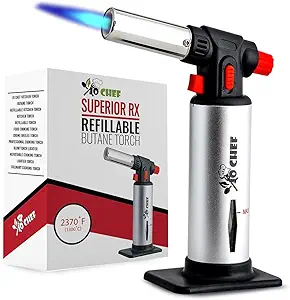
Choosing a culinary torch: flame control, ergonomics, and safety features matter most
When selecting a kitchen torch like the FunOwlet model, focus on three critical elements: adjustable flame precision for delicate tasks like crème brûlée, ergonomic design for comfortable handling during extended use, and reliable ignition systems. This specific torch features a 'reverse use' design that allows angled positioning, which is particularly useful for caramelizing sugar on desserts without straining your wrist.
Key Considerations Before Buying
- Flame adjustability is crucial—look for models with precise control dials rather than basic high/low switches, as this allows you to handle everything from delicate meringue to searing meats without scorching.
- Consider the ignition mechanism: piezo-electric systems (like this model uses) should provide consistent sparking without excessive force, while battery-powered igniters require regular replacement.
- Evaluate the fuel window visibility and refill mechanism—clear windows prevent running out mid-task, and quality refill valves minimize butane leakage during tank changes.
What Our Analysts Recommend
Examine the nozzle construction—brass or stainless steel resists corrosion from kitchen environments better than cheaper alloys. Check for safety features like child-resistant locks and automatic shut-off mechanisms that prevent accidental ignition. The torch's weight distribution significantly impacts control during precision tasks like caramelizing sugar or browning meringue.
Cooking Torches Market Context
Market Overview
The culinary torch market has expanded beyond professional kitchens to home cooks, with models now ranging from basic lighters to professional-grade torches with industrial flame outputs. Current trends favor multi-purpose designs that handle both kitchen tasks and occasional DIY applications like soldering or heat-shrinking tubing.
Common Issues
Many budget torches suffer from inconsistent ignition after several months, flame adjustment dials that loosen over time, and poorly sealed refill valves that leak butane. Some models marketed as 'professional' actually produce insufficient heat for proper caramelization or lack the sustained flame needed for tasks like browning large casseroles.
Quality Indicators
Quality torches feature metal construction around the flame nozzle and adjustment areas, where heat concentration is highest. Look for torches with visible O-rings in the refill mechanism and substantial weight in the handle, which indicates better internal component construction. Premium models often include replaceable flint in piezo igniters rather than disposable spark modules.
Review Authenticity Insights
Grade B Interpretation
The Grade B authenticity rating with 11% estimated fake reviews suggests most feedback is genuine, though shoppers should remain cautious of overly enthusiastic reviews lacking specific usage details. The 0.24-point difference between the raw (4.44) and adjusted (4.20) ratings indicates some review inflation exists but doesn't fundamentally distort the product's reception.
Trust Recommendation
Focus on reviews that mention specific applications like 'caramelizing sugar on grapefruit' or 'searing sous-vide chicken breasts' rather than generic praise. The 7,439-review volume provides substantial data—look for patterns in recurring complaints about the ignition button or praise for the flame adjustment precision.
Tips for Reading Reviews
Prioritize reviews discussing long-term performance (3+ months) to assess durability, and pay particular attention to comments about the 'reverse use' functionality, as this unique feature's effectiveness varies across user skill levels. Verified purchase reviews mentioning butane brand compatibility offer practical insights since fuel quality affects performance.
Expert Perspective
The FunOwlet torch's strong adjusted rating of 4.20/5 from authentic reviews indicates it performs well within its price segment, particularly for home cooks needing versatile flame control. Its 'reverse use' design addresses a common ergonomic issue in culinary torches—awkward wrist angles when working on flat surfaces. The substantial review volume with detailed usage scenarios suggests reliable performance across core applications like dessert finishing, cheese melting, and light searing.
Purchase Considerations
Weigh whether you need the DIY soldering capability—if primarily for kitchen use, ensure the flame can be adjusted finely enough for delicate tasks. Consider that butane isn't included, so factor in fuel costs and availability of quality butane (refined, multi-filtered) which significantly affects performance and nozzle longevity.
Comparing Alternatives
Compare flame adjustment mechanisms and handle ergonomics with similar-priced models from Sondiko or Blazer, as subtle design differences impact control during precision work.