
Choosing Natural Black Henna: What to Know About Grey Coverage and Chemical-Free Formulas
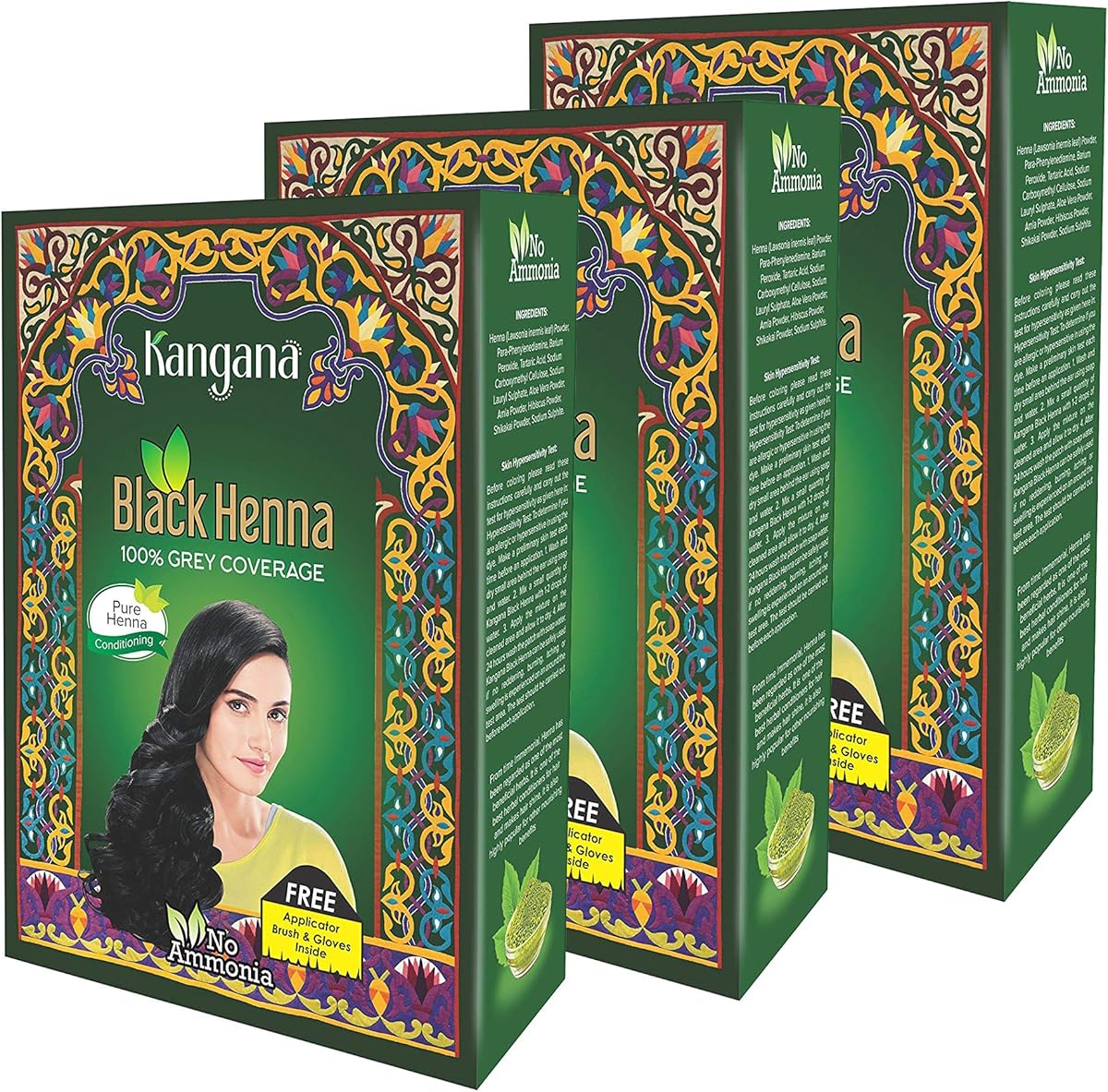
When considering KANGANA's Natural Black Henna Powder, understand that '100% grey coverage' refers to color opacity, not necessarily uniform dye uptake on resistant grey hair. This chemical-free powder requires mixing with an acidic liquid like lemon juice or vinegar to release dye molecules, unlike ready-to-use synthetic dyes. The three-pack format suggests this product is intended for multiple applications or maintenance.
Key Considerations Before Buying
- Natural henna like KANGANA's produces a translucent, semi-permanent stain that builds with repeated applications rather than a single opaque coating, which affects expectations for grey coverage.
- The 'chemical-free' claim specifically means no PPD, ammonia, or metallic salts, but the dye release still requires acidic activation and development time of 2-4 hours for optimal results.
- Black henna typically contains indigo powder alongside lawsonia (true henna), creating a cooler black tone rather than the reddish-brown of pure henna—important for those seeking neutral black results.
What Our Analysts Recommend
Quality natural henna powders should have a fine, siftable texture without grittiness, indicating proper milling of the lawsonia leaves. The color should be a vibrant greenish-brown when dry, not dull grey, which suggests freshness. Authentic products will specify botanical ingredients (lawsonia inermis, indigofera tinctoria) rather than vague 'herbal' claims.
Hennas Market Context
Market Overview
The natural hair color market has expanded significantly, with henna products ranging from pure botanical powders to hybrid formulas containing synthetic additives. Consumers increasingly seek chemical-free alternatives but often misunderstand henna's application process and color limitations compared to oxidative dyes.
Common Issues
Inconsistent grey coverage remains the primary complaint with natural hennas, as resistant grey hairs with thicker cuticles may absorb less dye. Some users experience unexpected reddish undertones with 'black' henna when indigo content is insufficient or improperly processed. Application messiness and lengthy processing times deter those accustomed to conventional 30-minute color treatments.
Quality Indicators
Superior henna powders specify geographic origin (like Rajasthani or Yemeni), have recent manufacturing dates since dye potency diminishes over 1-2 years, and provide clear mixing ratios. Products that include sample-sized test packets demonstrate manufacturer confidence in color results.
Review Authenticity Insights
Grade B Interpretation
A Grade B authenticity rating with 11% estimated fake reviews indicates predominantly genuine feedback but suggests some review manipulation. For this specific product, the 0.22-point difference between the raw 4.22 and adjusted 4.00 ratings suggests inflated positive reviews rather than fake negative ones.
Trust Recommendation
Focus on verified purchase reviews discussing specific grey coverage results and color development over time, as these reflect authentic usage patterns. Be particularly skeptical of reviews claiming 'one-time perfect black coverage' on resistant grey hair, as this contradicts typical henna behavior.
Tips for Reading Reviews
Prioritize reviews mentioning multiple applications, processing times exceeding 3 hours, or mixing techniques (like adding amla powder for cooler tones). Look for detailed photos showing hair in natural lighting at different angles, as henna's translucent quality makes direct overhead shots misleading.
Expert Perspective
KANGANA's product appears to deliver legitimate natural henna results based on the authentic review patterns showing gradual color build-up and typical application experiences. The maintained 4.00 adjusted rating after filtering suggests consistent satisfaction among genuine users, particularly regarding its chemical-free formulation. However, the gap between raw and adjusted ratings warrants cautious interpretation of extreme positive claims.
Purchase Considerations
This product suits those committed to multiple applications for full grey coverage and willing to accept henna's characteristic translucency and reddish undertones. The three-pack format offers value for maintenance but requires proper storage in airtight containers to preserve dye potency between uses. Those with previously chemically-treated hair should strand test, as henna can react unpredictably with residual metallic salts.
Comparing Alternatives
Compare KANGANA's powder texture and mixing requirements against competitors like Light Mountain or Rainbow Research, as fineness affects application smoothness and dye release consistency.


