Choosing a High-Capacity Dehydrator: Why Drying Space and Temperature Control Matter
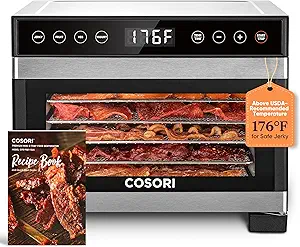
The COSORI's 6.5 ft² drying space across its stainless steel trays represents a significant capacity for serious home dehydrating. Buyers should understand that its 600W motor and 165°F maximum temperature directly impact drying times and the types of foods you can safely process, from jerky to delicate herbs.
Key Considerations Before Buying
- The 6.5 ft² capacity is ideal for batch processing but requires substantial counter space; measure your kitchen footprint before purchasing.
- Stainless steel trays, like those on this model, resist staining from fruits and are generally easier to clean than plastic, but check if they are dishwasher safe.
- A 600W motor provides faster drying than many 400-500W competitors, but verify noise levels if you plan to run it overnight in living areas.
What Our Analysts Recommend
For a dehydrator in this class, examine the rear-mounted fan design for even airflow and the precision of the digital thermostat. Consistent heat distribution is critical to prevent some trays from drying faster than others, a common flaw in cheaper cylindrical models.
Dehydrators Market Context
Market Overview
The home dehydrator market has shifted toward digital, square-footprint models with expanded temperature ranges, moving beyond basic fruit drying to include yogurt making and jerky. Premium models now compete on capacity, material quality (stainless steel vs. plastic), and precise low-temperature settings for herbs.
Common Issues
Users frequently report hotspots causing uneven drying, trays that warp or crack over time, and difficulty cleaning sticky residues from fruit leathers. Noise from the fan and motor can also be a concern for kitchens open to living spaces.
Quality Indicators
Look for a sealed heating element to prevent food debris ingress, a fan positioned to minimize dead zones, and trays that feel sturdy and stack securely. A transparent door, while not on this COSORI model, is a valued feature for monitoring progress without disrupting airflow.
Review Authenticity Insights
Grade B Interpretation
A Grade B with an 11% estimated fake review rate indicates a generally trustworthy review pool, but suggests a modest level of incentivized or biased feedback exists. The adjusted rating of 4.60, down from 4.89, reflects a more realistic performance score after filtering suspicious content.
Trust Recommendation
Prioritize reviews that detail long-term use over several months, mention specific foods like jerky or yogurt, and discuss cleaning or storage—these are hallmarks of genuine ownership. Be slightly more skeptical of brief, overly effusive reviews that don't mention a single drawback.
Tips for Reading Reviews
For dehydrators, seek out reviews that compare drying times for specific items (e.g., 'apple slices took 7 hours') and note consistency across trays. Reviews discussing dog treat recipes or herb preservation often come from experienced users providing substantive insights.
Expert Perspective
The COSORI model positions itself as a high-capacity workhorse, with its 600W power and stainless steel construction justifying a premium over entry-tier plastic units. The exceptionally high volume of reviews (over 21,000) and strong adjusted rating of 4.60 suggest it reliably meets core user expectations for performance and durability. The specific praise for its large jerky capacity and faster drying times, as noted in authentic reviews, aligns with its technical specifications.
Purchase Considerations
Weigh the need for its substantial 6.5 ft² capacity against your typical batch size; it may be overkill for occasional herb drying. Consider if the stainless steel trays and digital timer are worth the investment over simpler dial-controlled models, especially if you value precise, set-and-forget operation.
Comparing Alternatives
Shoppers should compare this model's tray material, wattage, and footprint against similar-capacity units from brands like Excalibur or Nesco to assess value.