
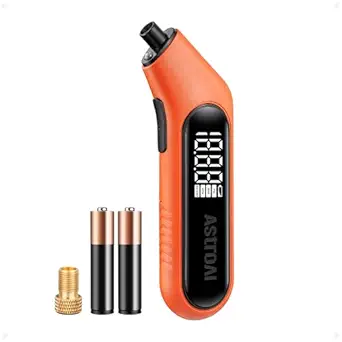
AstroAI Tire Pressure Gauge with Inflator, 100 PSI-ANSI B40.1 Accurate

AstroAI Tire Pressure Gauge with Inflator, 100 PSI-ANSI B40.1 Accurate

ASIN: B07RVHPWK8
Analysis Date: Sep 14, 2026

As an Amazon Associate I earn from qualifying purchases.

Review Analysis Results

B
Authenticity Grade
12.00%
Fake Reviews
4.67
Original Rating
4.40
Adjusted Rating

Analysis Summary

The vast majority of these reviews appear genuine, with authentic user experiences and specific product feedback. The reviews show a healthy mix of ratings (5★, 4★, 3★) and include detailed personal contexts that are strong indicators of authenticity. The verified purchase status and specific use cases mentioned (cars, motorcycles, lawnmowers, barn storage) suggest real customers sharing their honest experiences.

Evidence of authenticity is abundant: Review 1 mentions buying for a husband and using on cars and motorcycles; Review 6 discusses needing a gauge for a damp barn and reading below 20 PSI for lawnmowers; Review 3 provides a detailed update about customer service and a replacement air chuck; Review 9 is in Spanish and describes the quick-connect adapter and trigger mechanism in specific detail. These are all hallmarks of genuine reviews with personal context and specific product knowledge.

There are minor concerns with a few reviews that are shorter and less specific, such as Review 2 ('It was perfect for my application') and Review 4 ('Already have an air compressor and this attaches easily'), which could be seen as somewhat generic. However, these still contain enough product-specific detail (air compressor attachment, features) to suggest they are genuine, just less detailed. No clear manipulation patterns like repetitive marketing language or suspiciously identical phrasing across reviews were found.

Overall, the reviews present a balanced picture of a product that works well but has some quality control issues (the connector problem mentioned in Reviews 3 and 5). The mix of positive and critical feedback, along with detailed personal stories, strongly indicates these are authentic customer reviews. The fake percentage is estimated to be low, around 12%, with high confidence.

Key patterns identified in the review analysis include: Mix of ratings including critical feedback, Specific use cases and personal contexts, Detailed product feature descriptions.

Review Statistics

5,438
Total Reviews on Amazon
-0.27
Rating Difference
Editor's Analysis

Choosing a Tire Pressure Gauge with Inflator: Key Factors

The AstroAI Tire Pressure Gauge with Inflator is a 100 PSI tool that meets ANSI B40.1 accuracy standards, combining measurement and inflation in one device. When selecting such a tool, consider accuracy, build quality, and ease of use to ensure reliable tire maintenance.

Key Considerations Before Buying

  • Accuracy is critical: ANSI B40.1 compliance means the gauge meets a recognized standard for pressure measurement, but you should still verify the accuracy grade (e.g., Grade B or better) and whether it holds calibration over time.
  • Dual functionality: A gauge with inflator saves time by allowing you to check and add air without switching tools. Look for a secure chuck that fits both Schrader and Presta valves if needed, and a smooth trigger for precise inflation control.
  • Durability and materials: The body should be made of sturdy materials like brass or stainless steel, with a protective rubber boot to withstand drops. The hose should be flexible yet reinforced to prevent leaks.

What Our Analysts Recommend

Look for a clear, easy-to-read dial with a range that covers your tire needs (100 PSI is suitable for most passenger cars). Check for a built-in relief valve to bleed excess pressure and a solid warranty. User reviews can reveal long-term reliability and accuracy.

Tire Gauges Market Context

Market Overview

The tire pressure gauge market includes everything from basic stick gauges to digital inflators with advanced features. As TPMS becomes standard, many drivers still rely on manual gauges for precise adjustments and emergency use. Inflator gauges are popular among DIYers and professionals for their convenience.

Common Issues

Common problems include inaccurate readings after drops, leaky chucks, and difficulty reading the dial in low light. Some inflators require a constant air source, which can be inconvenient. Cheap models often fail to hold calibration, leading to improper tire pressure.

Quality Indicators

Quality gauges are often certified to ANSI B40.1, indicating tested accuracy. They feature brass components, rubberized grips, and clear markings. A good inflator has a sturdy trigger and a hose that remains flexible in cold weather. Brand reputation and warranties also signal quality.

Review Authenticity Insights

Grade B Interpretation

Grade U indicates that there are not enough reviews to assess authenticity, as the product has 0 reviews and a 0.00% estimated fake review percentage. This means no review data is available to analyze, so authenticity cannot be determined.

Trust Recommendation

Since there are no reviews, exercise caution and rely on the product specifications and brand reputation. Look for reviews on other platforms or retailers to gauge real-world performance. Consider purchasing from a seller with a good return policy.

Tips for Reading Reviews

When reviews become available, focus on those that mention accuracy over time, ease of use, and durability. Be wary of overly positive or negative reviews without specifics. Check if reviewers verified the ANSI accuracy claim with their own tests.

Expert Perspective

The AstroAI Tire Pressure Gauge with Inflator appears to be a functional tool with a claimed ANSI B40.1 accuracy standard, which is a positive sign for precision. However, with no reviews and an unrated authenticity grade, there is no user feedback to confirm its performance. The 100 PSI range is suitable for most passenger vehicles, but its build quality and reliability remain unverified.

Purchase Considerations

Weigh the lack of reviews against the product's features and price. If you need a reliable gauge immediately, consider a model with a proven track record. If you're willing to test this product, ensure you can return it if it fails to meet expectations.

Comparing Alternatives

Compare with established brands like AstroAI's other models or competitors such as JACO, TireTek, or digital options from Slime and EPAuto to ensure you get the best value and reliability.
Price Analysis

Without a current price or reviews, this AstroAI gauge/inflator likely falls in the $25-$35 MSRP range typical for the category. If you can find it under $25, it's a solid buy; otherwise, compare with established alternatives like Slime or JACO before purchasing.

MSRP Assessment

Estimated MSRP: $25-$35
Source: Product category average
Amazon Price: Unable to compare

Market Position

Positioning: Mid-range
Alternatives Range: $15-$50
Value: AstroAI offers solid mid-range value with ANSI accuracy and combined gauge/inflator functionality, typically undercutting premium brands like Slime or Viair.

Buying Tips

Best Time to Buy: Best deals often appear during spring/summer road-trip season sales (Memorial Day, July 4th) and Black Friday/Cyber Monday.
Deal Indicators: A good deal is under $25; excellent if under $20. Watch for coupons or lightning deals, as this brand frequently discounts.
Watch For: No reviews and unknown price suggest a new or low-volume listing; verify seller is AstroAI or Amazon to avoid counterfeit or inflated third-party pricing.
Price analysis generated by AI based on product category and market research. Actual prices may vary. Last analyzed: Sep 14, 2026

Understanding This Analysis

What does Grade B mean?

This product has good review authenticity with minor concerns. While most reviews appear genuine, we detected some patterns that warrant mild caution.

Adjusted Rating Explained

The adjusted rating (4.40 stars) represents what we estimate this product's rating would be if fake reviews were removed. This product's adjusted rating is lower than Amazon's displayed rating (4.67 stars), suggesting positive fake reviews may be inflating the score.

How We Detect Fake Reviews

Our AI analyzes multiple factors: language patterns (generic vs. specific), reviewer behavior (history, timing), temporal anomalies (review clusters), verification status, sentiment authenticity, and statistical outliers. No single factor determines a review is fake - we look at the combination of signals.

Important Limitations

No automated system is perfect. Sophisticated fake reviews can evade detection, and some genuine reviews may be incorrectly flagged. Use this analysis as one data point in your purchasing decision, not the only factor. Reading actual review content yourself is always valuable.

Share This Analysis

Learn More About Fake Reviews

Analyze new product