
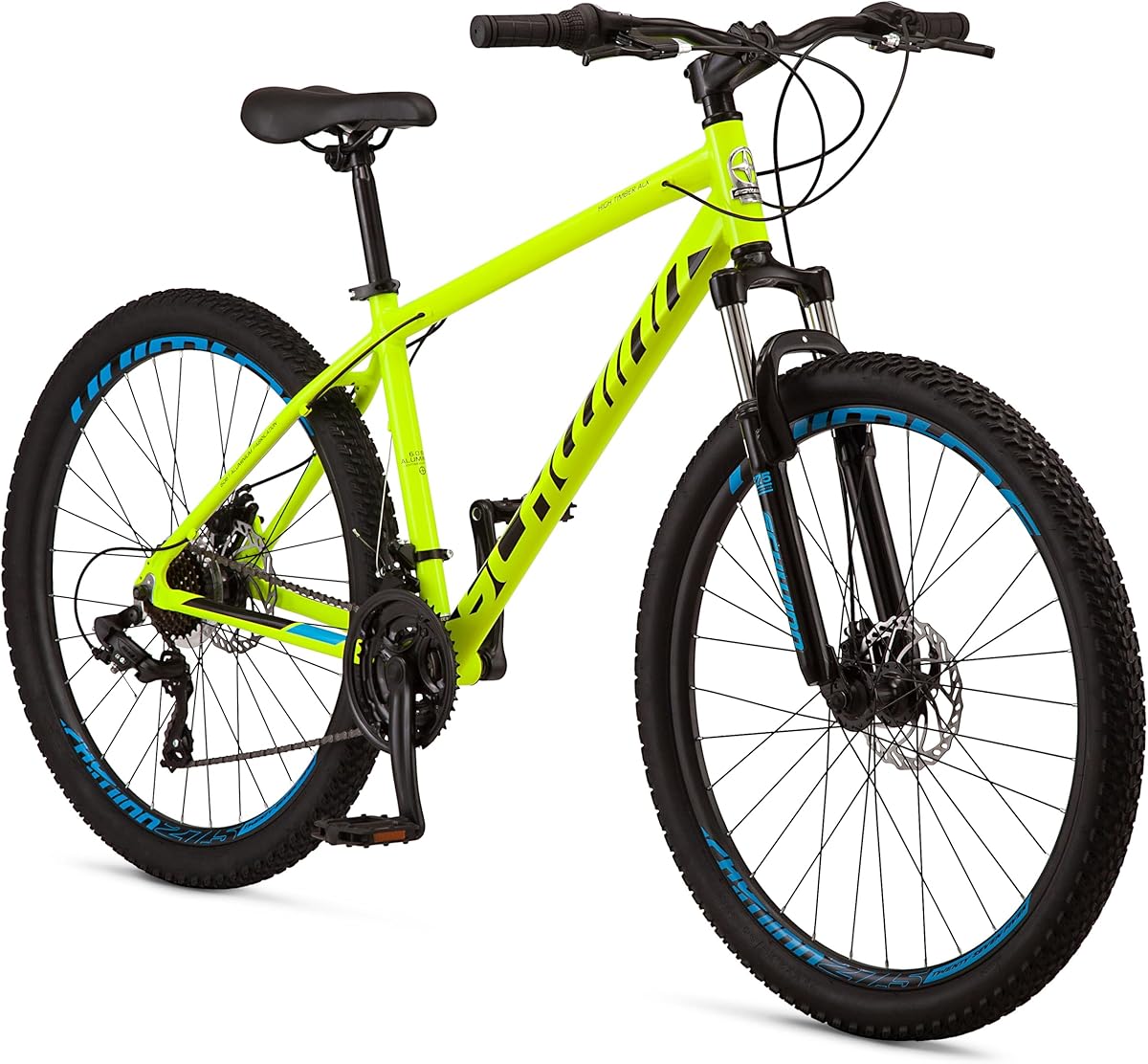
Choosing the Right Schwinn High Timber: Frame Material, Wheel Size, and Gearing Explained
The Schwinn High Timber's dual frame options—aluminum for lighter weight or steel for durability—create distinct riding experiences. With wheel sizes spanning 24 to 29 inches and gearing choices of 7 or 21 speeds, this bike serves a wide range of riders, from youth to adults, but requires careful sizing selection. The basic front suspension fork is designed for light trail use and smoother paths, not aggressive mountain biking.
Key Considerations Before Buying
- Frame choice is critical: the aluminum frame option significantly reduces weight for easier handling and transport, while the steel frame offers traditional durability and a slightly more compliant ride at the expense of added heft.
- Wheel size directly impacts fit and ride feel: 24-inch wheels are for younger riders, 26-inch suit smaller adults, and 27.5/29-inch options provide better roll-over for taller riders on varied terrain.
- The 7-speed vs. 21-speed decision hinges on your terrain; 7-speeds simplify maintenance for casual use, while 21-speeds offer finer gear increments for tackling hills, though they require more precise derailleur adjustment.
What Our Analysts Recommend
Inspect the welds on the frame for consistency, as this indicates manufacturing quality. Check that the suspension fork has a lockout feature for efficient pedaling on pavement, a valuable addition for mixed-use riders. Ensure the bike's stated size aligns with the rider's inseam, as the High Timber's geometry is more recreational than performance-oriented.
Mountain Bikes Market Context
Market Overview
The entry-level mountain bike market is crowded, with Schwinn competing against brands like Mongoose and GT on price and brand recognition. These bikes are increasingly designed as 'hybrid' trail bikes, suitable for light off-road use, paved paths, and neighborhood riding rather than technical singletrack.
Common Issues
At this price point, common compromises include basic mechanical disc or rim brakes that may require frequent adjustment, entry-level suspension forks with limited travel and damping, and assembly challenges that can affect gear indexing and brake alignment if not done meticulously.
Quality Indicators
Look for clear labeling of frame material (6061 aluminum vs. high-tensile steel), the presence of sealed bearing hubs for longevity, and a threadless headset for better steering stability. Component brands like Shimano or Microshift on the drivetrain suggest a baseline of reliable shifting performance.
Review Authenticity Insights
Grade B Interpretation
A 'Grade B' authenticity score with an 11% estimated fake review rate indicates a generally trustworthy review pool, but suggests a modest level of incentivized or biased feedback exists. The adjusted rating of 4.10/5, down from 4.33/5, is a more reliable indicator of genuine owner satisfaction.
Trust Recommendation
Focus on reviews that detail the assembly process, long-term durability over several months, and specific performance on hills or rough surfaces, as these are harder to fabricate. Be slightly more skeptical of overly effusive 5-star reviews that lack mechanical details or mention specific vendor names.
Tips for Reading Reviews
Prioritize reviews that discuss the real-world difference between the aluminum and steel frames, or that note how the bike handles after the first 100 miles—this speaks to component wear. Reviews mentioning 'tuning' or 'adjusting' the derailleurs post-assembly reflect authentic ownership experiences.
Expert Perspective
The Schwinn High Timber presents a classic value proposition: a recognizable brand name offering versatile sizing and configuration options at an accessible price. Its strength lies in its role as a dependable, multi-purpose bike for casual trail riders, commuters, and families, not as a high-performance mountain bike. The analysis data—a solid adjusted 4.10 rating from a largely authentic review pool—confirms it meets basic expectations for this segment, though reviews frequently cite assembly as a hurdle and component quality as adequate but not premium.
Purchase Considerations
Weigh the importance of lightweight maneuverability (aluminum frame) against the perceived ruggedness of steel, and consider if you'll benefit from the wider gear range of a 21-speed for hilly areas. Factor in the potential cost of a professional assembly or tune-up to ensure optimal performance and safety from the start.
Comparing Alternatives
Shoppers should compare the High Timber's specs and frame options directly against similar models like the Mongoose Ledge or the GT Aggressor, focusing on component groups and frame geometry for their intended use.


