
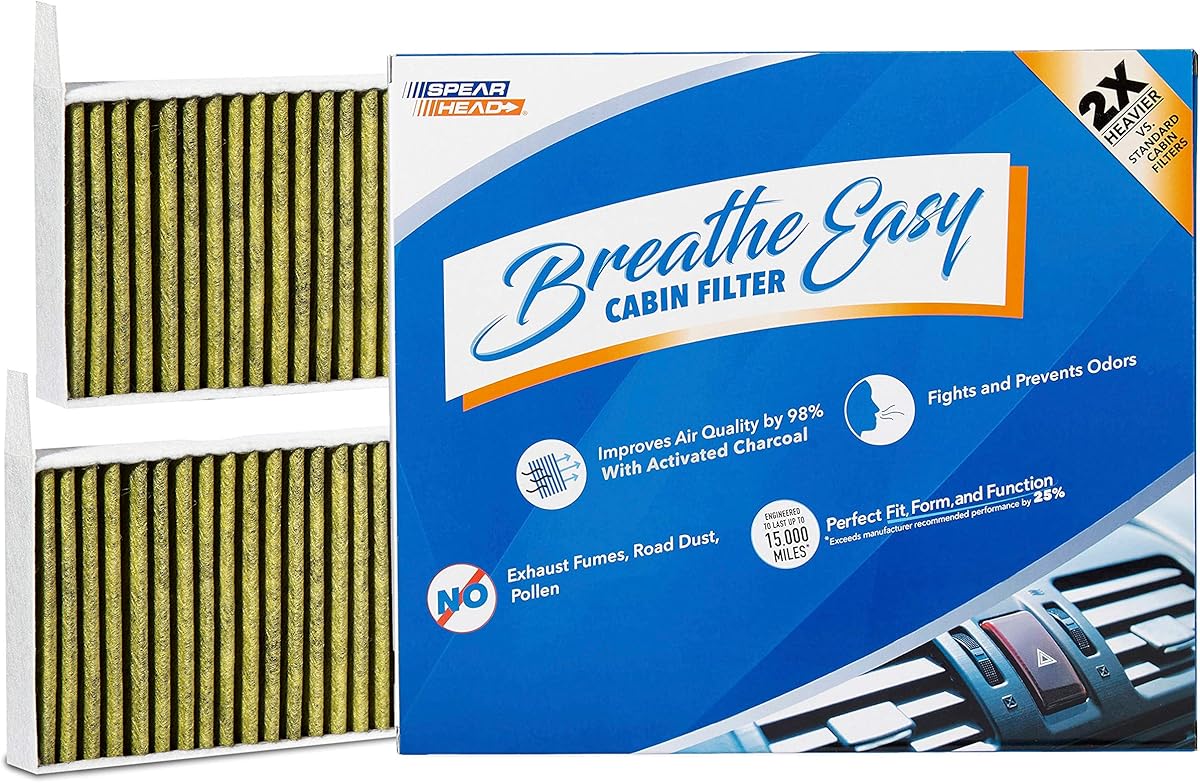
Choosing Tesla Cabin Filters: Why Activated Carbon and Fit Matter Most
For Tesla Model 3 and Y owners, cabin air filters aren't just about dust—they're critical for odor control and HVAC performance. The Spearhead BE-111 specifically addresses Tesla's notorious 'dirty sock syndrome' with activated carbon layers, while promising 25% longer service life than standard filters. Understanding filter construction and compatibility is essential for these vehicles.
Key Considerations Before Buying
- Activated carbon content directly impacts odor neutralization, especially important for Tesla's climate system which can develop musty smells.
- Exact fitment for your Model 3 (2017-2025) or Model Y (2020-2025) is crucial—even slight dimensional variances can cause installation issues or air bypass.
- The 2-pack offering reflects Tesla's recommended replacement interval and provides better value than single-filter purchases.
What Our Analysts Recommend
Quality Tesla cabin filters should have pleated media with consistent spacing and firm construction that won't collapse under airflow. The activated carbon should be evenly distributed throughout the filter media, not just sprayed on one surface. Check for precise OEM-style mounting tabs and seals that match your vehicle's housing.
Passenger Compartment Air Filters Market Context
Market Overview
The Tesla-specific cabin filter market has exploded as vehicles age beyond warranty, with aftermarket options ranging from basic particulate filters to premium multi-layer designs. Spearhead's 'Odor Defense' positioning targets a well-documented pain point among Tesla owners seeking alternatives to expensive service center replacements.
Common Issues
Many aftermarket filters fail to address Tesla's unique odor problems or have fitment issues with the tight glovebox-area installation. Some cheaper filters use minimal activated carbon that depletes quickly, while others may restrict airflow enough to trigger error codes.
Quality Indicators
Look for filters specifying both particulate efficiency (MERV ratings) and carbon weight per filter. Quality manufacturers provide detailed installation guides acknowledging Tesla's specific removal process, which requires glovebox removal on most Model 3/Y vehicles.
Review Authenticity Insights
Grade B Interpretation
A Grade B with 11% estimated fake reviews indicates generally trustworthy feedback, though some positive reviews may be incentivized. The adjusted 4.60 rating (from 4.89) suggests genuine satisfaction sits slightly below the surface rating but remains strong.
Trust Recommendation
Focus on reviews mentioning specific installation details—Tesla's filter replacement has particular steps that genuine owners would describe. Verified purchase reviews discussing odor reduction over weeks or months provide more reliable data than generic 'fits great' comments.
Tips for Reading Reviews
Prioritize reviews that compare airflow or odor performance to OEM filters, as these demonstrate actual usage. Be skeptical of reviews that don't mention the glovebox removal process—anyone who's actually installed a Tesla cabin filter will reference this challenging step.
Expert Perspective
The Spearhead BE-111 appears to be a well-targeted solution for Tesla owners, addressing both filtration and odor concerns with its activated carbon construction. The 4.60 adjusted rating from over 62,000 reviews suggests strong real-world performance, though the 11% fake review rate warrants careful review scrutiny. The product's specific fitment range and 2-pack configuration align well with Tesla maintenance patterns, where cabin filters typically need replacement every 1-2 years depending on climate.
Purchase Considerations
Consider whether your primary need is odor control (where activated carbon matters most) or basic particulate filtration. Tesla owners in humid climates or those who use cabin overheat protection frequently may benefit most from this filter's extended lifespan claims. Compare the per-filter cost against Tesla service center pricing, which often exceeds $100 for parts and labor.
Comparing Alternatives
Shoppers should compare carbon content and construction with competitors like MANN or Bosch's Tesla-specific filters, which may offer different performance trade-offs.

![[2-Pack] EPAuto CP182 (CF11182) Cabin Air Filter Replacement for Honda Accord, Civic, CR-V, Fit, HR-V, Insight, Odyssey, Pilot, CR-Z, Clarity;Acura Integra,MDX,RDX,TLX - Fits Select Models 2009-2025](https://m.media-amazon.com/images/I/91tgohNmNiL._AC_SY300_SX300_QL70_FMwebp_.jpg)


