
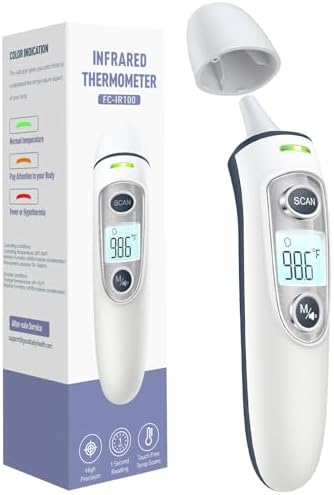
Choosing a Reliable Ear & Forehead Thermometer: Speed, Accuracy, and Hygiene
For parents and caregivers, a thermometer is a first line of defense. This model's dual ear and forehead modes offer flexibility, but its 1-second reading and 35-memory recall are standout features for tracking fevers over time. Understanding how these features work in practice is key to making a smart purchase.
Key Considerations Before Buying
- Ear vs. forehead mode: Ear readings are more accurate for core temperature but require correct probe placement and a clean lens. Forehead mode is non-invasive and great for sleeping children, but can be affected by ambient temperature and sweat.
- The 3-color backlight LCD and fever alarm are not just conveniences—they provide instant visual and audible cues, which is crucial when you're tired or stressed at 2 AM. Ensure the color thresholds match your expectations for fever levels.
- Mute mode is a lifesaver for checking a fever without waking a sick child, but verify that the mute setting is easy to toggle and doesn't reset between uses. Also, 35 memory recalls are useful for tracking temperature trends, but ensure the recall function is straightforward to navigate.
What Our Analysts Recommend
Look for a thermometer with a clinically validated accuracy range (typically ±0.2°F for ear mode) and a probe cover system to prevent cross-contamination. The device should have a clear, easy-to-read display and intuitive controls, as fumbling with settings during a fever is the last thing you need.
Ear Market Context
Market Overview
The thermometer market is saturated with options, from basic stick thermometers to advanced infrared devices. This dual-mode ear/forehead model sits in a popular middle ground, offering speed and convenience without the high cost of professional-grade devices.
Common Issues
Common complaints across this category include inconsistent readings between modes, calibration drift over time, and fragile probe tips. Many users also find that ear thermometers can be tricky to use on wiggly toddlers, leading to inaccurate results.
Quality Indicators
High-quality thermometers typically have a strong build, a clear warranty, and are backed by clinical validation. Look for devices that specify their accuracy range and have a low rate of 'error' or 'inconsistent reading' reviews. The presence of a fever alarm and memory recall is also a sign of a more thoughtful design.
Review Authenticity Insights
Grade B Interpretation
The Grade B rating and 10% estimated fake review rate suggest that while most reviews are genuine, a significant minority may be incentivized or untrustworthy. This is common for popular, lower-cost health products, so it's wise to read reviews critically.
Trust Recommendation
Given the 4.22 average rating and the large review count, you can trust the overall sentiment, but pay more attention to detailed, balanced reviews. Look for reviewers who mention specific use cases (like a toddler's ear infection) and who note both pros and cons, as these are more likely authentic.
Tips for Reading Reviews
When reading reviews for thermometers, focus on comments about consistency between readings and ease of use on different age groups. Be wary of overly short, overly positive reviews that lack specific details, and check if a reviewer has posted similar reviews for many other products.
Expert Perspective
This thermometer offers a compelling blend of speed, dual-mode flexibility, and thoughtful features like the fever alarm and memory recall. The 1-second reading is a genuine advantage for restless children, and the 3-color backlight improves usability in the dark. However, the 4.00 adjusted rating suggests some user experiences may be less stellar than the headline number implies, so temper expectations.
Purchase Considerations
Consider how you'll primarily use it: for a newborn, a rectal thermometer remains the gold standard for accuracy; for older kids and adults, this ear/forehead model is a practical daily option. Also, think about the cost of probe covers if you plan to use ear mode frequently, as they are an ongoing expense.
Comparing Alternatives
Shoppers should compare this model with dedicated ear thermometers from brands like Braun, which have a long track record in clinical settings, and with simple forehead-only thermometers that may be cheaper and simpler to use.


