
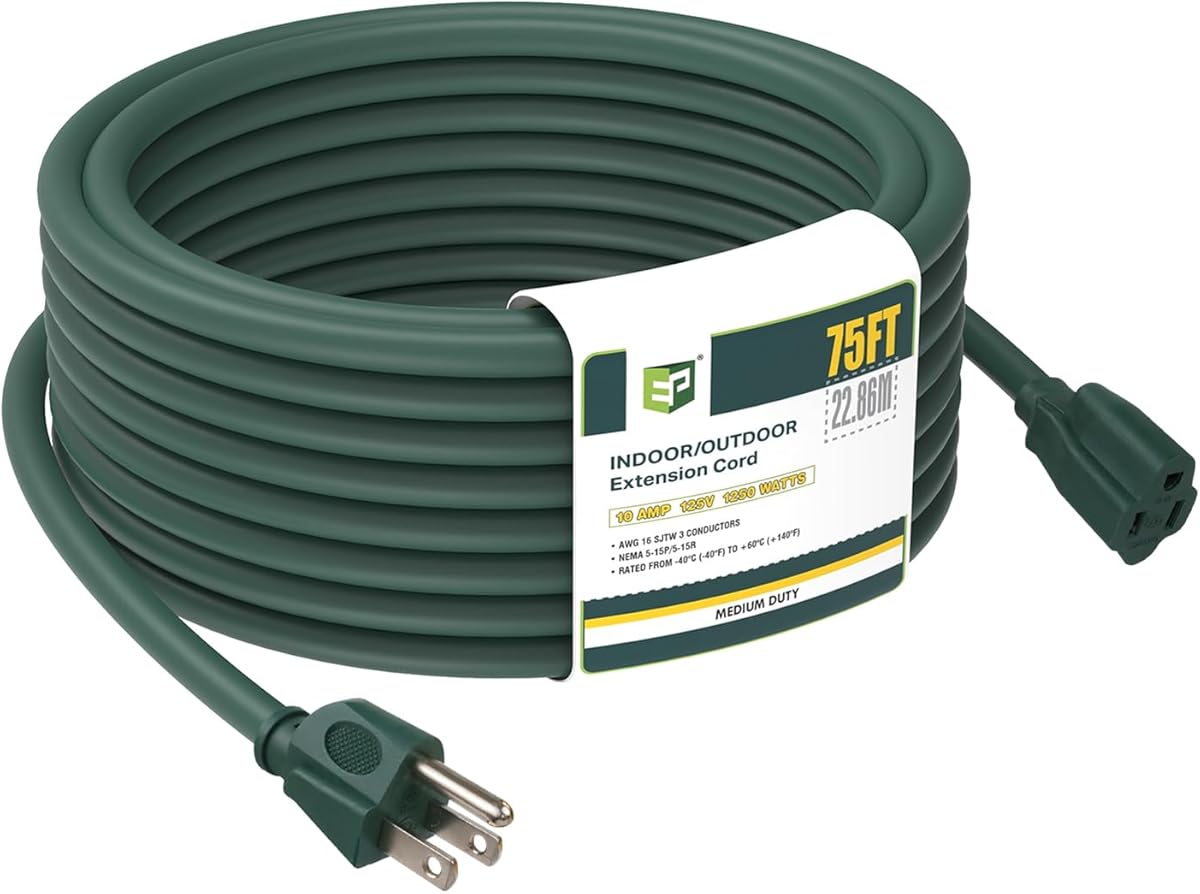
Choosing a 75-foot outdoor extension cord: What heavy-duty users need to know
When selecting a 75-foot outdoor extension cord like the EP model with SJTW rating, buyers must understand how wire gauge (16AWG), length, and amperage (13A) interact. This specific cord's cold-resistant flexibility and waterproof construction make it suitable for year-round outdoor use, but its 1625W capacity requires careful load management over its full 75-foot length.
Key Considerations Before Buying
- The 16AWG wire gauge at 75 feet creates significant voltage drop—expect approximately 6-8% drop at full 13A load, which matters for power tools or high-wattage equipment.
- SJTW rating indicates hard service, water-resistant, and weather-resistant construction suitable for outdoor use, but doesn't guarantee submersible capability.
- Cold-resistant flexibility (-31°F/-35°C rating) is crucial for winter applications like Christmas lights, but the cord remains stiffer in freezing temperatures than shorter indoor cords.
What Our Analysts Recommend
Examine the plug and connector molding quality—proper strain relief where the cord enters the housing prevents internal wire damage. For outdoor cords, check that the green color provides adequate visibility against grass and landscaping, though some users report it blends too well. The 16/3 configuration (three 16-gauge conductors plus ground) should feel substantial, not thin or easily kinked.
Extension Cords Market Context
Market Overview
The 75-foot outdoor extension cord market is dominated by 14AWG and 16AWG options, with 16AWG like this EP model offering a balance between flexibility and capacity at a lower price point. Recent trends show increased demand for cold-resistant jackets as consumers use cords year-round for seasonal lighting and winter equipment.
Common Issues
Long outdoor cords frequently suffer from plug/connector failures due to improper strain relief, and voltage drop complaints when users exceed the cord's 13A capacity over 75 feet. Green-colored cords often receive mixed feedback about visibility versus aesthetic blending with outdoor environments.
Quality Indicators
Quality outdoor cords feature molded plugs with visible UL/ETL certification marks, thick jacket material that resists abrasion, and clearly marked gauge and length information. The SJTW rating should be embossed along the cord's length, not just printed, indicating proper certification.
Review Authenticity Insights
Grade B Interpretation
A Grade B authenticity rating with 15% estimated fake reviews suggests generally trustworthy feedback, though approximately 1 in 7 reviews may be artificially positive. The drop from 4.89 to 4.50 adjusted rating indicates some review inflation, but not systematic manipulation.
Trust Recommendation
Focus on verified purchase reviews that mention specific use cases like Christmas light installation, garden tool operation, or winter conditions—these contain more actionable insights than generic praise. The high number of reviews (2237) provides sufficient authentic feedback to identify genuine patterns.
Tips for Reading Reviews
Prioritize reviews discussing actual load testing (how many lights or tools connected), flexibility in cold weather, and durability over multiple seasons. Be skeptical of reviews that only mention packaging or delivery speed without addressing the cord's performance characteristics.
Expert Perspective
This EP cord represents a solid mid-range option for consumers needing 75 feet of outdoor power with cold-resistant properties. The 16AWG gauge is appropriate for light to moderate loads (under 10A continuous) over this distance, though users running high-draw equipment should consider 14AWG or 12AWG alternatives. The SJTW rating and grounded design provide necessary safety features for outdoor applications, while the 4.50 adjusted rating reflects genuinely positive user experiences with minor concerns about visibility and cold-weather flexibility.
Purchase Considerations
Buyers should assess whether they truly need 75 feet—excess cord creates storage challenges and increased voltage drop. Consider if the green color works for your environment, or if orange or yellow would provide better visibility and safety. The 13A/1625W rating is adequate for most residential applications but approaches limits with multiple high-draw tools.
Comparing Alternatives
Shoppers should compare this 16AWG option against 14AWG cords for similar length, which offer lower voltage drop but less flexibility and higher cost.


