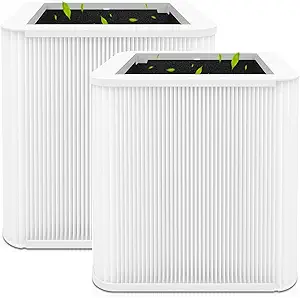
Choosing Aftermarket MA Series 40 Filters: Balancing Performance, Cost, and Compatibility
When selecting replacement filters for your MA Series 40 air purifier, you're navigating the crucial balance between OEM quality and aftermarket affordability. This specific 2-pack of 3-in-1 filters with activated carbon represents a popular third-party option that claims full compatibility while offering multi-stage filtration. Buyers should understand that filter performance hinges on precise dimensional fit and material density, not just advertised compatibility.
Key Considerations Before Buying
- Verify the 3-in-1 construction includes a true HEPA-equivalent layer, not just a 'HEPA-type' fiber, as this determines particle capture efficiency for allergens and dust.
- Assess the activated carbon content's weight and granularity; thicker carbon beds with smaller granules provide better VOC and odor adsorption than thin layers.
- Confirm the filter's exact depth matches your MA Series 40 unit; even slight dimensional variances can cause air bypass, reducing purification effectiveness.
What Our Analysts Recommend
Quality aftermarket filters demonstrate precise pleat spacing in the HEPA layer—consistent, uniform folds indicate proper manufacturing. The carbon layer should be visibly substantial and evenly distributed, not clumped or sparse. Check customer photos for comparisons with OEM filters, particularly noting gasket integrity around the edges, which prevents unfiltered air leakage.
Air Purifier Filters Market Context
Market Overview
The aftermarket air purifier filter segment has expanded significantly as consumers seek cost-effective alternatives to OEM replacements, particularly for popular models like the MA Series. Third-party manufacturers compete primarily on price while emphasizing equivalent filtration specs, creating a market where performance consistency varies between brands. This specific 2-pack offering targets recurring maintenance costs, appealing to households running purifiers continuously.
Common Issues
The most frequent complaints in this category involve fit discrepancies—filters that are slightly too thick, tall, or loose, causing operational errors or reduced airflow. Some aftermarket filters use lower-density carbon or fewer pleats in the mechanical layer, shortening effective lifespan despite matching advertised replacement intervals. Inconsistent manufacturing batches can also lead to performance variation between purchases.
Quality Indicators
Superior filters maintain tight pleat counts (typically 70-90 for this size) and use borosilicate microglass media rather than polyester blends. Quality carbon stages incorporate both granular and pelletized carbon for broad-spectrum gas adsorption. Reputable suppliers provide detailed micron ratings (e.g., 0.3 micron capture rate) rather than vague 'high-efficiency' claims.
Review Authenticity Insights
Grade B Interpretation
A Grade B authenticity rating with 11% estimated fake reviews indicates predominantly genuine feedback with moderate manipulation concerns. For this filter, it suggests most experiences are authentic, but some reviews may exaggerate performance or obscure compatibility issues. The 4.60 adjusted rating (down from 4.89) reflects this cleaned assessment, still indicating strong customer satisfaction.
Trust Recommendation
Prioritize reviews discussing specific performance metrics—like odor reduction timelines or filter fit precision—over generic praise. Verified purchase reviews with uploaded photos showing installed filters or side-by-side OEM comparisons offer the highest credibility. Be cautious of reviews that don't mention runtime duration before replacement.
Tips for Reading Reviews
Focus on reviews mentioning long-term use (3+ months) to assess actual lifespan versus claims. Look for discussions of airflow resistance changes over time, which indicates filter media quality. Pay particular attention to any mentions of MA Series 40 error codes post-installation, as this reveals true compatibility.
Expert Perspective
The strong adjusted rating of 4.60/5 from verified purchasers suggests this aftermarket filter generally delivers on its compatibility promise for MA Series 40 units while providing meaningful cost savings. The high satisfaction rate indicates successful balancing of filtration performance and affordability, though the authenticity grade reminds us to weigh feedback carefully. The 3-in-1 design with activated carbon addresses core user needs for particulate, odor, and VOC removal in a single replacement cycle.
Purchase Considerations
Weigh the approximately 50% cost savings against OEM filters against potential variations in carbon capacity and exact fit. Consider your usage environment—heavy odor or VOC situations may benefit from OEM carbon density, while general allergen reduction may work well with this alternative. The 2-pack format makes economic sense for regular maintainers but requires storage consideration to preserve filter integrity.
Comparing Alternatives
Shoppers should compare this filter's pleat count, carbon weight specifications, and warranty terms against other MA Series 40 compatible options and genuine OEM replacements.