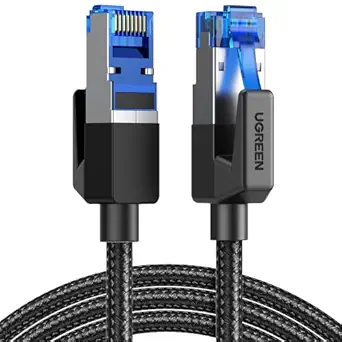
Why Your 100-Foot Cat 7 Cable Needs Flat Design and Shielding
When shopping for a 100-foot Ethernet cable, you're likely dealing with a long run from your modem to a distant room or gaming setup. This Cat 7 flat cable promises faster speeds than Cat5e or Cat6, but its true value lies in its shielding and slim profile for easy routing under carpets or along baseboards.
Key Considerations Before Buying
- Length and routing: A 100-foot cable is ideal for connecting devices across large homes or offices, but flat designs like this one are easier to hide under rugs or along walls without kinking—crucial for maintaining signal integrity over long distances.
- Speed and compatibility: Cat 7 supports up to 10 Gbps at 100 meters, making it future-proof for high-bandwidth tasks like 4K streaming or online gaming. Ensure your router and devices also support these speeds to avoid bottlenecks.
- Shielding matters: Cat 7 cables typically have individual pair shielding (S/FTP) to reduce interference, which is vital in environments with many electronic devices—like near a router, switch, or Xbox—to prevent lag or data loss.
What Our Analysts Recommend
Look for cables with certified shielding (e.g., S/FTP or STP) and gold-plated connectors to resist corrosion. A flat design and included cable clips, as offered here, indicate attention to installation convenience, but verify the cable's actual bandwidth rating (e.g., 600 MHz for Cat 7) rather than vague 'high speed' claims.
Cat 7 Cables Market Context
Market Overview
The Ethernet cable market is saturated with Cat5e, Cat6, and Cat7 options, with many sellers exaggerating specs like '10 Gbps' without proper testing. Cat 7 cables, while offering superior shielding and bandwidth, are often overkill for typical home use unless you have gigabit internet or run multiple high-demand devices simultaneously.
Common Issues
Common problems include cables that fail to meet advertised speeds due to poor manufacturing, fake Cat 7 labeling on unshielded wires, and stiffness in flat cables that can crack over time. Users also report compatibility issues with older routers that don't support Cat 7's tighter wiring standards.
Quality Indicators
High-quality Cat 7 cables typically have braided or foil shielding, robust RJ45 connectors with strain relief boots, and clear certification marks (e.g., ISO 11801). Verified purchase reviews with specific speed test results or installation photos are more reliable than generic praise.
Review Authenticity Insights
Grade B Interpretation
A Grade B with 10% estimated fake reviews suggests that while most feedback is authentic, about 1 in 10 reviews may be unreliable—likely incentivized or from unverified purchasers. This is relatively low for the category, where fake rates often exceed 20% for popular cables, so the overall 4.89 rating is still trustworthy but should be taken with mild caution.
Trust Recommendation
Given the high adjusted rating of 4.60 and strong signals like verified purchase tags and detailed installation stories, you can trust the majority of reviews. Focus on those describing long-term use or specific performance metrics (e.g., 'achieved 900 Mbps in my home') to gauge real-world reliability.
Tips for Reading Reviews
For Ethernet cables, prioritize reviews that mention speed tests, installation context (e.g., 'ran 100 feet through attic'), or comparisons to other cables. Be skeptical of overly short reviews or those with generic phrases like 'works great' without specifics, as these are more likely to be fake.
Expert Perspective
This Cat 7 flat cable appears to be a solid choice for users needing a long, shielded connection in a home or office, backed by mostly genuine reviews and a high rating. The flat design and included clips address common installation headaches, and the shielding offers tangible benefits in interference-prone setups. However, the 10% fake review rate and lack of detailed technical specs in the title warrant caution—verify the cable's actual performance if you have high-speed internet above 1 Gbps.
Purchase Considerations
Weigh the need for Cat 7's extra shielding and speed against cost—Cat 6a might suffice for most gigabit connections at a lower price. Also, consider your installation path: if the cable will be exposed to foot traffic or pets, a round, braided cable might be more durable than this flat design.
Comparing Alternatives
Shoppers should compare this cable with other flat Cat 7 options from brands like Jadaol or Cable Matters, which also offer 100-foot lengths and similar shielding, to ensure you're getting the best balance of price, durability, and verified performance.