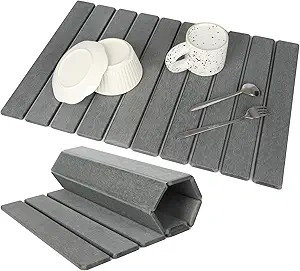
Choosing the Right Silicone Drip Mat: Thickness, Size, and Material Safety Matter
When selecting a silicone drip mat like this 1/2-inch thick, 18x12-inch model, buyers should prioritize three factors: adequate thickness for liquid containment, proper sizing for their counter space, and certified food-safe materials. This specific product's half-inch thickness represents a premium option compared to thinner mats that may allow drips to pool underneath.
Key Considerations Before Buying
- The 1/2-inch thickness provides superior liquid containment for wet glasses and dishes, preventing water from reaching your counter surface—a key advantage over standard 1/4-inch mats.
- At 18x12 inches, this mat accommodates multiple glasses or small plates simultaneously, making it suitable for coffee bars or as a dedicated drying station beside sinks.
- Food-safe silicone certification is crucial since cheaper mats may contain fillers that can leach chemicals when in contact with wet dishes or heat.
What Our Analysts Recommend
High-quality silicone mats should be uniformly thick without thin spots, have a slightly textured surface to prevent sliding, and maintain their shape without curling at the edges. The material should feel substantial but flexible, not stiff or rubbery, indicating proper silicone composition.
Dish Drying Mats Market Context
Market Overview
The silicone drying mat market has expanded significantly, with products ranging from thin, decorative mats to commercial-grade options like this 1/2-inch model. Premium mats now compete with traditional dish racks by offering space-saving designs and improved hygiene through faster drying.
Common Issues
Thinner silicone mats (under 1/4 inch) often fail to contain water adequately, allowing drips to seep onto countertops. Some lower-quality mats develop permanent creases or discolorations, while others may have chemical odors indicating improper curing of the silicone material.
Quality Indicators
Premium silicone mats feature consistent thickness measurements, certified food-grade materials (often FDA-compliant), and heat resistance up to at least 450°F. The edges should be smoothly finished without sharp seams that could trap moisture or debris.
Review Authenticity Insights
Grade B Interpretation
A Grade B authenticity rating with 11% estimated fake reviews suggests mostly genuine feedback with some potentially inflated reviews. The adjusted 4.70/5 rating (from the original 5.00) indicates strong but not perfect customer satisfaction.
Trust Recommendation
Focus on reviews that mention specific use cases like coffee bar setup, wine glass drying, or commercial kitchen applications. Verified purchase reviews (all 942 in this case) carry more weight, particularly those discussing long-term performance beyond initial impressions.
Tips for Reading Reviews
Look for reviews that mention the mat's performance after months of use, its reaction to heat exposure, and how it handles heavy glassware. Be skeptical of reviews that only praise packaging or use generic language without detailing actual usage scenarios.
Expert Perspective
This 1/2-inch silicone mat represents a premium option in the drying mat category, with its substantial thickness addressing the primary complaint about thinner mats: inadequate liquid containment. The 4.70 adjusted rating from nearly 1,000 verified purchases indicates consistently positive experiences, particularly for users needing reliable water protection for countertops. The product's dimensions make it versatile for both home kitchens and commercial setups like coffee bars where glassware drying is frequent.
Purchase Considerations
Consider whether your primary need is protecting delicate counter surfaces from water rings (where thickness matters most) or simply having a hygienic drying surface. The 18x12 size works well for standard kitchen configurations but may be insufficient for large-scale dish drying. Evaluate if you need the heat resistance for placing hot pans or if you'll use it exclusively for room-temperature items.
Comparing Alternatives
Shoppers should compare this mat's thickness and dimensions against thinner, potentially less expensive options, as well as consider silicone mats with drainage channels or raised edges for specific applications.