
Choosing a Glass Electric Kettle: What Matters Beyond Basic Boiling
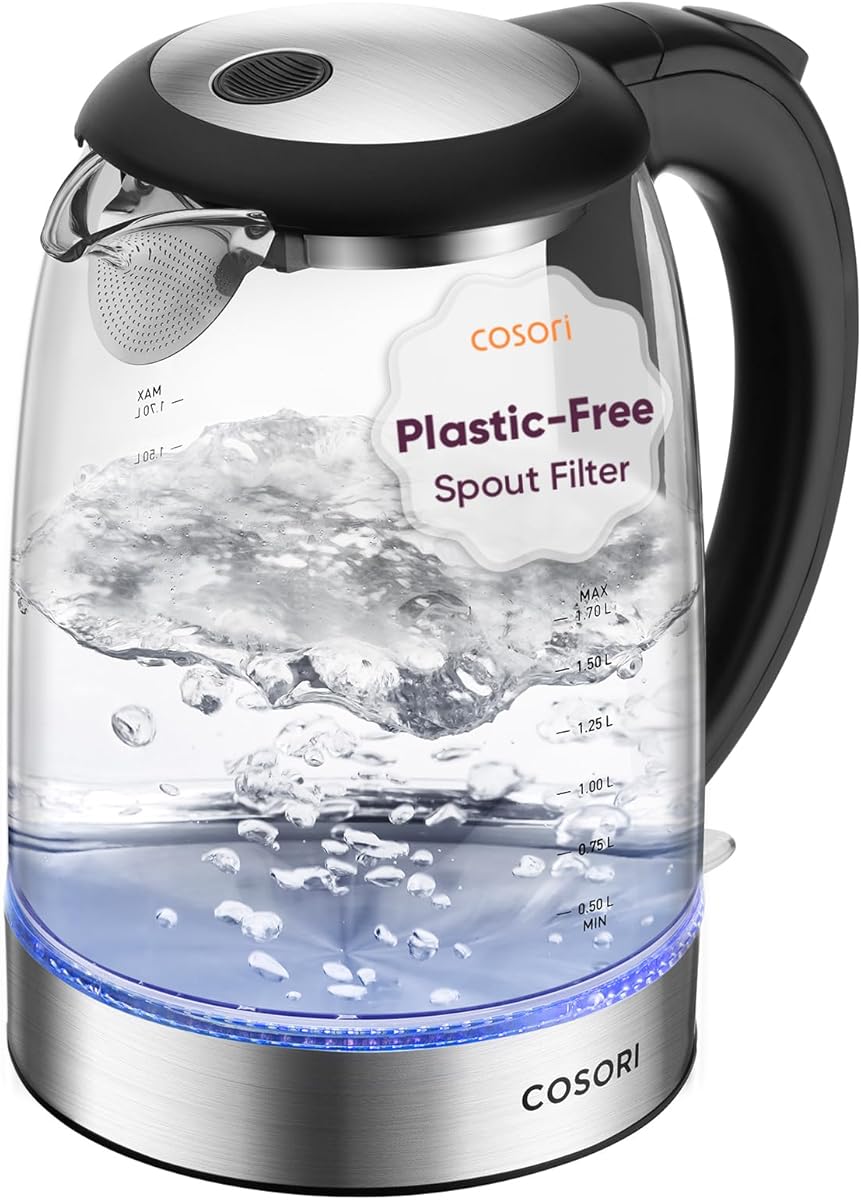
When selecting a glass electric kettle like the Cosori model, the primary considerations extend beyond simple water heating. This specific kettle features borosilicate glass construction with no plastic water contact—a critical distinction from many competitors that use plastic components or stainless steel with plastic interiors. The wide mouth design and 1500W heating element create unique performance characteristics that affect daily use.
Key Considerations Before Buying
- Borosilicate glass kettles like this Cosori model resist thermal shock better than regular glass, but require careful handling compared to stainless steel alternatives.
- The 'no plastic contact' claim addresses mineral taste concerns, but glass construction means you'll see scale buildup more visibly than in opaque kettles.
- A 1500W element heats 1.7L quickly, but higher wattage in residential settings may trip older circuits when used simultaneously with other appliances.
What Our Analysts Recommend
For glass kettles specifically, examine the base-plate connection quality—poor contacts cause intermittent heating. The lid hinge mechanism on wide-mouth designs should operate smoothly without plastic fatigue. Genuine borosilicate glass will have superior clarity and feel substantial, not thin and brittle.
Electric Kettles Market Context
Market Overview
The electric kettle market has bifurcated into budget plastic models and premium glass/stainless options, with glass kettles like this Cosori occupying a middle ground emphasizing aesthetic appeal and perceived purity. Current trends favor transparent designs and plastic-free claims, though these often come with durability trade-offs.
Common Issues
Glass kettles frequently develop hairline cracks near heating elements due to thermal stress, while auto-shutoff mechanisms can fail if mineral deposits interfere with sensors. Wide mouth designs sometimes compromise steam sealing, reducing heating efficiency over time.
Quality Indicators
Superior glass kettles feature seamless glass-to-metal bonding at the base, not glued connections. Look for boil-dry protection that works independently of the auto-shutoff, and heating elements that don't create visible hot spots on the glass surface.
Review Authenticity Insights
Grade B Interpretation
A Grade B authenticity rating with 15% estimated fake reviews suggests generally reliable feedback, but approximately 1 in 7 reviews may be artificially positive. For this Cosori kettle, the gap between the raw 4.6 and adjusted 4.3 rating indicates some review manipulation affecting the overall score.
Trust Recommendation
Focus on verified purchase reviews discussing specific use cases like daily tea brewing or pour-over coffee preparation. Be skeptical of reviews emphasizing only aesthetic features without mentioning heating performance or durability over months of use.
Tips for Reading Reviews
Look for reviews mentioning the kettle's performance after 6+ months of descaling, as glass shows mineral buildup immediately. Pay attention to comments about the base's stability and cord length—practical details often missing in inauthentic reviews.
Expert Perspective
The Cosori glass kettle presents a compelling option for consumers prioritizing plastic-free water contact and visual appeal, though the 4.3 adjusted rating suggests more nuanced performance than the raw 4.6 indicates. The borosilicate construction addresses taste concerns common in plastic kettles, while the wide mouth genuinely simplifies cleaning—a frequent pain point with narrow-neck designs. However, glass inherently carries more fragility risk than stainless steel alternatives, and the visible scale buildup requires more frequent descaling maintenance.
Purchase Considerations
This kettle makes most sense for households that value aesthetic presentation and don't mind the maintenance trade-offs of glass. The 1.7L capacity suits small to medium families, but heavy users might prefer stainless steel's durability. Consider your water hardness—soft water areas will minimize the visual scale issue that's pronounced with glass construction.
Comparing Alternatives
Compare with stainless steel kettles offering similar plastic-free claims, and evaluate whether the visual appeal justifies the fragility trade-off.


