
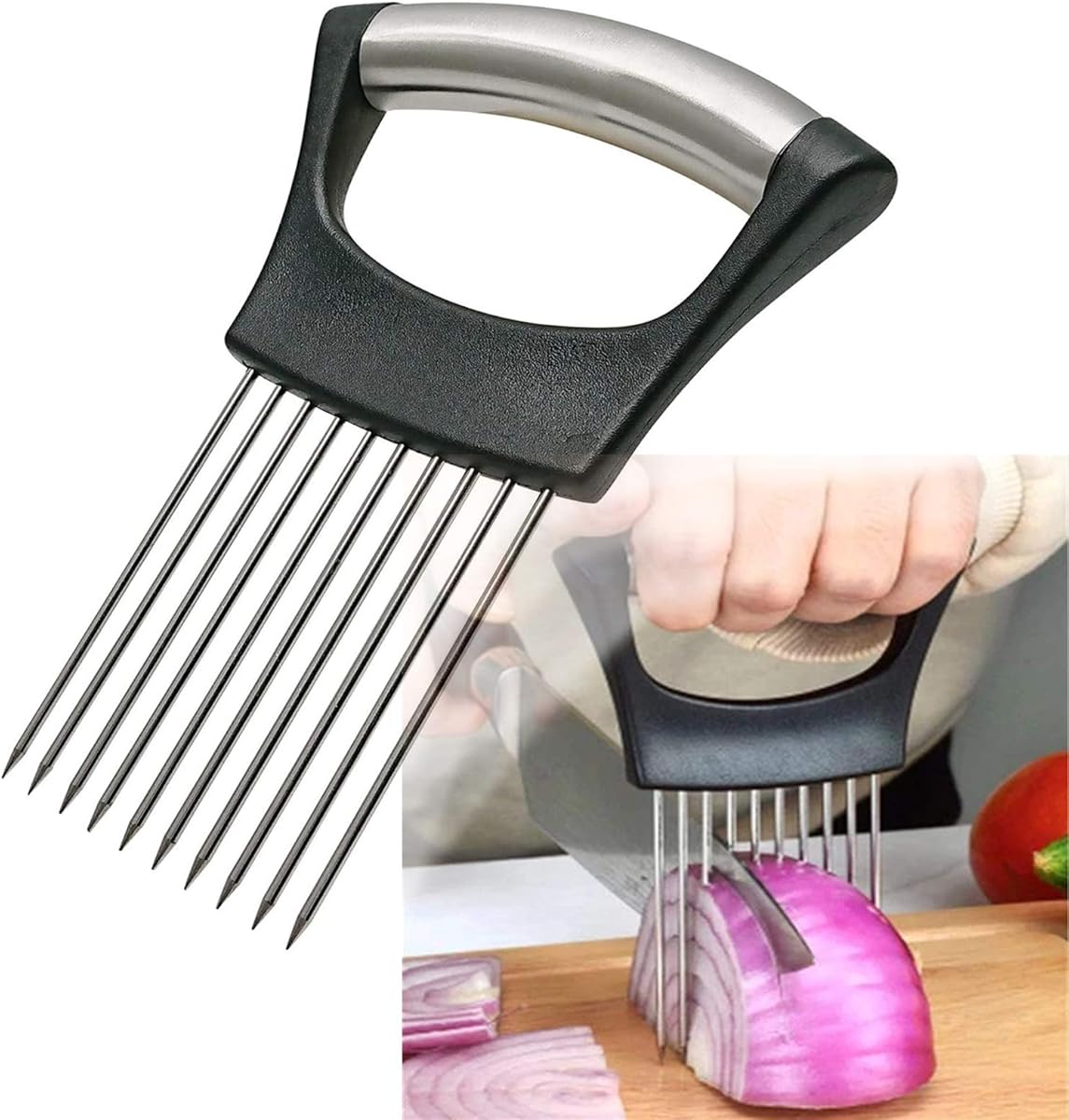
Choosing a Multi-Vegetable Holder: Stability, Blade Compatibility, and Material Matter
This stainless steel onion holder represents a specialized kitchen tool designed to stabilize round produce during slicing, particularly for users who struggle with manual knife skills or want uniform cuts. Unlike generic slicers, this product's value lies in its ability to work with your existing knives while securing slippery items like tomatoes and avocados. Buyers should understand this is an accessory, not a complete cutting system.
Key Considerations Before Buying
- Knife compatibility is crucial—this holder requires you to supply your own chef's knife or serrated blade, so ensure your preferred knife fits the designated slots without excessive wobble.
- Evaluate the grip mechanism; effective holders use downward-facing prongs or a cage design that pierces the vegetable's top to prevent rotation during the final, most dangerous cuts.
- Consider the size range of produce you typically cut; while marketed for onions and tomatoes, its effectiveness on smaller items like shallots or larger items like beefsteak tomatoes varies by model.
What Our Analysts Recommend
High-quality holders feature substantial, non-flexing stainless steel construction, particularly in the prongs and base. Look for models with a weighted or non-slip base to prevent tipping when pressure is applied. The blade guides should be precisely formed to minimize lateral knife movement, which is a primary cause of uneven slices and user injury.
Kitchen Utensils & Gadgets Market Context
Market Overview
The market for specialized cutting aids has expanded beyond mandolines, with holders like this targeting home cooks seeking safer alternatives to hand-holding round vegetables. These products sit between basic plastic guides and expensive electric food processors, appealing to those wanting more control than a mandoline offers without the full cleanup.
Common Issues
Common failures include flimsy prongs that bend under pressure, shallow blade guides that allow knives to jump tracks, and lightweight bases that tip with taller vegetables. Many users report frustration with models that don't accommodate a wide enough diameter range, making them single-purpose tools.
Quality Indicators
Superior products use 300-series stainless steel (not merely stainless-coated) for all load-bearing parts and have a base with a rubberized perimeter or substantial heft. Quality is also evident in smooth, burr-free edges on all metal components and blade slots that are consistently machined rather than stamped.
Review Authenticity Insights
Grade B Interpretation
A 'B' grade with an estimated 15% fake review rate suggests the majority of feedback is trustworthy, but shoppers should be moderately vigilant. This level is common for popular kitchen gadgets where some incentivized reviews may exaggerate ease of use or durability.
Trust Recommendation
Focus on reviews that mention specific use over time, like 'after six months of weekly use' or that detail a minor flaw alongside praise. For this product, prioritize reviews discussing blade compatibility issues or cleaning difficulties, as these are authentic pain points often omitted in promotional content.
Tips for Reading Reviews
Look for reviews with photos of the holder in use with different vegetables, as these demonstrate real-world application. Be skeptical of reviews that only praise the concept without describing the actual slicing process or that claim it works perfectly with 'any knife'—this is rarely true.
Expert Perspective
With an adjusted rating of 4.30/5 from a substantial review pool (4,730), this product performs well within its niche. The high rating, even after adjusting for potentially inauthentic reviews, indicates genuine user satisfaction, particularly regarding safety and slice uniformity. The drop from 4.67 to 4.30 suggests the raw average was slightly inflated, but the core positive reception remains strong. Its multi-vegetable claim appears validated by user experiences beyond just onions.
Purchase Considerations
This tool is most valuable for individuals with arthritis, less confident knife skills, or a need for consistently thick or thin slices across many tomatoes or onions. It offers less value for advanced cooks comfortable with knife technique or those needing rapid, high-volume processing, where a mandoline might be more efficient.
Comparing Alternatives
Shoppers should compare the prong design and base dimensions with similar holders, as a few millimeters can significantly affect stability with different produce sizes.


