Balancing 1080p Gaming Performance with MSI's Ventus 2X Cooling Solution
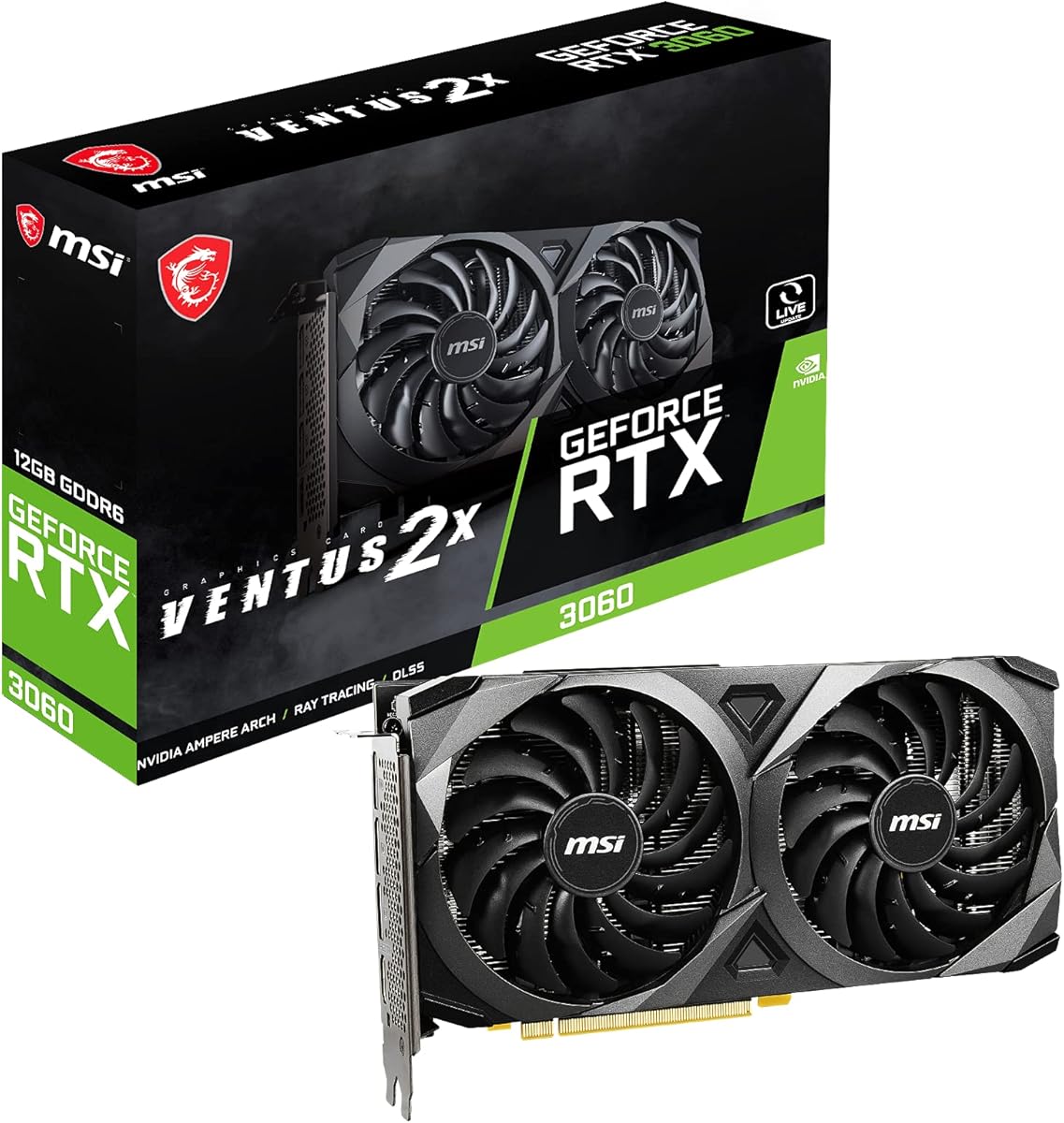
The MSI Ventus 2X 12G represents a specific implementation of NVIDIA's RTX 3060 chipset, prioritizing a compact dual-fan design that fits most PC cases. Buyers should understand this card targets 1080p gaming with ray tracing capabilities, but its 12GB VRAM offers surprising longevity for creative workloads. The Ventus series positions itself as MSI's entry-level cooling solution, balancing thermal performance with cost-conscious construction.
Key Considerations Before Buying
- The Ventus 2X cooler uses Torx Fan 3.0 technology but lacks the more robust heatsink found in MSI's Gaming X Trio line, making case airflow particularly important for sustained boost clocks.
- With a 170W TDP and standard 8-pin power connector, this card works well in older or budget power supplies, but its performance ceiling is lower than factory-overclocked RTX 3060 variants.
- The 12GB GDDR6 memory is unusual for this performance tier and benefits texture-heavy games and applications like Blender or DaVinci Resolve more than typical gaming benchmarks suggest.
What Our Analysts Recommend
Quality indicators include consistent boost clock maintenance around 1800MHz under load and fan noise below 40dB in gaming scenarios. Check for coil whine mentions in reviews, as some Ventus models exhibit this under high frame rates. The metal backplate provides structural rigidity but offers minimal thermal transfer compared to higher-end models.
Graphics Cards Market Context
Market Overview
The RTX 3060 occupies the competitive mid-range segment where AMD's RX 6600 XT and Intel's Arc A750 offer alternatives, though NVIDIA's DLSS and superior ray tracing give it distinct advantages. Current pricing often places last-generation cards like this against newer entry-level options, creating value decisions around feature sets versus raw performance.
Common Issues
Mid-range cards frequently face thermal constraints in smaller form factors, with the Ventus 2X's compact design sometimes struggling in cases with restricted intake. Driver stability remains crucial, with some users reporting issues with multi-monitor setups or specific game titles that require manual optimization.
Quality Indicators
Look for consistent praise about out-of-box performance without requiring undervolting or manual fan curves. Quality implementations maintain GPU temperatures below 75°C under sustained load while delivering the advertised boost clocks. Manufacturer warranty support and RMA experiences often separate satisfactory purchases from problematic ones.
Review Authenticity Insights
Grade B Interpretation
A Grade B with 15% estimated fake reviews indicates generally reliable feedback, though approximately 1 in 7 reviews may be artificially positive. The significant drop from 4.89 to 4.50 when excluding suspicious reviews suggests inflated initial ratings that overstate real-world satisfaction.
Trust Recommendation
Focus on verified purchase reviews discussing specific games (like Cyberpunk 2077 or Elden Ring) at 1080p resolution, as these provide actionable performance data. Be skeptical of reviews mentioning only packaging or delivery without addressing thermal performance or driver experiences.
Tips for Reading Reviews
Prioritize reviews that mention ambient temperatures and case configurations, as the Ventus 2X's thermal performance varies dramatically with environment. Look for discussions about fan curve adjustments or sustained clock speeds during 1+ hour gaming sessions for genuine stress-test feedback.
Expert Perspective
The MSI RTX 3060 Ventus 2X delivers competent 1080p gaming performance with the notable advantage of 12GB VRAM, though its cooling solution represents a compromise for the price point. The authentic 4.50 rating from verified purchasers aligns with expectations for a budget-focused RTX 3060 implementation—satisfactory for target performance but with thermal limitations during extended use. This card makes most sense for builders upgrading from GTX 10-series cards who want ray tracing capabilities without overhauling their power supply or case.
Purchase Considerations
Weigh the 12GB VRAM buffer against the cooler's thermal limitations, particularly if your case has restricted airflow. Consider whether DLSS support in your frequently played games justifies choosing this over similarly priced AMD alternatives with better raw rasterization performance. The card's 242mm length makes it compatible with most micro-ATX cases, but verify your power supply has both adequate wattage and the required 8-pin connector.
Comparing Alternatives
Shoppers should compare thermal performance and noise levels against dual-fan models from ASUS Dual, Gigabyte Eagle, and ZOTAC Twin Edge within the same price bracket.