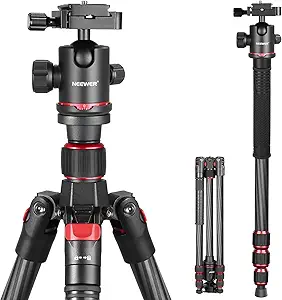
Choosing a Carbon Fiber Tripod: Stability, Portability, and Load Capacity
When shopping for a carbon fiber tripod like the K&F CONCEPT 68-inch model, you're balancing weight savings against rigidity and payload. This category is ideal for photographers who need a lightweight support system for DSLRs and mirrorless cameras, especially when traveling or shooting in demanding conditions. Key factors include leg construction, head type, and maximum load—all of which directly affect stability and ease of use.
Key Considerations Before Buying
- Load capacity: With a 22 lbs rating, this tripod supports heavy pro DSLRs and long lenses, but always verify your gear's weight plus accessories to avoid instability. Carbon fiber's strength-to-weight ratio makes such high loads feasible without excessive bulk.
- Monopod conversion: The detachable leg design adds versatility for action shots or hiking, but ensure the locking mechanism is secure and quick to operate. This feature is particularly useful for reducing setup time in fast-paced environments.
- Ball head quality: The included metal ball head with quick release plate should offer smooth panning and tilt, but check for any play or stiffness that could affect precise framing. Look for independent tension control and a secure lock.
What Our Analysts Recommend
In a complete tripod, examine leg locks for durability and ease of adjustment—twist locks are common on carbon fiber models but can be slower than flip locks. The center column should be sturdy and allow for low-angle shots, while rubber feet and spikes provide grip on various surfaces. A built-in bubble level and Arca-Swiss compatible plate enhance usability across different camera setups.
Complete Tripods Market Context
Market Overview
The tripod market has shifted toward lightweight carbon fiber designs that offer professional-grade stability without the weight of aluminum. Brands like K&F CONCEPT compete by bundling features such as detachable monopods and phone mounts, targeting both traditional photographers and content creators. Prices range from budget-friendly to premium, with carbon fiber options typically starting around $100 and climbing with better build quality.
Common Issues
Users often report leg lock failures or corrosion after extended use in wet or sandy conditions, especially on lower-cost carbon fiber models. Another frequent complaint is that ball heads can slip under heavy loads or develop gritty movement over time, requiring periodic cleaning or replacement. Compatibility with quick release plates and center column wobble are also recurring concerns.
Quality Indicators
High-quality carbon fiber tripods use multiple layers of weave and resin for maximum rigidity and vibration dampening. Look for leg sections with thick walls and reinforced joints, as well as a head that offers smooth, backlash-free operation. Weight-to-load ratio is a strong indicator—a tripod that supports 22 lbs while weighing under 4 lbs suggests efficient design and materials.
Review Authenticity Insights
Grade B Interpretation
The B grade and 10% estimated fake review rate indicate that while most reviews are genuine, a small but notable portion may be unreliable. This is typical for popular tripod models where incentivized or promotional reviews can inflate ratings slightly. The 4.22/5 star rating is likely a fair representation, but the adjusted 4.00/5 suggests some skepticism is warranted.
Trust Recommendation
Focus on verified purchase reviews that describe specific use cases, such as wildlife photography or long-exposure shots, as these tend to be more authentic. Be cautious of overly brief or generic five-star reviews, and prioritize those that mention both pros and cons. The high number of reviews (1790) provides a solid base for pattern recognition.
Tips for Reading Reviews
When reading reviews for tripods, look for comments on stability in windy conditions, ease of leg adjustment, and head performance with your specific camera weight. Pay attention to any mentions of defects after a few months of use, as longevity is critical for this product. Filter by 'most recent' to spot any recurring quality control issues.
Expert Perspective
The K&F CONCEPT 68-inch carbon fiber tripod appears to be a solid value proposition for photographers needing a lightweight yet high-capacity support system. The 22 lbs load rating and detachable monopod feature are standout specs that compete with more expensive brands, though the 10% fake review rate and B grade suggest some reviews may be inflated. Overall, it seems well-suited for travel and studio use, but potential buyers should verify its long-term durability through detailed user feedback.
Purchase Considerations
Consider your primary shooting environment—if you often work in wind or with heavy telephoto lenses, you may want to test the tripod's stability under full load. The included phone mount adds convenience for hybrid shooters, but ensure the ball head's tension can handle your camera's weight without creeping. Budget-conscious buyers will appreciate the feature set, but those needing absolute precision might invest in a separate head.
Comparing Alternatives
For comparison, look at other carbon fiber tripods in the same price range, such as those from Benro or Sirui, which may offer better build tolerances or warranty coverage. Testing leg lock smoothness and head fluidity in person can help narrow down the best fit for your gear.