Unlock 6 SATA Ports: Your Guide to PCIe SATA Cards
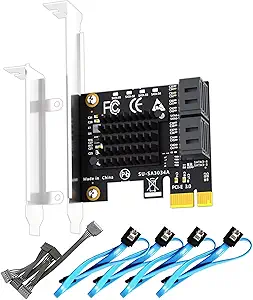
Expanding storage capacity in a desktop PC often requires adding SATA ports beyond what the motherboard provides. This PCIe SATA card, equipped with the ASM1166 chip, offers six 6 Gbps SATA 3.0 ports, making it ideal for connecting multiple SSDs or HDDs without bottlenecking performance. The included cables and low-profile bracket ensure compatibility with standard and slim cases.
Key Considerations Before Buying
- Chipset matters: The ASM1166 chip is key for reliable performance—avoid cards with unknown or outdated controllers that may cause driver issues or data corruption.
- Port count and speed: Six SATA 3.0 ports at 6 Gbps each are sufficient for most multi-drive setups, but ensure your PCIe slot (e.g., x1 or x2) can deliver enough bandwidth for simultaneous use, especially with SSDs.
- Form factor fit: The low-profile bracket is essential for small form factor PCs; verify your case's slot type (standard vs. low-profile) to avoid installation problems.
What Our Analysts Recommend
Quality indicators include a reputable chipset like ASM1166, positive user feedback on driver stability, and inclusion of all necessary accessories (cables, brackets). Look for cards with solid build quality, such as sturdy PCB and reliable SATA connectors, to ensure long-term durability.
SCSI Port Cards Market Context
Market Overview
The PCIe SATA card market is saturated with budget options, but chipsets like ASM1166 and Marvell 88SE9215 dominate reliable models. As users increasingly add SSDs for caching or storage pools, demand for multi-port cards with native 6 Gbps support remains high.
Common Issues
Common problems include driver incompatibility with newer operating systems, bandwidth limitations when all ports are saturated, and overheating on passive-cooled cards. Some cheap cards use outdated chips that fail under load or lack TRIM support for SSDs.
Quality Indicators
High-quality cards feature known chipsets (ASM1166, Marvell), solid capacitors, and good thermal management. Verified user reviews mentioning specific use cases (e.g., NAS builds, gaming rigs) and long-term reliability are strong signals of a dependable product.
Review Authenticity Insights
Grade B Interpretation
With a Grade B and an estimated 10% fake review rate, this product has mostly authentic feedback but some suspicious reviews may inflate its rating. The adjusted rating of 4.20/5 (from 4.44) suggests real-world performance is slightly below the headline score, but still solid.
Trust Recommendation
Trust the bulk of verified reviews that detail specific setups—like using this card with multiple SSDs in a home server—as they reflect genuine experiences. Be cautious of overly short or vague 5-star reviews that lack context, as they may be fabricated.
Tips for Reading Reviews
Focus on reviews that mention the ASM1166 chip, driver installation, and performance with multiple drives. Look for balanced feedback that notes both pros (e.g., easy setup, good speed) and cons (e.g., heat, cable management), as these are more credible.
Expert Perspective
This PCIe SATA card offers a cost-effective solution for expanding storage with six SATA 3.0 ports, leveraging the reliable ASM1166 chip for stable 6 Gbps transfers. The inclusion of cables and a low-profile bracket adds value, but the 10% fake review rate and adjusted rating of 4.20 suggest some marketing hype. Overall, it's a solid choice for users needing extra SATA ports, provided they verify compatibility and manage bandwidth expectations.
Purchase Considerations
Weigh the card's price and features against your specific needs—such as number of drives and case size—since cheaper alternatives may use inferior chips. Ensure your motherboard has a free PCIe slot (x1 or higher) and that your power supply can support additional drives.
Comparing Alternatives
Shoppers should compare this card with models using Marvell 88SE9215 or JMB585 chips, which offer similar specs but may have different driver support or thermal performance.