
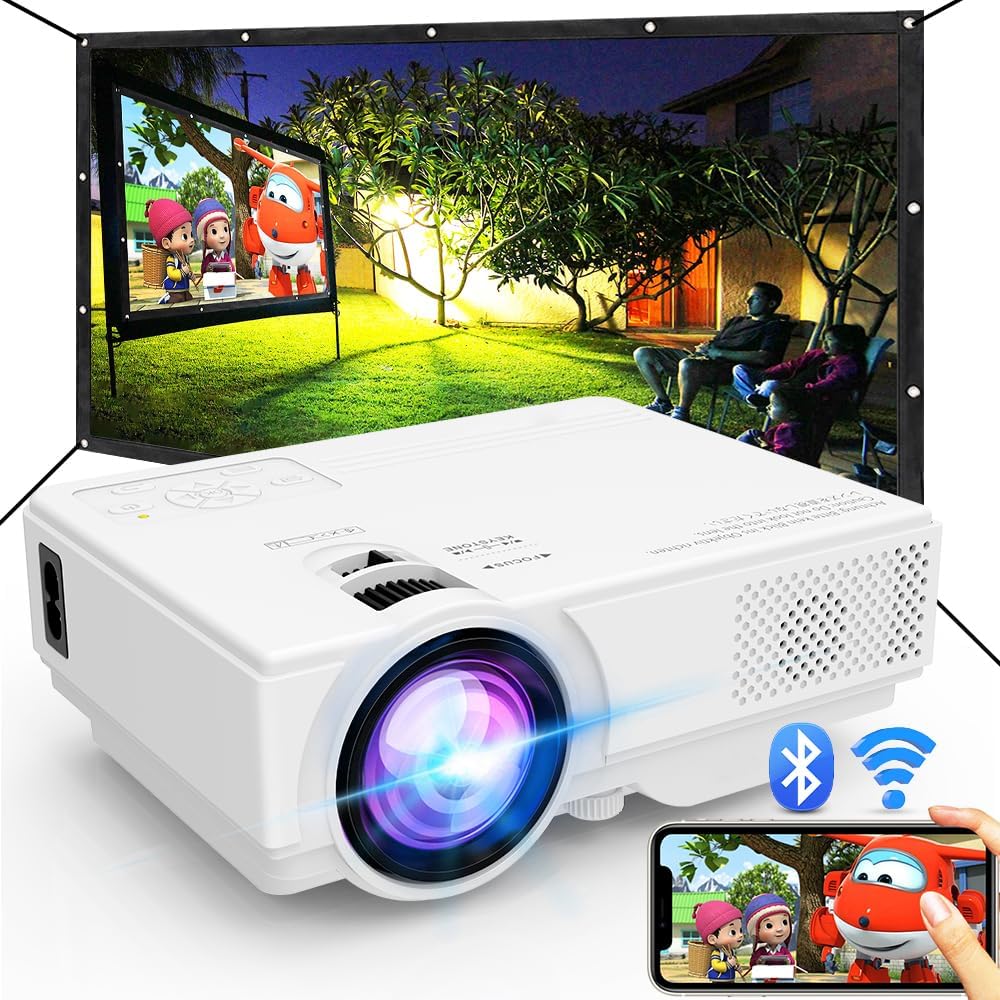
Choosing a Portable WiFi Projector: Balancing Connectivity, Brightness, and Portability
This specific projector combines smartphone synchronization with outdoor portability, creating a hybrid device that serves both indoor movie nights and backyard entertainment. Buyers should understand that '1080P support' doesn't mean native 1080P resolution—this projector accepts 1080P input but displays at a lower native resolution, which is typical for budget portable models. The dual connectivity (WiFi and Bluetooth) enables wireless streaming but requires understanding the limitations of screen mirroring versus dedicated apps.
Key Considerations Before Buying
- Screen synchronization quality varies significantly between WiFi direct connections and USB cable connections—WiFi offers convenience but may introduce lag during fast-motion content.
- Outdoor use requires sufficient brightness (measured in lumens, not specified here) and battery considerations since most portable projectors need external power sources.
- The 'mini' form factor often means compromised speaker quality, making the Bluetooth connectivity crucial for pairing with external speakers for better audio.
What Our Analysts Recommend
For portable projectors in this category, examine the actual ANSI lumens rating rather than marketing terms like 'upgrade outdoor projector.' Check if the WiFi connection supports both screen mirroring and direct streaming from apps like Netflix or YouTube, as some budget models only offer basic mirroring. Quality indicators include heat dissipation design (important for extended outdoor use) and lens material—glass lenses maintain focus better than plastic during temperature changes.
Video Projectors Market Context
Market Overview
The budget portable projector market ($100-$300 range) has exploded with Chinese-manufactured models offering smartphone connectivity as a primary feature. These devices compete on connectivity options rather than pure image quality, with most using DLP technology from Texas Instruments with lower-resolution chips. The 'outdoor capable' claim has become standard marketing, though actual outdoor performance varies dramatically based on true brightness and contrast ratios.
Common Issues
Users frequently report focus drift during extended use as plastic lens assemblies heat up, and inconsistent WiFi connectivity that drops during streaming. Many budget projectors exaggerate resolution capabilities, listing '1080P support' while using 480P or 720P native DLP chips that upscale content. Audio-video synchronization problems are common with wireless screen mirroring, particularly with Android devices.
Quality Indicators
Look for specific technical disclosures: native resolution (not just 'support'), ANSI lumens (not 'LED brightness'), and contrast ratio. Better models in this category use fan designs that balance cooling with acceptable noise levels (under 30dB). Check if the manufacturer provides firmware updates to address connectivity issues—this indicates ongoing product support rather than disposable electronics.
Review Authenticity Insights
Grade C Interpretation
A Grade B authenticity rating with 11% estimated fake reviews suggests generally reliable feedback with moderate manipulation. For this projector category, fake reviews typically exaggerate outdoor brightness performance and underreport connectivity issues. The 0.27-point drop from the displayed 4.67 to adjusted 4.40 rating indicates some review inflation but still reflects genuinely positive reception.
Trust Recommendation
Focus on reviews that mention specific usage scenarios like 'backyard movie night with 10-foot screen' or 'bedroom ceiling projection' rather than generic praise. Be skeptical of reviews claiming exceptional brightness in daylight conditions—this contradicts the physics of budget LED projectors. The high review count (4,815) provides sufficient authentic data points to identify consistent patterns.
Tips for Reading Reviews
Prioritize reviews discussing setup difficulties with WiFi synchronization and heat management during 2+ hour movies—these reveal real-world limitations. Look for mentions of specific smartphone models (iPhone 14, Samsung Galaxy S23) as compatibility varies. Reviews noting firmware version numbers or customer service interactions typically indicate genuine ownership experiences.
Expert Perspective
This projector's 4.40 adjusted rating from nearly 5,000 reviews indicates it delivers satisfactory performance for its price segment, particularly for users prioritizing smartphone connectivity over cinematic image quality. The product succeeds as an entry-level entertainment device rather than a home theater replacement. The WiFi/Bluetooth combination addresses the core need for cable-free setup that dominates this market segment, though with expected compromises in latency and stability. Its popularity suggests it meets basic expectations for casual viewing environments.
Purchase Considerations
Weigh the convenience of wireless connectivity against the image quality trade-offs—if sharp 1080P detail is crucial, consider stepping up to native 1080P models. Evaluate your primary use case: occasional outdoor movies justify this portable design, while dedicated indoor theater use might warrant investment in a brighter, fixed-installation projector. The Bluetooth functionality adds value for audio but doesn't compensate for the typically weak built-in speakers.
Comparing Alternatives
Shoppers should compare lumen output, native resolution, and warranty terms against similar-priced models from Vankyo, GooDee, or Apeman to contextualize this projector's value proposition.
![CLOKOWE Mini Projector with WiFi and Bluetooth - [Built-in Apps] Smart Portable Projector with 180° Rotation, Auto Keystone, Support 1080P, Compatible with HDMI/USB/TV Stick/Smartphone/Laptop](https://m.media-amazon.com/images/I/71aHwv3EZ0L.__AC_SX300_SY300_QL70_FMwebp_.jpg)


