
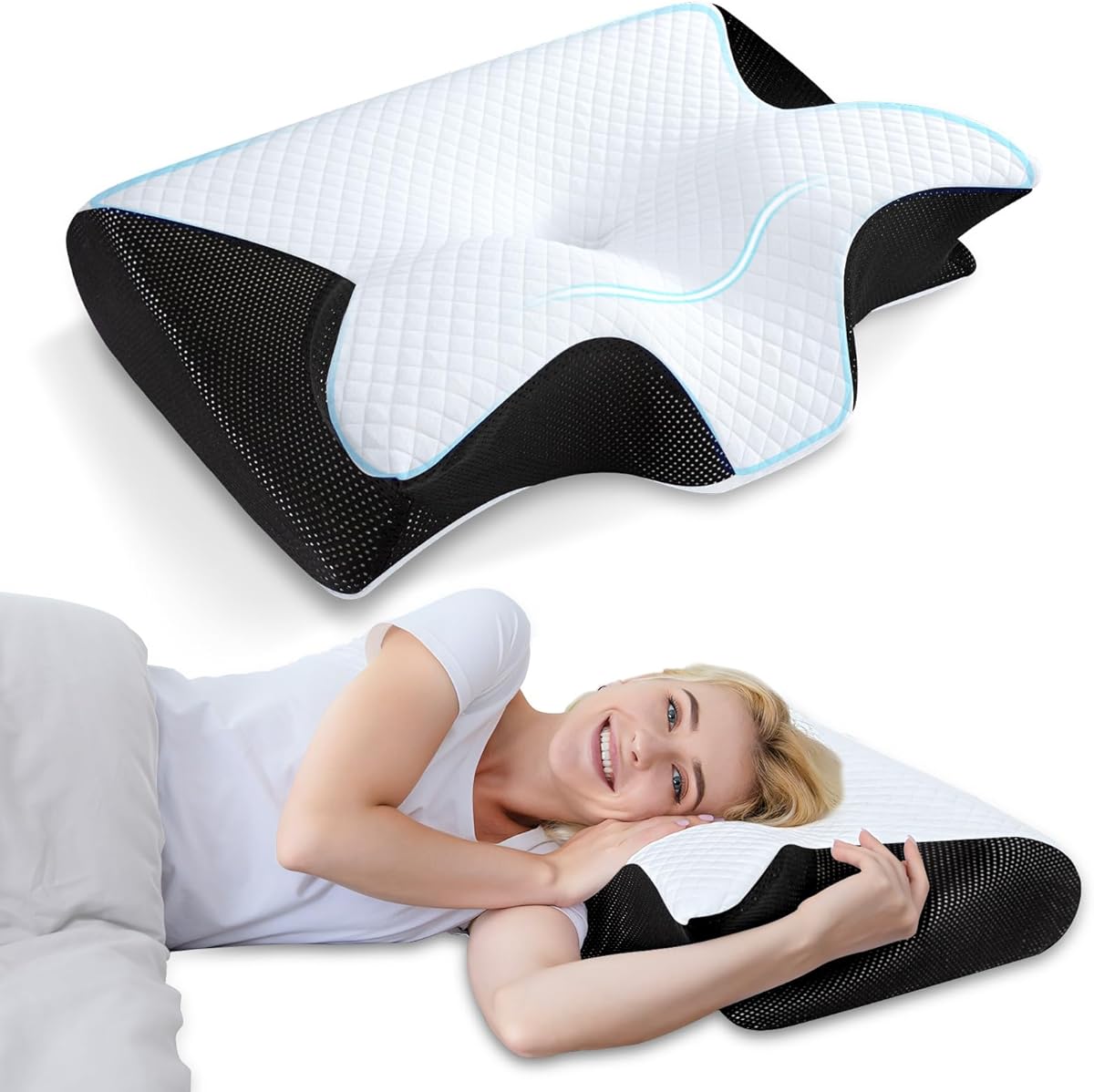
Choosing a Cervical Pillow: How HOMCA's 2-in-1 Design Addresses Different Sleep Positions
The HOMCA Memory Foam Cervical Pillow represents a specific approach to neck support with its dual-sided contour design. Unlike single-profile pillows, this model offers distinct height options on each side, targeting both side and back sleepers with one product. Buyers should understand that true orthopedic support requires proper spinal alignment, which varies significantly between sleeping positions.
Key Considerations Before Buying
- The 2-in-1 design means one side has a higher contour for side sleeping (typically 4.7 inches) while the other offers lower support for back sleeping (around 3.9 inches), requiring you to commit to flipping the pillow based on your dominant position.
- Memory foam density matters—this pillow uses shredded memory foam that allows some adjustability but may lack the firm, consistent support of solid orthopedic foam blocks preferred by some with chronic neck issues.
- The contoured center cradle is specifically shaped to cradle the cervical spine, but its effectiveness depends on your shoulder width and head size matching the pillow's dimensions.
What Our Analysts Recommend
Quality cervical pillows maintain their structural integrity without flattening excessively at pressure points. Check for a removable, breathable cover that accommodates the pillow's unusual shape—the HOMCA includes a bamboo-derived cover that helps with heat dissipation. The foam should recover slowly when compressed, indicating proper viscoelastic properties rather than cheap polyurethane.
Neck & Cervical Pillows Market Context
Market Overview
The cervical pillow market is saturated with contour designs, but few successfully address multiple sleeping positions without compromise. Most products target either side or back sleepers exclusively, making dual-purpose designs like HOMCA's relatively uncommon. Premium segments focus on temperature-regulating materials and medical-grade certifications.
Common Issues
Many users abandon cervical pillows during the 1-3 week adjustment period when neck muscles adapt to proper alignment. Another frequent complaint is heat retention in solid memory foam designs, though shredded foam like HOMCA's improves airflow. Incorrect height selection remains the primary reason for returns, as a mismatch exacerbates rather than relieves pain.
Quality Indicators
Look for detailed dimension specifications (not just 'medium' or 'high'), CertiPUR-US certified foam that's been tested for off-gassing, and covers with moisture-wicking properties. Higher-quality pillows maintain their contour shape for 18+ months rather than developing permanent body impressions.
Review Authenticity Insights
Grade B Interpretation
A Grade B authenticity rating with 11% estimated fake reviews indicates predominantly genuine feedback but suggests some review manipulation. For this HOMCA pillow, the 4.40 adjusted rating (down from 4.67) reflects more realistic user experiences after filtering suspicious patterns. This level is typical for popular Amazon bedding products.
Trust Recommendation
Focus on reviews that describe specific adjustment periods or compare this pillow to previous cervical pillows they've tried—these details are harder to fabricate. The high review count (over 10,000) means even with some manipulation, there's substantial authentic data to analyze.
Tips for Reading Reviews
Prioritize reviews mentioning sleep position transitions (e.g., 'as a side sleeper who sometimes rolls to my back') and specific pain conditions like cervical radiculopathy or whiplash recovery. Be skeptical of reviews that only praise packaging or delivery speed without discussing sleep experience.
Expert Perspective
The HOMCA pillow's 4.40 adjusted rating from genuine reviews suggests it performs well for its specific design approach. The shredded memory foam construction addresses common heat complaints while providing some moldability that solid contours lack. However, the dual-height design represents a compromise—neither side may be ideal for sleepers who exclusively use one position. The pillow appears most successful for combination sleepers or those transitioning between positions who value flexibility over specialized support.
Purchase Considerations
Consider your consistency in sleep position—dedicated side sleepers might prefer a dedicated high-contour pillow, while strict back sleepers often need lower support than this pillow's back-sleeper side provides. The shredded foam allows some customization by removing filling, but this alters the engineered contour. Those with severe osteoarthritis or spinal fusion may require more rigid medical-grade support.
Comparing Alternatives
Compare this 2-in-1 design against single-profile orthopedic pillows from brands like Tempur-Pedic or Mediflow, which often provide more targeted support for specific conditions.


