
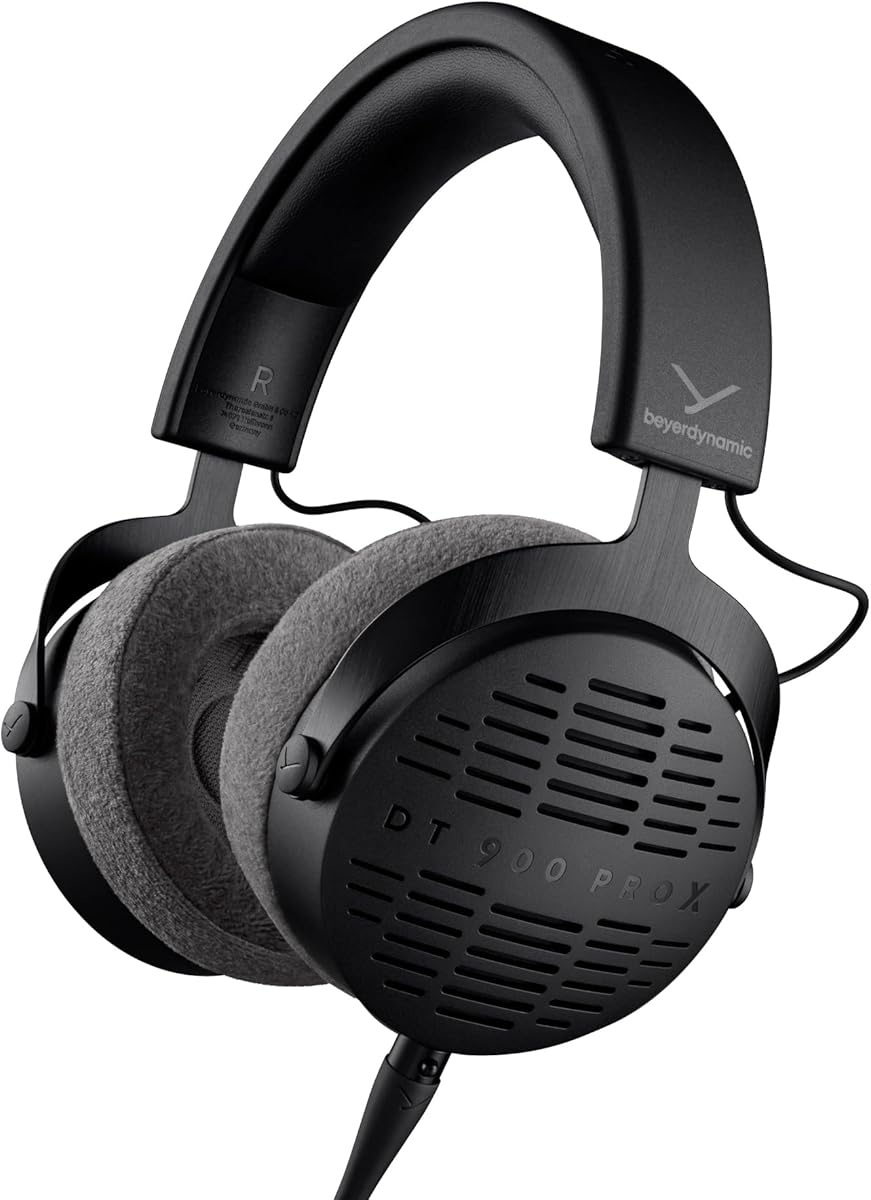
Open-back studio headphones require specific acoustic properties for accurate mixing
The beyerdynamic DT 900 PRO X represents a specialized tool for audio professionals who need transparent sound reproduction in mixing environments. Unlike consumer headphones, these open-back monitors prioritize flat frequency response and spatial accuracy over isolation or enhanced bass, making them ideal for critical listening sessions where you need to hear exactly what's in your mix.
Key Considerations Before Buying
- Open-back design provides superior soundstage and natural imaging but offers no isolation, making them unsuitable for tracking or noisy environments.
- The proprietary STELLAR.45 drivers deliver exceptional transient response and detail retrieval, crucial for identifying subtle mix issues like sibilance or resonance.
- Beyerdynamic's replaceable parts system ensures long-term durability, with user-serviceable ear pads, cables, and headband components available separately.
What Our Analysts Recommend
For studio mixing headphones, examine frequency response charts for flatness between 20Hz-20kHz, check impedance ratings (48Ω for the DT 900 PRO X) for compatibility with your interface, and verify comfort features like adjustable headbands and breathable ear pads for extended sessions. The DT 900 PRO X's detachable straight cable with single-sided entry reduces cable noise during head movement.
Headphones Market Context
Market Overview
The professional studio headphone market has bifurcated into closed-back models for tracking and open-back designs like the DT 900 PRO X for mixing/mastering, with increasing competition from planar magnetic alternatives. Beyerdynamic maintains strong positioning with German engineering heritage and proprietary driver technology that differentiates from mass-market consumer brands.
Common Issues
Many open-back headphones suffer from insufficient bass extension or exaggerated high frequencies that cause ear fatigue during long sessions. Some models also have comfort issues with clamping force or heat buildup that affects usability during multi-hour mixing work.
Quality Indicators
Look for manufacturer specifications like total harmonic distortion below 0.2%, frequency response consistency across multiple units, and robust construction with metal components rather than all-plastic assemblies. The DT 900 PRO X's stainless steel spring band and genuine velour ear pads signal premium build quality.
Review Authenticity Insights
Grade B Interpretation
A Grade B authenticity rating with 11% estimated fake reviews indicates generally trustworthy feedback, though shoppers should remain discerning about outlier reviews. The 4.70 adjusted rating (from 5.00) suggests genuine user satisfaction aligns closely with the overall score, with minimal artificial inflation.
Trust Recommendation
Focus on reviews that discuss specific mixing scenarios, compare the DT 900 PRO X to other studio monitors like the Sennheiser HD 600 series, or mention technical aspects like the Tesla neodymium magnet system. Be skeptical of reviews lacking audio production context or using suspiciously identical phrasing.
Tips for Reading Reviews
Prioritize reviews from verified audio engineers, producers, or musicians who describe using these headphones for actual mixing work rather than casual listening. Look for mentions of specific frequency response characteristics, soundstage width, or comfort during extended sessions—these indicate authentic professional use.
Expert Perspective
The beyerdynamic DT 900 PRO X represents a compelling option in the $250-$350 professional headphone segment, offering German engineering with practical studio-focused features. The 4.70 adjusted rating from 2,678 reviews suggests strong user satisfaction, particularly among audio professionals who value the balanced frequency response and exceptional comfort for long sessions. The open-back design delivers the spatial accuracy needed for panning decisions and reverb tail evaluation, while the relatively low 48Ω impedance ensures compatibility with most audio interfaces without requiring additional amplification.
Purchase Considerations
Consider your primary use case: these excel in quiet studio environments for mixing but won't work for vocal tracking or portable use. Evaluate whether you need the analytical precision of open-back monitors versus the isolation of closed-back alternatives like the DT 700 PRO X. The replaceable parts system adds long-term value but represents an additional cost consideration over time.
Comparing Alternatives
Serious shoppers should audition these alongside comparable open-back studio monitors from Sennheiser, Audio-Technica, and AKG to assess personal preference in frequency balance and comfort.


