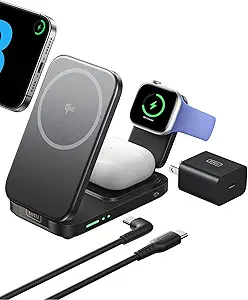
How to Choose a Multi-Device Charging Station That Lasts
A 50W, 6-port charging dock like this one can replace a tangle of wall adapters, but not all multi-device stations deliver stable power or survive daily use. This guide covers the practical details—port count, wattage sharing, stand design, and safety—so you can pick a station that actually simplifies charging.
Key Considerations Before Buying
- Total wattage and per-port output: 50W across 6 ports means about 8.3W per port if every device is connected, which is enough for phones but may slow-charge tablets. Look for stations that specify per-port amps (e.g., 2.4A) and support simultaneous charging without severe throttling.
- Stand design and device fit: The built-in stand must accommodate different phone sizes and cases without tipping. Check whether the slots are wide enough for thick cases and whether the base is weighted or has non-slip feet for stability on nightstands or desks.
- Safety and charging protocols: A quality station should include overcurrent, overvoltage, and temperature protection, plus smart ICs that recognize device-specific fast-charging standards. Without these, you risk slow charging or, in rare cases, damage to battery health.
What Our Analysts Recommend
Prioritize stations with clearly labeled per-port output, UL or ETL certification, and a stable, non-slip stand. Replaceable cables and a detachable power cord are also signs of better build quality and easier long-term use.
Charging Stations Market Context
Market Overview
Multi-device charging stations have become a staple for households with multiple phones, tablets, and accessories, driven by the decline of included wall chargers. The market now spans budget 6-port docks to premium 100W+ GaN stations, with prices ranging from under $20 to over $80.
Common Issues
Frequent complaints include ports that stop working after a few months, stations that overheat when fully loaded, and stands that are too narrow for larger phones or cases. Some units also fail to deliver advertised wattage, leading to slower-than-expected charging.
Quality Indicators
Reliable stations typically have a solid, weighted base, clearly marked output per port, and safety certifications. Brands that publish detailed specs and offer a 12-month or longer warranty tend to have fewer failure reports.
Review Authenticity Insights
Grade A Interpretation
An A authenticity grade with an estimated 5% fake review rate means the 4.67-star rating is highly trustworthy. The adjusted 4.60 rating still reflects strong satisfaction, and the review set includes a healthy mix of 3-, 4-, and 5-star feedback with specific use cases.
Trust Recommendation
You can rely on the overall rating as a genuine signal of quality, but still read the 3-star reviews for recurring issues like port failure or slow charging. Focus on reviews that mention long-term use (3+ months) to gauge durability.
Tips for Reading Reviews
Look for reviewers who describe their exact device mix and charging speed, as these details are hard to fake. Pay attention to complaints about heat, port longevity, and stand stability—these are the most common real-world pain points.
Expert Perspective
This 50W 6-port charging station appears to be a solid mid-range option, backed by a large volume of authentic reviews and a high adjusted rating. The 6-port design and integrated stand make it a practical hub for families or individuals with multiple devices, though the 50W total output means heavy users may find per-port speeds modest when all ports are occupied.
Purchase Considerations
Weigh your typical charging load: if you regularly charge more than three devices at once, consider a higher-wattage station (65W+) to avoid slow charging. Also check whether the stand fits your phone with a case, and confirm the return policy in case of port defects.
Comparing Alternatives
Compare this model with similar 6-port stations from brands like Anker or Aukey, especially if you need higher per-port output or a more compact footprint.