
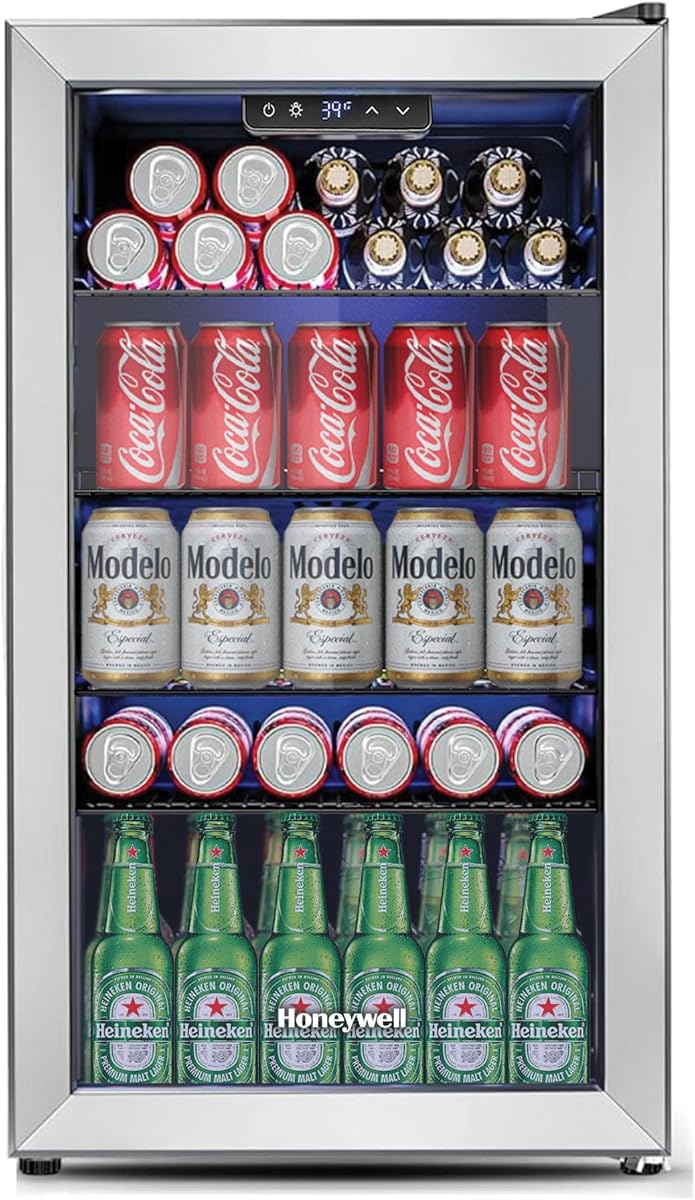
Choosing a Glass-Door Beverage Cooler: Capacity, Cooling, and Commercial Claims
When evaluating this Honeywell 116-can beverage refrigerator, focus on how its 'commercial grade' designation translates to home or office use. Unlike residential mini-fridges, this unit features a glass door for display and adjustable shelving, but its true performance hinges on compressor reliability and temperature consistency for both soda and wine.
Key Considerations Before Buying
- Verify the actual 116-can capacity fits your space; this requires approximately 20"W x 19"D footprint, and shelving adjusts for wine bottles or tall cans.
- Assess noise level for your intended environment (office, bar, living area); compressor-based cooling in these units often generates more hum than thermoelectric models.
- Consider the glass door's lighting and condensation; some users report LED light failures or fogging, which impacts display clarity.
What Our Analysts Recommend
Quality indicators include consistent temperature maintenance across all shelves, a sturdy door seal to prevent cold air leakage, and metal or heavy-duty plastic shelving that doesn't warp. Listen for reviews mentioning uniform cooling versus hot spots, especially around the top shelf near the fan.
Display Refrigerators Market Context
Market Overview
The glass-door beverage cooler market is saturated with units claiming 'commercial' specs at consumer prices, often using similar OEM designs. Honeywell's entry competes directly with brands like Koolatron and Costway, where differentiation comes from warranty, shelving design, and compressor branding.
Common Issues
Frequent problems include inadequate cooling at advertised temperatures, LED light failures within months, and shelving clips that break during adjustment. Many units struggle with humidity control, leading to interior condensation that obscures the display.
Quality Indicators
Superior models feature dual-zone cooling, digital thermostats with precise control, and anti-condensation glass coating. Check for reviews detailing long-term compressor performance and customer service responsiveness for a brand like Honeywell, which licenses its name to appliance manufacturers.
Review Authenticity Insights
Grade B Interpretation
A Grade B with 18% estimated fake reviews suggests generally reliable feedback but warrants scrutiny. The adjusted rating dropping from 4.47 to 4.10 indicates inflated positive reviews, likely emphasizing aesthetics over performance.
Trust Recommendation
Prioritize reviews discussing specific performance over 30+ days, mentions of temperature consistency, and any details about Honeywell's support process. Be skeptical of reviews focusing solely on unboxing or generic praise without operational context.
Tips for Reading Reviews
Search for mid-range (3-4 star) reviews that balance pros and cons, and look for mentions of 'fan placement' or 'shelving adjustment'—these specific terms often indicate authentic user experience with this Honeywell model's design quirks.
Expert Perspective
This Honeywell cooler presents a mid-tier option with decent capacity and the visual appeal of a glass door, but its 'commercial grade' label is primarily marketing. The 4.10 adjusted rating reflects real-world performance that's good but not exceptional, with noted variability in cooling efficiency and component longevity. Its strength lies in flexible shelving for mixed beverage storage, though lighting and seal issues are recurring themes in authentic critical reviews.
Purchase Considerations
Weigh the importance of the Honeywell brand association against potentially similar-performing generic models at lower price points. Consider your need for precise temperature control—if storing wine, verify reviews confirm stable temperatures in the 54-57°F range, not just soda cooling.
Comparing Alternatives
Shoppers should compare compressor specifications, warranty terms, and interior layout with models from Koolatron or EdgeStar, which may offer similar features with different service networks.


