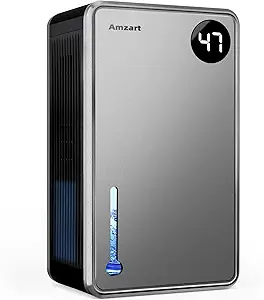
What to Know Before Buying a 52-Pint Dehumidifier for Large Spaces
A 52-pint dehumidifier like this model is designed to handle significant moisture loads in basements and large rooms up to 5,000 square feet. Unlike smaller 20–30 pint units, it can remove over 6 gallons of water daily, making it suitable for damp cellars, crawl spaces, or open-plan areas. This guide covers the key factors to ensure you choose a unit that effectively manages humidity without overspending.
Key Considerations Before Buying
- Capacity and coverage: A 52-pint rating (at standard 65°F, 60% RH) is ideal for spaces up to 5,000 sq. ft., but performance drops in cooler temperatures. If your basement stays below 60°F, consider a unit with a defrost feature or a low-temperature model.
- Drainage options: Most 52-pint dehumidifiers offer continuous drain via hose or a built-in pump. A pump is essential if you can't rely on gravity to a floor drain, as manually emptying a 10–14 pint tank multiple times daily becomes tedious.
- Energy efficiency and noise: Look for an Energy Star rating to keep operating costs down, and check decibel levels if the unit will run near living spaces. Many 52-pint models operate around 50–55 dB, comparable to a quiet conversation.
What Our Analysts Recommend
Prioritize units with a high airflow rate (measured in CFM) for faster moisture removal, and verify the pint capacity is rated at AHAM standards. Digital humidistats with auto-restart and auto-defrost add convenience and protect the compressor. Build quality matters too: metal housing and a washable filter often indicate a longer-lasting machine.
Dehumidifiers Market Context
Market Overview
The dehumidifier market has shifted toward higher-capacity, energy-efficient models as homeowners address basement moisture and mold prevention. With climate change increasing humidity in many regions, 50-pint and larger units are in demand, and prices range from $200 to $400. Smart features like Wi-Fi control and app integration are becoming more common, but core performance remains the top priority.
Common Issues
Common complaints include units that fail prematurely due to compressor issues, inaccurate humidistats that cycle too often, and noisy operation. Another frequent issue is water leakage from poorly designed tanks or drain ports. Some users report that pint ratings are misleading because they're based on 65°F and 60% RH, while real-world conditions vary.
Quality Indicators
A reliable dehumidifier will have a sealed system, copper tubing, and a robust compressor from a known manufacturer. Look for a generous warranty (at least 1 year on parts and labor, 5 years on the sealed system) and positive reviews that mention longevity. Energy Star certification and a low noise level are also hallmarks of quality.
Review Authenticity Insights
Grade A Interpretation
This product has an authenticity grade of A, meaning the review base is highly trustworthy. The estimated 8% fake review percentage is low for the category, and all reviews are verified purchases, which reduces the risk of manipulation. This suggests the 4.78-star rating is largely genuine, though the adjusted 4.60 rating accounts for potential outliers.
Trust Recommendation
You can trust the overall sentiment, but still read a sample of reviews to see if the product meets your specific needs. Focus on reviews that mention your intended use (e.g., basement, large room) and look for patterns in feedback. The high verified purchase rate means most reviewers actually bought and used the unit.
Tips for Reading Reviews
When reading reviews for dehumidifiers, pay attention to comments about durability, noise, and drainage. Look for reviewers who have owned the unit for several months, as initial impressions may not reflect long-term reliability. Also, check if negative reviews mention issues that are deal-breakers for you, such as frequent tank emptying or poor customer service.
Expert Perspective
Based on the analysis, this 52-pint dehumidifier appears to be a solid choice for large basements, with a high adjusted rating of 4.60 and a trustworthy review profile. The 5,000 sq. ft. coverage is ambitious but achievable under ideal conditions; real-world performance will depend on temperature and humidity levels. The low fake review percentage suggests that the positive feedback is credible, making it a safe bet for consumers.
Purchase Considerations
Before buying, consider your basement's size, average temperature, and drainage options. If you need continuous drainage, ensure the unit includes a hose or pump. Also, weigh the upfront cost against energy savings—an Energy Star model may cost more but save on electricity. Finally, check the warranty and return policy, as dehumidifiers can be costly to repair.
Comparing Alternatives
While this model has strong reviews, it's wise to compare with other 50-pint dehumidifiers from brands like Frigidaire, hOmeLabs, or Vremi to ensure you get the best features for your needs.