Choosing High-Capacity Rechargeable AAA Batteries: What 1100mAh Really Means
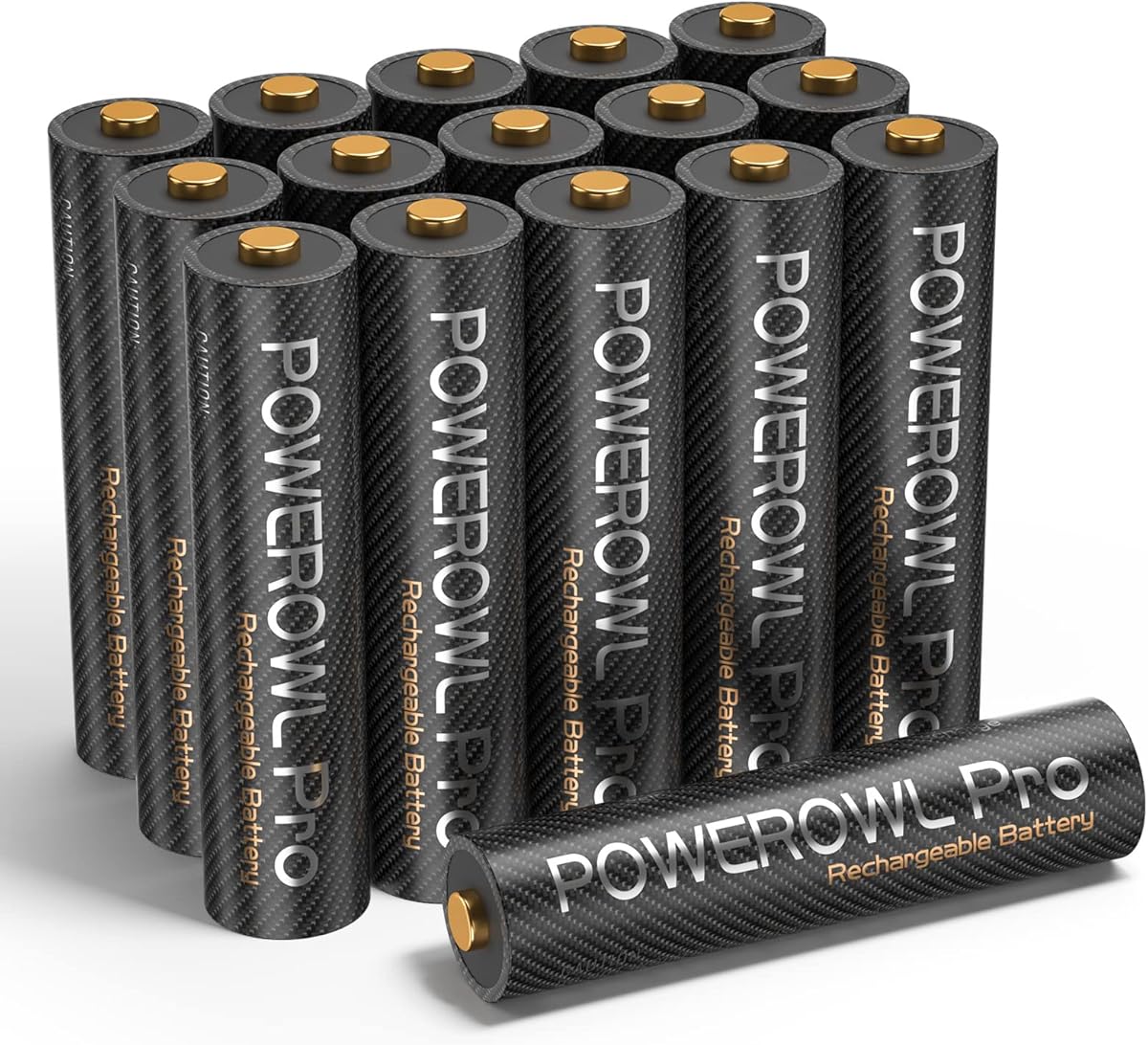
When evaluating POWEROWL's 1100mAh AAA batteries, understand that capacity ratings represent maximum potential, not guaranteed runtime. These NiMH cells target users who need extended power for high-drain devices like gaming controllers or digital cameras, not occasional remote control use. The 16-count package suggests household or small business applications where bulk purchasing makes economic sense.
Key Considerations Before Buying
- Verify your device compatibility—some older electronics with tight battery compartments may not accommodate the slightly larger dimensions common to high-capacity NiMH AAA cells.
- Assess your charging ecosystem: these batteries require a NiMH-specific smart charger to prevent overcharging and maximize the advertised 1100mAh capacity.
- Calculate your actual cost-per-cycle: while the initial 16-pack investment is higher than disposables, the 500+ recharge cycles make them economical for frequently used devices.
What Our Analysts Recommend
Genuine high-capacity AAA batteries should maintain voltage stability under load, not just advertise high mAh numbers. Check for low self-discharge technology (often marked as 'pre-charged' or 'ready-to-use'), which POWEROWL includes, meaning they hold charge when stored. Quality indicators include consistent performance across all cells in multi-packs and clear cycle life specifications.
AAA Market Context
Market Overview
The rechargeable AAA market has bifurcated into budget 800-900mAh options and premium 1000mAh+ models like POWEROWL's 1100mAh PRO series. Recent trends show consumers moving toward higher-capacity cells despite premium pricing, driven by increased use in smart home devices and children's electronics. The 16-count packaging reflects growing demand for bulk household solutions rather than traditional 4- or 8-packs.
Common Issues
Capacity inflation remains problematic, with some brands advertising peak laboratory ratings rather than real-world performance. Inconsistent cell matching within multi-packs can cause devices to fail prematurely when one battery degrades faster than others. Many users underestimate the importance of proper conditioning during initial charges for NiMH batteries to reach advertised capacity.
Quality Indicators
Look for batteries that specify both minimum and typical capacity (1100mAh is likely typical, not minimum). Quality manufacturers provide cycle life data—POWEROWL's '500+ cycles' claim should be verified against actual user experiences. Physical construction matters: welded rather than crimped seals prevent leakage, and consistent weight across cells indicates manufacturing precision.
Review Authenticity Insights
Grade B Interpretation
A Grade B with 11% estimated fake reviews indicates generally reliable feedback but suggests some review manipulation around the 4.67/5 rating. The 0.27-point drop to 4.40 after adjustment reveals potential review padding, though the majority of experiences appear genuine. This level of authenticity is typical for popular battery brands competing in Amazon's competitive household supplies category.
Trust Recommendation
Focus on verified purchase reviews mentioning specific devices like Xbox controllers, blink cameras, or LED flashlights—these provide more reliable performance data than generic praise. Pay particular attention to mid-range 3- and 4-star reviews, which often contain nuanced observations about capacity consistency across the 16-pack and long-term performance after 6+ months of use.
Tips for Reading Reviews
Search for reviews discussing actual runtime comparisons against branded disposables or other rechargeables like Eneloop. Look for mentions of 'cell matching' or consistency across the pack—uneven performance in multi-packs is a common NiMH issue. Reviews noting performance in extreme temperatures or high-drain devices provide more valuable insights than general satisfaction comments.
Expert Perspective
POWEROWL's 1100mAh PRO series represents a competitive offering in the high-capacity AAA segment, though the adjusted 4.40 rating suggests the initial 4.67 may be slightly inflated. The 16-count package at this capacity level targets serious users who need reliable power for multiple devices simultaneously. The NiMH chemistry with low self-discharge makes these suitable for both frequently used and occasional devices, provided users invest in proper charging equipment. The B authenticity grade indicates generally trustworthy feedback, but consumers should temper expectations about achieving full 1100mAh in all applications.
Purchase Considerations
Evaluate whether your usage patterns justify the premium for 1100mAh over standard 1000mAh cells—the 10% capacity increase matters most in high-drain devices. Consider your charging infrastructure: without a quality smart charger, you won't maximize these batteries' potential. The 16-pack makes sense for households with 8+ AAA devices but represents overinvestment for minimal needs.
Comparing Alternatives
Compare against established brands like Panasonic Eneloop and AmazonBasics for similar capacity ranges, particularly regarding long-term performance after 100+ charge cycles.