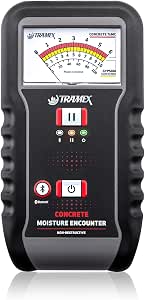
Pinless Moisture Meters: Essential for Detecting Hidden Wall and Floor Damage
When shopping for a moisture meter like the RDINSCOS pinless model, understanding its non-destructive scanning capability is crucial. This tool uses electromagnetic sensors to detect moisture beneath surfaces without leaving holes, making it ideal for inspecting walls, wood, and masonry. Before you buy, consider how its built-in flashlight and digital display enhance usability in dark or tight spaces, and whether its pinless design suits your specific inspection needs.
Key Considerations Before Buying
- Pinless vs. pin-type: Pinless meters like this one are great for quick, non-invasive scans, but they measure relative moisture and can be affected by dense materials like metal or foil-backed insulation. If you need precise moisture content readings, consider a pin-type meter or one with both modes.
- Depth of penetration: The RDINSCOS scans up to 3/4 inch deep, which is sufficient for most wall and flooring checks, but for thicker materials or deep-set moisture, you may need a more powerful meter. Always verify the depth specification matches your intended use.
- Material calibration: Different materials (wood, drywall, concrete) have different moisture reference scales. Ensure the meter has a general reference scale or dedicated modes for the materials you'll test, as this affects reading accuracy.
What Our Analysts Recommend
Look for a meter with a clear, backlit display, adjustable sensitivity, and a robust build that can handle job-site conditions. Features like a flashlight, low-battery indicator, and a protective cover add practical value. Also, check user reviews for consistency in readings and ease of calibration, as these are common pain points with budget-friendly meters.
Moisture Meters Market Context
Market Overview
The moisture meter market is flooded with options ranging from $20 to over $500, with pinless models gaining popularity for home inspectors and DIYers due to their non-destructive nature. Most affordable units, including the RDINSCOS, offer a balance of basic features and portability, but professional-grade meters with advanced calibration and data logging cost significantly more.
Common Issues
Common issues in this category include inconsistent readings on uneven surfaces, false positives from metal or moisture-absorbent materials, and short battery life. Many users also report that budget meters lack accuracy on dense materials like concrete, requiring a pin-type for verification.
Quality Indicators
Quality indicators include a stable reading within seconds, minimal drift when held still, and a sensor that is flush with the base to avoid gaps. Durable construction, a reliable battery compartment, and a warranty from the manufacturer also signal a better product.
Review Authenticity Insights
Grade B Interpretation
The Grade B rating and 10% estimated fake review percentage suggest that while the majority of reviews are genuine, a small fraction may be incentivized or filtered. This is typical for a popular product with over 2,400 reviews, and it doesn't invalidate the overall positive sentiment (4.67/5). However, the adjusted rating of 4.40/5 indicates that some positive reviews might be overly generous, so weigh the lower bound when making your decision.
Trust Recommendation
Given the 10% fake rate, rely more on detailed, balanced reviews that mention specific use cases and limitations rather than overly brief or gushing ones. Cross-check critical complaints (e.g., false positives on certain surfaces) with multiple sources to see if they are consistent patterns.
Tips for Reading Reviews
For this product, look for reviews that mention the depth of scanning, accuracy on different materials, and battery life. Pay attention to photos or videos that demonstrate readings on known wet vs. dry areas—these are more trustworthy than text-only testimonials. Also, filter for 'verified purchase' and check the date to ensure relevance.
Expert Perspective
The RDINSCOS pinless moisture meter is a solid entry-level tool for homeowners and DIYers, offering a non-destructive way to detect moisture in common building materials. Its built-in flashlight and digital readout are practical touches, and the high genuine review count suggests it meets expectations for most users. However, the 10% fake review rate and the adjusted rating of 4.40/5 indicate that it's not perfect—likely having occasional accuracy issues on certain surfaces. For the price, it's a reliable choice for preliminary checks, but professionals should verify with a pin meter for critical decisions.
Purchase Considerations
Consider your primary use: if you're a homeowner checking for leaks before buying a house or after a storm, this meter is sufficient. If you're a contractor needing precise moisture content for flooring installation, invest in a higher-end model with material-specific calibration. Also, factor in the cost of batteries and whether the lack of a protective case is a dealbreaker for your storage conditions.
Comparing Alternatives
Shoppers should compare this with other pinless meters in the same price range, such as the General Tools MMD7NP or the Dr.meter MS100, to see which offers better depth penetration or additional features like data hold. Reading comparative reviews can help you decide if the RDINSCOS's specific feature set aligns with your needs.