
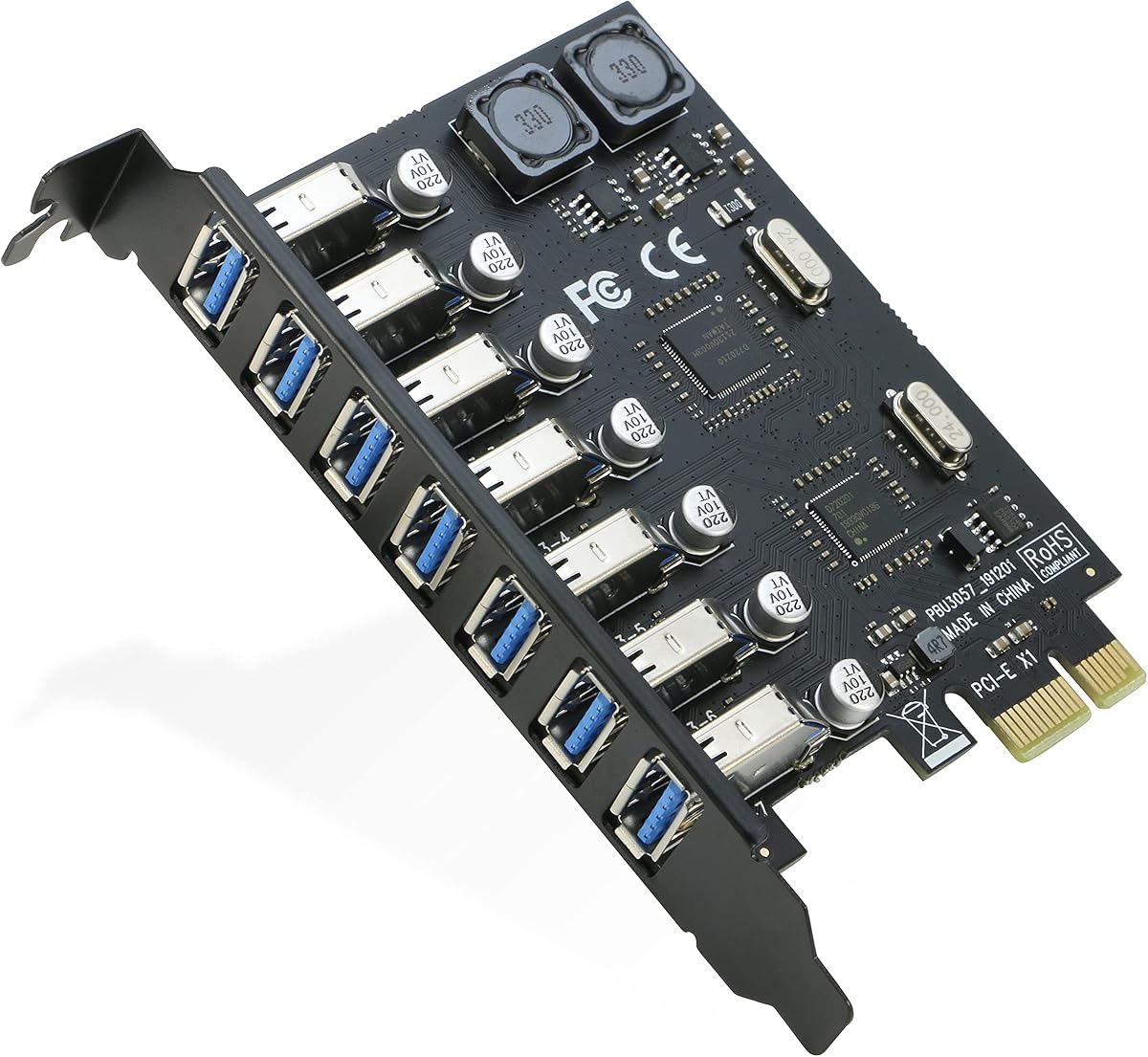
Expand Your Desktop's USB 3.0 Ports Without External Power Requirements
The RIITOP PCI-e x1 to USB 3.0 adapter addresses a specific need: adding seven USB 3.0 ports to desktop computers without requiring additional power connectors. This product's 'no power need' claim means it draws all necessary power directly from your motherboard's PCI-e x1 slot, making installation simpler but limiting power delivery to connected devices.
Key Considerations Before Buying
- This card's x1 PCI-e lane provides 5Gbps total bandwidth shared across all seven ports, meaning simultaneous transfers to multiple high-speed devices will experience reduced speeds.
- The 'no power need' design means each port delivers only 900mA maximum, insufficient for bus-powered hard drives or multiple high-draw peripherals simultaneously.
- Verify your motherboard has an available PCI-e x1 slot (the shortest black slot) and your case has an open low-profile bracket for installation.
What Our Analysts Recommend
Quality indicators include proper heat dissipation design (note the ventilation holes in this card's bracket), gold-plated USB connectors for corrosion resistance, and clear documentation about power limitations. Genuine USB 3.0 controllers (like the VIA VL805 likely used here) should maintain consistent 5Gbps signaling when not bandwidth-saturated.
USB Port Cards Market Context
Market Overview
USB 3.0 expansion cards have evolved into two distinct categories: powered cards with supplemental SATA or molex connectors for high-current devices, and simpler 'bus-powered' cards like this RIITOP model for low-to-moderate power needs. The market increasingly favors cards with USB 3.2 Gen 1 (5Gbps) controllers that maintain backward compatibility.
Common Issues
Bus-powered cards frequently encounter problems with external hard drives that require more than 900mA, causing disconnections or failure to spin up. Bandwidth sharing across multiple ports leads to speed reductions when transferring data simultaneously, and some cards suffer from driver compatibility issues with newer operating systems.
Quality Indicators
Superior cards feature dedicated power regulation circuits, quality capacitors near the USB controller chip, and proper shielding to reduce electromagnetic interference. Look for cards that specify their controller chip (VIA, Renesas, or ASMedia chips are generally reliable) rather than generic 'USB 3.0' claims.
Review Authenticity Insights
Grade B Interpretation
A Grade B authenticity rating with 15% estimated fake reviews suggests mostly genuine feedback but warrants careful review reading. The adjusted rating of 4.30/5 (down from 4.67/5) indicates some review inflation, though the 100% verified purchase status increases credibility.
Trust Recommendation
Focus on the 3-star and 4-star reviews for balanced perspectives, as these are less likely to be manipulated. Pay particular attention to reviews discussing specific use cases like connecting multiple webcams, card readers, or low-power peripherals rather than generic praise.
Tips for Reading Reviews
Look for reviews that mention specific device combinations tested (e.g., 'connected 4 flash drives and a keyboard simultaneously') and note any bandwidth or power issues. Reviews discussing driver installation on Windows 10/11 or Linux provide valuable real-world compatibility information.
Expert Perspective
The RIITOP card represents a competent solution for users needing additional USB 3.0 ports for low-to-moderate power devices like keyboards, mice, flash drives, and webcams. Its 4.30 adjusted rating reflects generally positive experiences, though the power limitations mean it's unsuitable as a hub for bus-powered hard drives or multiple high-draw devices. The x1 PCI-e interface creates a bandwidth bottleneck when multiple ports are active simultaneously, which is typical for this product category.
Purchase Considerations
Choose this card if you primarily need additional ports for human interface devices and occasional file transfers from single flash drives. Consider a powered USB expansion card instead if you plan to connect external storage devices, charge multiple phones/tablets, or use power-hungry peripherals like external optical drives.
Comparing Alternatives
Shoppers should compare this bus-powered design with cards offering supplemental power connectors if their needs extend beyond basic peripheral connectivity.


