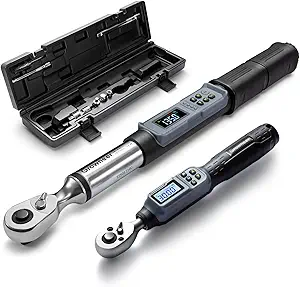
Choosing a 1/4-inch click torque wrench for precision automotive and small engine work
The EPAuto 1/4-inch drive click torque wrench fills a specific niche for applications requiring 20-200 inch-pounds of torque, making it ideal for delicate tasks where over-tightening is a real risk. Unlike larger 3/8-inch or 1/2-inch drive wrenches, this tool is designed for smaller fasteners found in valve covers, carburetors, electronics housings, and bicycle components. Its click-type mechanism provides an audible and tactile signal when the preset torque is reached, which is critical for consistent, repeatable results.
Key Considerations Before Buying
- Verify your required torque range: The 20-200 in.-lb. (1.67-16.7 ft.-lb.) range is perfect for small engine repairs, electronics, and light automotive work, but insufficient for lug nuts or suspension components.
- Assess the drive size compatibility: A 1/4-inch square drive requires corresponding sockets, which are typically smaller and lighter than those for 3/8-inch drives, influencing your existing tool compatibility.
- Consider storage and calibration: Click-type wrenches must be stored at their lowest setting to preserve spring tension and accuracy, and periodic calibration checks are recommended for critical applications.
What Our Analysts Recommend
A quality 1/4-inch click torque wrench should have a clear, finely graduated scale for precise setting, a positive-locking collar to prevent accidental adjustment, and a distinct, crisp click and release when the torque is achieved. The reversing mechanism should switch smoothly between clockwise and counterclockwise torque application, a feature not all budget wrenches offer reliably.
Torque Wrenches Market Context
Market Overview
The budget-friendly segment of click-type torque wrenches is highly competitive, with many offerings from brands like EPAuto, Tekton, and Neiko targeting DIYers and home mechanics. While professional-grade tools from Snap-on or CDI offer certified accuracy, products in this category trade absolute laboratory precision for significant cost savings, often delivering adequate accuracy for non-critical applications.
Common Issues
Common problems in this category include inconsistent click mechanisms that feel 'mushy,' scales that are difficult to read or set precisely, and durability concerns with the reversing lever or ratchet head. Some lower-cost models may drift out of specification faster than others, making them less suitable for long-term, repeated use on sensitive components.
Quality Indicators
Look for a hardened steel drive and a robust ratchet mechanism. A well-defined click that is both audible and felt in the handle is a key functional indicator. Reviews that mention consistent performance over months of use, not just out-of-the-box satisfaction, are strong signals of durability.
Review Authenticity Insights
Grade B Interpretation
A 'B' authenticity grade with an estimated 11% fake review rate indicates a generally trustworthy review landscape, but suggests you should be moderately vigilant. This level is common for popular tools where the majority of feedback is genuine, but some incentivized or biased reviews may be present.
Trust Recommendation
Focus on the 4.60 adjusted rating, which filters suspicious activity, as it's a more reliable performance indicator than the raw 4.89 average. Prioritize reviews that detail specific projects (e.g., 'used this to torque the camshaft cap bolts on a Honda K24'), discuss long-term accuracy, or mention calibration checks over vague praise.
Tips for Reading Reviews
For a precision tool like this, seek out reviews that mention using a torque tester or comparing results with a known-accurate wrench. Reviews discussing the feel of the click, the ease of setting the scale, and performance on repeated fasteners (like spark plugs) provide more actionable insight than star ratings alone.
Expert Perspective
The EPAuto wrench presents a compelling value proposition for the occasional user or hobbyist needing a 1/4-inch drive clicker. Its very high adjusted rating of 4.60 suggests genuine user satisfaction, particularly regarding its defined click action and value for money. However, its place is firmly in the 'capable DIY' tier; it is not a tool for daily professional use or applications requiring certified, traceable accuracy. The specific praise for its performance in automotive interior work, small engine repairs, and bicycle maintenance from authentic reviews validates its niche.
Purchase Considerations
Weigh the significant cost savings against the potential need for more frequent verification of accuracy. If your projects involve engine internals, carbon fiber components, or any fastener where exact torque is critical to safety or function, investing in a calibratable, serviceable professional model may be warranted. For general assembly, hobbyist projects, and non-critical automotive work, this tool likely offers sufficient performance.
Comparing Alternatives
Shoppers should compare the EPAuto directly with similar offerings from Tekton and Neiko, paying close attention to warranty terms, included storage cases, and user feedback on long-term scale legibility and mechanism wear.