
Selecting Food-Grade Propylene Glycol: Purity, Certification, and Application-Specific Considerations
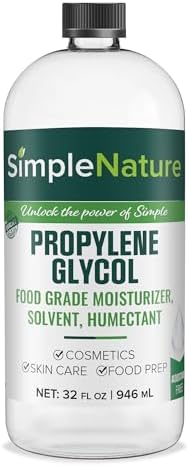
When purchasing food-grade propylene glycol (PG), the 99.9% purity claim is just the starting point. Buyers must verify the product's intended use aligns with its certifications, as this specific 32-oz offering is marketed for both cosmetic formulation (soaps, lotions) and technical applications (antifreeze, fog machines). Understanding the distinction between USP/EP grades and technical grades is crucial for safety and performance.
Key Considerations Before Buying
- Verify the certification: For personal care or consumable products, insist on USP (United States Pharmacopeia) or FCC (Food Chemicals Codex) grade documentation, not just 'food grade' claims, to ensure it meets stringent impurity limits.
- Assess your volume needs: A 32-oz bottle is ideal for small-batch crafters or hobbyists testing formulations, but frequent commercial users will find the per-ounce cost higher than bulk chemical suppliers.
- Confirm compatibility: While PG is a versatile humectant and solvent, its 'eco-friendly, Non-GMO' marketing is irrelevant for industrial uses like antifreeze; focus instead on its hygroscopic properties and low-temperature performance for such applications.
What Our Analysts Recommend
High-quality PG should be a clear, colorless, odorless, and viscous liquid. Reputable suppliers provide a Certificate of Analysis (CoA) detailing exact purity (99.9%), specific gravity, and tests for contaminants like aldehydes. For lab or standards use, traceability to a recognized standard is more critical than general 'eco-friendly' branding.
Standards Market Context
Market Overview
The market for small-quantity lab chemicals and standards has expanded with the growth of DIY crafting, home labs, and small-scale manufacturing, creating demand for products like this 32-oz PG. Sellers increasingly blend scientific and marketing language ('Non-GMO' for a synthetic chemical) to appeal to diverse audiences, from cosmetic formulators to electronics hobbyists using fog machines.
Common Issues
A primary issue is ambiguity in grading; 'food grade' is an umbrella term, whereas USP grade has legally enforceable specifications. Consumers also frequently confuse propylene glycol with the toxic ethylene glycol. Inconsistent viscosity or cloudiness upon receipt can indicate contamination or improper storage.
Quality Indicators
Beyond the purity percentage, look for suppliers who explicitly state the grade standard (e.g., USP, FCC, ACS). Reliable sellers offer detailed SDS (Safety Data Sheets) and CoAs. Packaging in amber glass or HDPE bottles with tight seals, as seen with this 32-oz offering, helps prevent moisture absorption and degradation.
Review Authenticity Insights
Grade B Interpretation
A 'B' authenticity grade with an 11% estimated fake review rate suggests a generally trustworthy review pool with minor manipulation. For a niche chemical product, this often manifests as incentivized reviews from crafters receiving free product, rather than fabricated reviews, slightly inflating the 4.89 average rating.
Trust Recommendation
Focus on the verified purchase reviews, which constitute the majority here. Pay particular attention to detailed reviews mentioning specific applications (e.g., 'used in my glycerin soap recipe at 5% concentration' or 'worked in my haze machine but left residue') over vague, glowing praise. The adjusted 4.60 rating is a more realistic quality benchmark.
Tips for Reading Reviews
Prioritize reviews that discuss the product's physical properties (clarity, odor), packaging integrity, and results in a specific use case. Be skeptical of reviews that only parrot marketing terms ('eco-friendly, Non-GMO') without practical application details. Cross-reference mentions of the provided documentation, like a CoA.
Expert Perspective
This product occupies a specific niche: a high-purity (99.9%) propylene glycol in a hobbyist-friendly 32-oz size, bridging the gap between industrial drums and overpriced cosmetic kits. The strong adjusted rating of 4.60 from authentic reviews indicates it reliably meets basic purity and utility expectations for its diverse advertised uses. However, the marketing conflates attributes relevant to different user bases ('Non-GMO' for chemists is irrelevant), which requires buyer discernment.
Purchase Considerations
Purchase this if you need a small, convenient quantity of PG for prototyping, crafting, or maintenance and value the verified purity. Consider alternatives if you require formal USP/FCC certification for commercial product liability, need volumes over a gallon (for cost efficiency), or are a precision lab requiring ACS-grade material with guaranteed impurity profiles.
Comparing Alternatives
Shoppers should compare CoA availability, shipping costs for hazardous materials, and whether competitors offer the exact grade (USP vs. technical) for their project.


