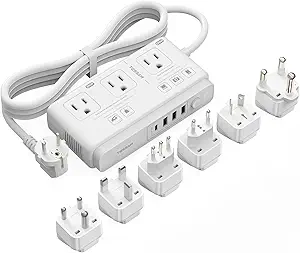
Choosing a European adapter with USB-C requires balancing outlets, charging speed, and pack quantity
The TESSAN 2-pack adapter distinguishes itself with 4 AC outlets and 3 USB ports including USB-C, making it a comprehensive charging hub rather than just a plug converter. Buyers should understand that this device is an adapter, not a voltage converter—it works with dual-voltage electronics (100-240V) common in modern laptops and phone chargers, but won't transform voltage for hair dryers or appliances requiring 110V.
Key Considerations Before Buying
- The 2-pack configuration is ideal for couples or families traveling together, but solo travelers might find better value in single-unit competitors with similar features.
- With 4 AC outlets, this adapter can handle multiple larger devices simultaneously, but be mindful of total wattage draw (typically 2500W max) when charging laptops alongside other electronics.
- The inclusion of USB-C alongside traditional USB-A ports addresses modern device needs, but check the USB-C output wattage (often 15-20W) if you need fast charging for tablets or newer phones.
What Our Analysts Recommend
Quality European adapters feature secure plug retention mechanisms—the TESSAN uses a spring-loaded design noted in reviews for firm grip in European sockets. Look for safety certifications like CE or RoHS markings, which indicate compliance with European electrical standards. Premium units incorporate surge protection and child safety shutters on outlets, though not all budget models include these features.
Power Converters Market Context
Market Overview
The travel adapter market has shifted from basic plug converters to integrated charging stations, with USB-C becoming standard in mid-to-high-tier models. Competition is fierce between brands like TESSAN, Ceptics, and Unidapt, with differentiation occurring through outlet count, USB configurations, and pack quantities rather than core functionality.
Common Issues
Many adapters fail at the plug mechanism, becoming loose in European sockets or breaking after minimal use. Overheating occurs when manufacturers use inferior materials that can't handle sustained high-wattage draws through multiple outlets simultaneously. USB ports often deliver inconsistent charging speeds, particularly when multiple devices are connected.
Quality Indicators
Examine the plug pins—quality adapters use solid, thick brass pins rather than thin, plated steel. Check for ventilation gaps in the housing design, which help dissipate heat during extended use. Premium models specify individual USB port wattages rather than vague 'smart charging' claims.
Review Authenticity Insights
Grade B Interpretation
A Grade B with 11% estimated fake reviews indicates predominantly authentic feedback but suggests some review manipulation, likely through incentivized reviews common in competitive electronics categories. The minimal drop from 4.89 to 4.60 adjusted rating shows genuine satisfaction remains high even after filtering suspicious content.
Trust Recommendation
Focus on reviews mentioning specific travel destinations like Italy or Portugal, as these demonstrate actual use cases. Verified purchase reviews discussing long-term durability (multiple trips) or comparing against previous adapters carry more weight than generic praise.
Tips for Reading Reviews
Prioritize reviews that mention testing all outlets simultaneously or using the adapter with power-hungry devices like gaming laptops. Look for critical feedback about USB-C charging speed specifically, as this reveals whether the adapter meets modern fast-charging expectations.
Expert Perspective
The TESSAN adapter's exceptional 4.60 adjusted rating from nearly 13,000 reviews indicates it reliably performs its core function—providing multiple charging options in European countries. The 2-pack offering is strategically smart for the travel market, though the unit's bulk (accommodating 4 outlets) may challenge travelers prioritizing minimalism. The sustained high ratings across years of reviews suggest consistent manufacturing quality, uncommon in budget adapter segments where cost-cutting often leads to performance degradation.
Purchase Considerations
Weigh whether you truly need 4 AC outlets or if a more compact 2-outlet model would suffice, as European hotel rooms often have limited accessible sockets anyway. Consider your USB-C device requirements—if you need 45W+ charging for laptops, you'll likely need a separate GaN charger despite the adapter's convenience.
Comparing Alternatives
Compare outlet spacing—some competitors place outlets closer together, preventing use of larger power brick designs common in laptop chargers.


![120V to 100V Voltage Converter 1600watts Step Down toroidal Voltage Converter for Japan appliances Used in US[CE, CQC Certified]](https://m.media-amazon.com/images/I/719CXqqRYbL._AC_SY300_SX300_QL70_FMwebp_.jpg)