
Choosing a 72cc Gas Post Hole Digger: Power, Bits, and Extension Considerations
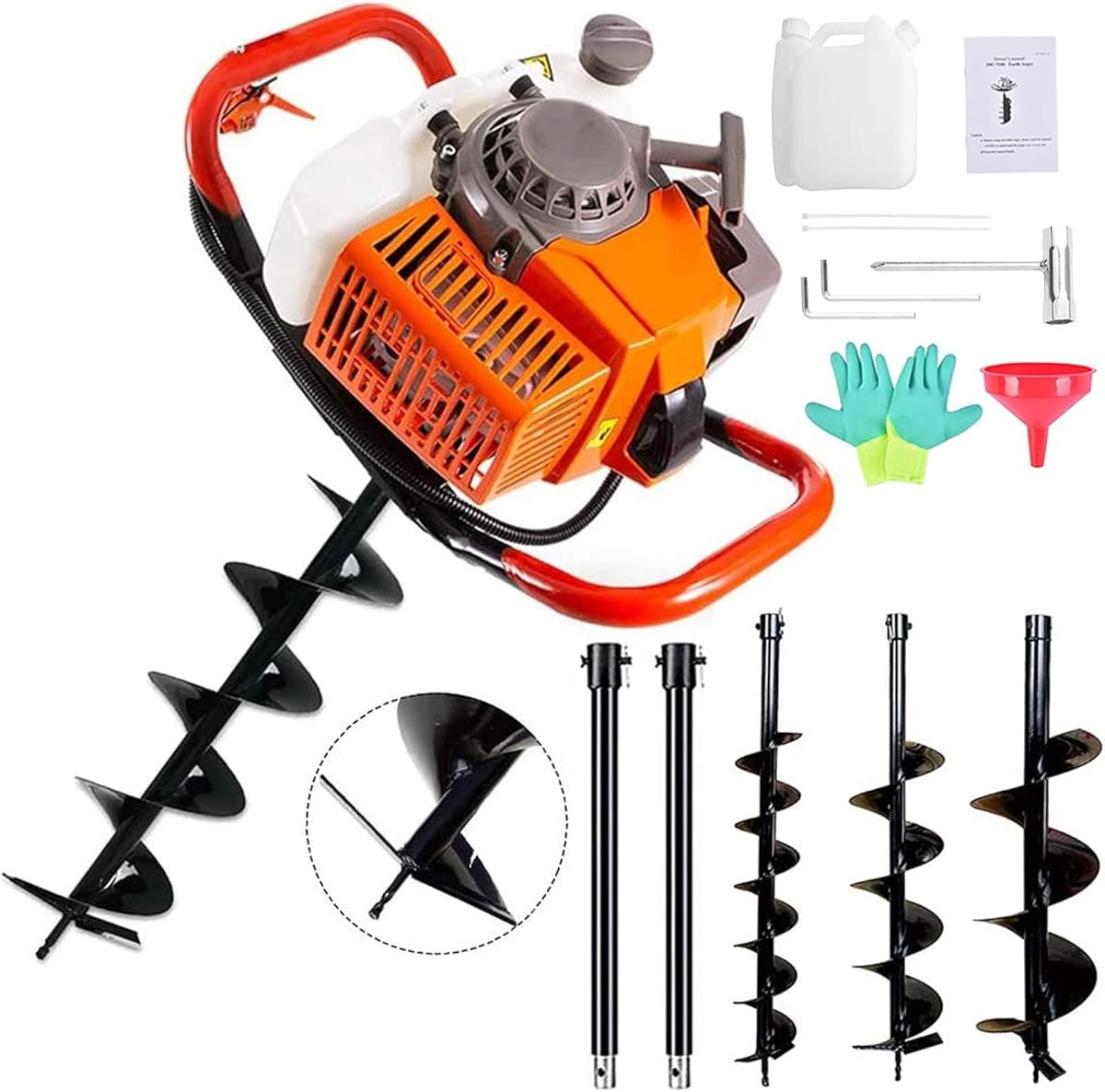
This 72cc 2-stroke petrol digger with three auger sizes (4", 8", 12") and two extension rods represents a mid-range power option for serious property work. Buyers should understand that 72cc engines provide substantial torque for challenging soil but require proper 2-stroke fuel mixing and maintenance. The included bit range covers everything from fence posts to small tree planting, making it versatile for farm and large garden applications.
Key Considerations Before Buying
- The 72cc displacement indicates this unit generates significant torque for rocky or compacted soils, but also means heavier weight and more vibration than smaller 40-50cc models—consider your physical capability to operate it.
- Three auger sizes (4", 8", 12") plus extensions allow for diverse projects, but switching between bits requires proper securing with shear bolts; examine how the connection system handles different soil loads.
- Two-stroke engines like this one require precise oil-to-gas mixing (typically 25:1 or 40:1); improper fuel preparation is the leading cause of failure in this category, so factor in your comfort with small engine maintenance.
What Our Analysts Recommend
Quality indicators include forged steel auger flights with hardened cutting edges that resist dulling in rocky soil, and a centrifugal clutch that engages smoothly under load. Check that extension rods have positive locking mechanisms to prevent separation during operation, and examine whether the gearbox housing is sealed against dirt intrusion—critical for longevity in abrasive conditions.
Augers & Posthole Diggers Market Context
Market Overview
The gas-powered post hole digger market has shifted toward mid-power 60-80cc units that balance homeowner affordability with professional-grade capability. Recent models increasingly include multiple auger sizes as standard, responding to consumer demand for versatility beyond basic fence installation.
Common Issues
Premature gearbox failure from inadequate sealing, bent auger shafts in rocky conditions, and carburetor problems from improper fuel storage plague lower-quality units. Many users underestimate the physical demand of operating heavier 70+cc machines, leading to fatigue-related accidents or dissatisfaction.
Quality Indicators
Look for gearboxes with metal gears rather than plastic, auger bits with replaceable cutting teeth instead of welded edges, and anti-vibration handles that reduce operator fatigue. Quality units feature robust throttle linkages protected from dirt and moisture, extending the engine's service life between maintenance intervals.
Review Authenticity Insights
Grade B Interpretation
A Grade B authenticity rating with 10% estimated fake reviews indicates generally reliable feedback, though approximately 1 in 10 reviews may be artificially positive. The 4.00 adjusted rating (down from 4.22) suggests genuine satisfaction sits between 'good' and 'very good' rather than exceptional.
Trust Recommendation
Focus on verified purchase reviews discussing specific use cases like rocky soil performance or auger bit durability over several seasons. Since all reviews are verified purchases, prioritize those mentioning long-term ownership (6+ months) and actual project completion details over general praise.
Tips for Reading Reviews
Look for reviews that mention the 72cc engine's starting reliability in different temperatures, how the three auger sizes perform in various soil types, and whether the extension rods maintain alignment during deep digging. Be skeptical of reviews lacking operational details or those claiming unrealistically easy use with heavy machinery.
Expert Perspective
This digger's 4.00 adjusted rating from verified purchasers suggests it delivers solid performance for its price point, particularly given the inclusion of three auger sizes and extensions—a $150-300 value if purchased separately. The 72cc engine places it in the sweet spot for serious property owners needing to tackle mixed soil conditions without commercial-grade expense. However, the authenticity analysis indicates some review inflation, so temper expectations accordingly; this is likely a competent but not exceptional tool.
Purchase Considerations
Weigh whether you truly need 12" diameter capability (for substantial planting) or if an 8" maximum would suffice, as larger augers dramatically increase torque requirements and physical effort. Consider your soil composition—clay-heavy or rocky conditions benefit from this unit's power, while sandy soils might not justify the engine size and weight.
Comparing Alternatives
Compare this 72cc model against both smaller 50cc units for lighter work and commercial 80+cc diggers if you have extensive, demanding projects to understand the power-to-weight tradeoffs.


