
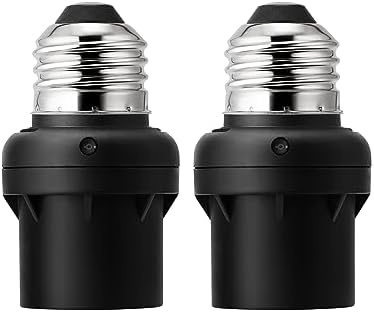
Choosing a Dusk-to-Dawn Sensor Socket: Key Factors for Outdoor Lighting Automation
The DEWENWILS Light Sensor Socket represents a specific type of retrofit solution for converting standard outdoor fixtures into automated dusk-to-dawn lights. Unlike smart bulbs or integrated fixtures, this product is a screw-in adapter that adds photocell functionality between your existing socket and bulb, making compatibility with your current bulb type (LED, CFL, halogen, incandescent) a primary consideration.
Key Considerations Before Buying
- Verify your bulb's base size matches the E26/E27 socket standard and that its total wattage does not exceed the adapter's 300W incandescent/150W LED-CFL rating to prevent overheating or sensor malfunction.
- Assess the installation location's ambient light conditions, as the built-in photocell requires direct exposure to natural daylight cycles and may fail to trigger correctly if installed under an eave or in deep shadow.
- Consider the physical clearance needed, as this adapter adds approximately 2 inches of height to your bulb assembly, which may not fit within enclosed or recessed outdoor fixtures.
- Confirm your intended use case aligns with a simple on/off at dusk/dawn; this product lacks adjustable sensitivity, timers, or smart home connectivity found in more advanced (and expensive) systems.
What Our Analysts Recommend
For sensor sockets, prioritize units with robust, weather-resistant thermoplastic casings (like the DEWENWILS's PC/ABS blend) and brass-plated, corrosion-resistant internal contacts. A quality indicator is a clear specification for both resistive (incandescent/halogen) and inductive (LED/CFL) loads, as driving different bulb technologies requires proper circuitry to avoid flickering.
Light Sockets Market Context
Market Overview
The retrofit photocell socket market is crowded with low-cost options, but significant variation exists in build quality, sensor accuracy, and longevity. Products like the DEWENWILS aim to balance affordability with broad bulb compatibility, a key selling point as consumers transition to LEDs but own fixtures without integrated sensors.
Common Issues
Common failures include premature photocell degradation causing lights to stay on constantly or not turn on at all, plastic housings cracking from UV exposure or thermal stress, and incompatibility with certain dimmable or low-wattage LED bulbs that don't draw enough current to keep the sensor circuit active.
Quality Indicators
Look for explicit certifications (like ETL or UL listing, which this product has), detailed technical specs for different bulb types, and construction that uses a photoresistor (CdS cell) rather than cheaper, less reliable alternatives. High-quality units will also have clear polarity markings and secure, strain-relieved wire connections.
Review Authenticity Insights
Grade B Interpretation
A 'Grade B' with an estimated 11% fake review rate suggests the review corpus is generally reliable but warrants cautious scrutiny. For this product, it indicates most feedback is from verified purchasers sharing genuine experiences, though a small portion of reviews may be incentivized or overly simplistic.
Trust Recommendation
Focus on reviews that detail long-term performance (6+ months), mention specific bulb brands and models used, and discuss installation in various weather conditions. Be slightly more skeptical of brief, 5-star reviews that lack these specifics, as they may constitute the estimated inauthentic portion.
Tips for Reading Reviews
Pay particular attention to reviews mentioning use with modern LED bulbs, as sensor compatibility is not universal. Also, prioritize feedback that notes the exact time of year and geographic location, as photocell performance varies with seasonal light changes and latitude.
Expert Perspective
The DEWENWILS socket presents a strong value proposition based on its high adjusted rating (4.6/5) and genuine reviewer focus on ease of installation and reliable basic function. Its key advantage is broad compatibility across legacy and modern lighting technologies, a notable feat in this category. The primary trade-off is the lack of adjustable sensitivity, meaning performance is fixed and may not suit locations with streetlight interference or desired earlier/later triggering. The 2-pack offering is practical for symmetrical outdoor lighting needs.
Purchase Considerations
This product is an excellent fit for users seeking a simple, cost-effective way to automate existing porch lights, garage lights, or other outdoor fixtures without rewiring. It is less ideal for applications requiring precise control, use in fully enclosed fixtures, or integration with a broader home automation system. The high rating suggests it executes its core promise—reliable dusk-to-dawn switching—effectively for most users.
Comparing Alternatives
Shoppers should compare this model with units offering adjustable sensitivity or built-in timers if their lighting environment is complex, and verify competitor claims about LED compatibility, as performance varies.
![Borju Plug in Light Socket [2-Pack], Outlet to Socket Adapter, 360° Rotatable Plug with On/Off Switch, ETL Listed, White](https://m.media-amazon.com/images/I/516jadDV0IL._AC_SL1500_.jpg)


