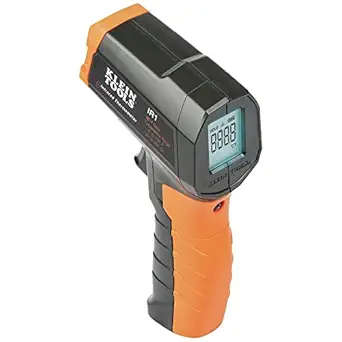
Choosing an Infrared Thermometer Gun: Key Factors for Accuracy
Infrared thermometer guns like this model offer non-contact temperature measurement from -58°F to 1472°F, making them versatile for cooking, home repairs, and HVAC work. With adjustable emissivity and a color LCD, this tool aims to provide accurate readings across various surfaces.
Key Considerations Before Buying
- Emissivity adjustment is crucial for accurate readings on different materials; without it, measurements on shiny or reflective surfaces can be off by significant margins. This model allows you to set emissivity from 0.1 to 1.0, which is essential for tasks like checking oven temperatures or electrical components.
- The distance-to-spot ratio determines how far you can be from an object while still getting an accurate reading. A higher ratio (e.g., 12:1) means you can measure smaller targets from farther away, which is useful for safely checking hot engine parts or HVAC vents.
- Response time and accuracy specifications matter: look for a response time under 500ms and accuracy of ±2% or better. This model claims a response time of 500ms and accuracy of ±2°C, which is typical for consumer-grade infrared thermometers.
What Our Analysts Recommend
When evaluating infrared thermometers, prioritize models with adjustable emissivity, a clear laser pointer for targeting, and a backlit display for low-light conditions. Build quality, such as a rugged housing and ergonomic grip, also indicates durability for frequent use.
Infrared Thermometers Market Context
Market Overview
The infrared thermometer market has expanded beyond industrial use into consumer sectors like cooking and home diagnostics, driven by demand for non-contact safety and convenience. Prices range from $20 to over $100, with features like higher temperature ranges and Bluetooth connectivity differentiating premium models.
Common Issues
A frequent complaint is inaccurate readings on reflective surfaces due to fixed emissivity settings, leading to user frustration. Another issue is poor build quality in budget models, where the laser or sensor may fail prematurely. Additionally, some users expect medical-grade accuracy for body temperature, which these devices are not designed for.
Quality Indicators
Quality infrared thermometers typically feature adjustable emissivity, a reputable brand with calibration certificates, and a distance-to-spot ratio of at least 12:1. Reviews mentioning consistent accuracy over time and responsive customer service are positive signs. Avoid models with vague specifications or no emissivity adjustment.
Review Authenticity Insights
Grade B Interpretation
A Grade B authenticity rating with an estimated 15% fake reviews suggests that while most reviews are genuine, there is a notable minority that may be manipulated. This means you should approach the 4.44-star average with some caution, as the adjusted rating of 4.10 is likely more reliable.
Trust Recommendation
Focus on reviews that provide detailed use cases, mention both pros and cons, and include photos or videos. Verified purchase reviews with specific measurements or comparisons to other models are generally trustworthy. Be wary of generic praise or reviews that only highlight one aspect without context.
Tips for Reading Reviews
When reading reviews for infrared thermometers, look for comments about accuracy on different surfaces, ease of emissivity adjustment, and durability over time. Pay attention to whether reviewers mention using the device for similar applications to yours, as performance can vary by task.
Expert Perspective
This infrared thermometer gun offers a solid feature set for its price point, including adjustable emissivity and a wide temperature range suitable for diverse tasks. The 4.44-star rating is strong, though the adjusted 4.10 suggests some inflated reviews. The B authenticity grade indicates mostly genuine feedback, but consumers should verify critical reviews for accuracy concerns.
Purchase Considerations
Consider your primary use: for cooking, a lower temperature range with high accuracy is key; for home repairs, a higher range and durability matter. Check whether the emissivity range covers your typical materials and if the distance-to-spot ratio meets your needs. Also, assess whether you need extras like a carrying case or tripod mount.
Comparing Alternatives
Before purchasing, compare this model with other infrared thermometers in the same price range, focusing on emissivity adjustability, accuracy specifications, and warranty terms. Reading expert reviews and watching demonstration videos can help you gauge real-world performance.