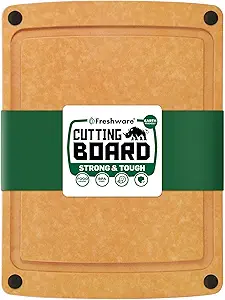
Choosing an Extra-Large Acacia Cutting Board: Size, Grain, and Maintenance Essentials
This 24x18-inch acacia wood cutting board represents a substantial investment in kitchen workflow, offering both generous prep space and specific functional features like a reversible design and juice groove. Buyers should understand how acacia's unique properties differ from maple, walnut, or bamboo boards, particularly regarding hardness, oil absorption, and grain pattern. The large format demands consideration of storage and weight, as this isn't a board you'll tuck easily into a drawer.
Key Considerations Before Buying
- Acacia wood is exceptionally hard (around 2,300 on the Janka scale), making it durable against knife marks but requiring proper oiling to prevent drying and cracking, especially on a large surface area.
- The 24x18-inch size with a juice groove is ideal for butchering large cuts of meat or prepping multiple vegetables at once, but its bulk requires dedicated counter or storage space—measure your kitchen before purchasing.
- A reversible board with a juice groove on one side offers versatility, but check if the groove runs fully around the perimeter to effectively contain liquids from large roasts or juicy fruits.
What Our Analysts Recommend
Examine product images for end-grain versus edge-grain construction; this board appears to be edge-grain, which is more common for acacia and provides a good balance of durability and knife-friendliness. Quality indicators include uniform grain without large knots or cracks, smoothly routed juice grooves that won't trap debris, and mention of food-grade mineral oil treatment in the manufacturing process. Thickness (typically 1.5-2 inches for this size) is crucial for stability and warp resistance.
Cutting Boards Market Context
Market Overview
The market for large wooden cutting boards is currently segmented between affordable, thin bamboo options and premium hardwoods like acacia, maple, and teak, with acacia gaining popularity for its striking grain patterns and competitive pricing. Consumers are increasingly seeking boards over 20 inches in length for meal-prepping efficiency and as decorative serving pieces, driving demand for reversible designs with functional grooves.
Common Issues
Large wooden boards are prone to warping if not properly seasoned and stored flat, and acacia's density can sometimes lead to accelerated knife dulling compared to softer woods. Inconsistent oiling regimens are the primary cause of premature cracking, especially around the juice groove where stress can concentrate. Some manufacturers use subpar glue in laminated constructions, leading to seam separation after repeated washing.
Quality Indicators
Look for boards labeled as solid wood rather than laminated composites, with clearly described wood sourcing (sustainably harvested acacia is ideal). High-quality boards will have rounded, sanded edges for comfortable handling and will specify they are pre-treated with food-safe oil. Customer reviews that mention the board's weight (a heavy board is often more stable) and grain consistency over time are strong real-world quality signals.
Review Authenticity Insights
Grade B Interpretation
A Grade B authenticity rating with an estimated 11% fake review rate indicates a generally trustworthy review profile, but suggests a modest level of potentially incentivized or unverified feedback. For this acacia board, this means the core 4.2 adjusted rating from verified purchasers is a reliable benchmark, though shoppers should be slightly skeptical of overly effusive 5-star reviews that lack specific usage details.
Trust Recommendation
Focus on the verified purchase reviews that discuss long-term ownership (6+ months), as these will provide genuine insights into how the acacia wood holds up to oiling, washing, and knife wear over time. Pay particular attention to 3- and 4-star reviews, which often contain the most balanced assessments of the board's heft, grain quality, and groove functionality.
Tips for Reading Reviews
For this product, prioritize reviews that mention specific use cases like 'carving a Thanksgiving turkey' or 'weekly meal prep' to gauge the juice groove's utility and the surface's resistance to staining. Look for reviews with photos showing the actual grain pattern and board thickness, as these validate the reviewer's experience and help set accurate size expectations for your own kitchen.
Expert Perspective
This large acacia board presents a compelling option for serious home cooks who need ample, durable prep space. The adjusted 4.2 rating from authentic reviews suggests most buyers are satisfied with its size and acacia's visual appeal. The key strengths appear to be its substantial footprint and reversible design, though the wood's hardness means it requires a committed maintenance routine with regular mineral oil applications to prevent drying. The juice groove is a critical feature at this size; ensure reviews confirm it adequately contains runoff from large tasks.
Purchase Considerations
Weigh whether your kitchen workflow truly benefits from an 18x24-inch surface, as this board will likely live on your countertop. Consider your willingness to maintain a hardwood board—acacia needs oiling every 4-6 weeks with frequent use. If you primarily use ceramic or very hard steel knives, note that acacia's density may cause slightly faster dulling than a softer end-grain maple board.
Comparing Alternatives
Shoppers should compare this edge-grain acacia board with similar-sized options in maple or walnut, considering differences in hardness, porosity, and price, as well as the presence of integrated handles or non-slip feet.