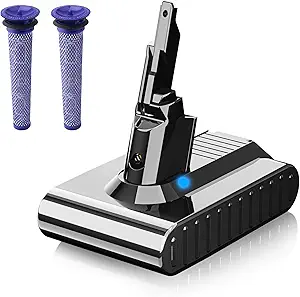
Choosing a Reliable Replacement Battery for Your Shark Ion Robot Vacuum
When your Shark Ion robot vacuum starts losing power mid-clean or refuses to hold a charge, a replacement battery like the FirstPower 3.2Ah RVBAT850 can restore its performance. This guide focuses on key factors to consider when selecting a compatible battery for models such as the R75, RV761, and RV850C, ensuring you get the best value and longevity.
Key Considerations Before Buying
- Capacity and compatibility: The FirstPower offers 3.2Ah capacity, which should match or exceed your original battery's runtime. Verify compatibility with your specific Shark model (e.g., RV1000S, RV1100VL) to avoid fitment issues.
- Build quality and safety: Look for batteries with built-in protection circuits against overcharge, short circuits, and overheating. The FirstPower's lithium-ion chemistry typically requires such safeguards to prevent damage to your vacuum.
- Price vs. performance: At a competitive price point, this battery offers a balance between cost and expected lifespan. Consider if the lower upfront cost justifies potential trade-offs in cycle life compared to OEM options.
What Our Analysts Recommend
Quality indicators include clear specifications (voltage, capacity, cell type), positive user feedback on runtime and durability, and certifications like CE or RoHS. Avoid batteries with vague descriptions or no warranty, as these may indicate inferior cells.
Batteries Market Context
Market Overview
The replacement battery market for robot vacuums is crowded with third-party options, often at lower prices than OEM parts. Brands like FirstPower compete by offering higher capacities or lower costs, but quality can vary widely due to different cell sources.
Common Issues
Common problems include shorter-than-advertised runtimes, rapid capacity loss after a few months, and compatibility errors with newer vacuum firmware. Some users report batteries that stop charging entirely, often due to poor cell balancing or protection circuit failures.
Quality Indicators
High-quality replacement batteries typically use branded cells (e.g., Samsung, LG), have robust protection boards, and include clear instructions. Positive reviews that mention consistent performance over six months are strong indicators of reliability.
Review Authenticity Insights
Grade B Interpretation
The Grade B rating and estimated 10% fake review rate suggest that while most feedback is genuine, a small portion may be incentivized or fabricated. This is typical for mass-market electronics on Amazon, where some sellers boost ratings artificially.
Trust Recommendation
You can generally trust the majority of reviews, but focus on verified purchase badges and detailed accounts. Be cautious of overly uniform five-star praise or reviews lacking specifics about installation or performance.
Tips for Reading Reviews
Prioritize reviews that describe battery life after several weeks of use, as initial impressions may not reflect long-term reliability. Look for mentions of compatibility with your exact Shark model and any issues with charging docks.
Expert Perspective
The FirstPower 3.2Ah RVBAT850 presents a solid, budget-friendly option for Shark Ion robot vacuum owners, with a strong average rating of 4.44 out of 5 from over 1,000 reviews. However, the adjusted rating of 4.20 and 10% suspicious review rate indicate some inflated praise. The battery likely offers satisfactory performance for most users, but potential buyers should temper expectations regarding longevity, as third-party cells may degrade faster than OEM equivalents.
Purchase Considerations
Weigh the lower cost against the risk of reduced lifespan or compatibility quirks. If your vacuum is older and you want a quick fix without investing in a new unit, this battery is a reasonable choice. For critical daily use, consider OEM or premium third-party alternatives with better track records.
Comparing Alternatives
Shoppers should compare this with other third-party options from brands like BatPower or Wasabi, as well as official Shark batteries, to find the best balance of price, capacity, and reliability.