
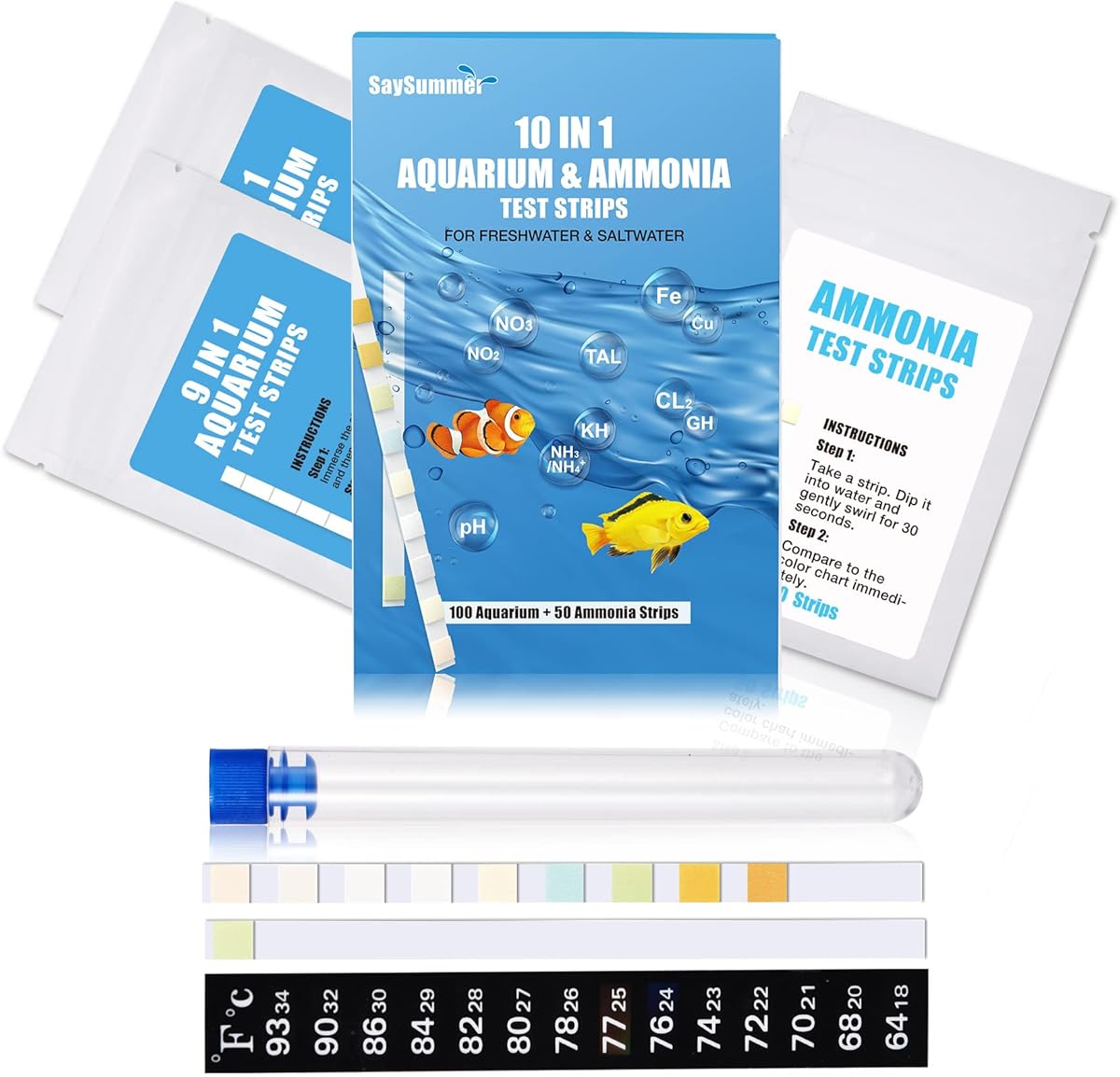
Choosing a 10-in-1 Aquarium Test Strip Kit: Accuracy, Value, and Ease of Use
For aquarium hobbyists, a comprehensive test strip kit like this 10-in-1, 150-count option offers a convenient snapshot of water chemistry. Buyers should evaluate these kits based on the relevance of the included parameters—especially ammonia—to their specific tank type (freshwater or saltwater) and the clarity of the color comparison chart.
Key Considerations Before Buying
- Parameter relevance: This kit tests for ammonia, nitrite, nitrate, chlorine, hardness, alkalinity, carbonate, pH, and copper. Ensure the parameters match your monitoring needs, particularly for sensitive species or new tank cycles.
- Strip count and shelf life: With 150 strips, this kit offers volume, but test strips can degrade. Check expiration dates and storage recommendations to ensure reagent viability over time.
- Color chart clarity and interpretation: Accurate reading depends on a well-designed, high-contrast color chart. Look for kits with distinct color gradients to avoid ambiguous results, especially for critical toxins like ammonia.
What Our Analysts Recommend
Quality indicators include foil-sealed individual strips to prevent moisture degradation and a sturdy, waterproof container. The color chart should be printed on durable, non-glossy material resistant to water damage from wet fingers during testing.
Aquarium Test Kits Market Context
Market Overview
The aquarium test strip market is crowded, with products ranging from basic 5-in-1 sets to comprehensive kits like this 10-in-1. Consumer demand is shifting toward kits that include ammonia-specific testing, as it's a critical toxin, especially during tank cycling.
Common Issues
Common complaints include color charts with poor differentiation between adjacent values, leading to guesswork, and strips that react inconsistently or expire quickly if not stored properly. Some kits also lack parameters essential for specific aquatic environments.
Quality Indicators
Beyond strip count, look for kits that clearly state compatibility with both freshwater and saltwater, as reagent sensitivity can differ. Independent verification in user reviews comparing strip results to liquid test kits is a strong real-world quality signal.
Review Authenticity Insights
Grade B Interpretation
A Grade B authenticity rating with an 11% estimated fake review rate suggests a generally trustworthy review profile, but shoppers should remain slightly cautious. This level indicates most feedback is genuine, though a small portion may be incentivized or inauthentic.
Trust Recommendation
Focus on reviews that detail specific usage scenarios, like 'testing during a new tank cycle' or 'comparing results with my API liquid kit,' as these demonstrate authentic experience. The adjusted rating of 4.20/5, accounting for suspicious reviews, is a more reliable performance metric than the raw 4.44/5.
Tips for Reading Reviews
Prioritize reviews discussing long-term use over several months, as they comment on strip shelf life and consistency. Be wary of overly vague praise; instead, look for critiques about color chart legibility or comparisons of ammonia readings to other testing methods.
Expert Perspective
This 10-in-1, 150-strip kit presents a strong value proposition for routine monitoring, particularly for its inclusion of ammonia testing—a non-negotiable parameter for fish health. The high verified review count and adjusted 4.20 rating suggest it performs reliably for most hobbyists' needs. The primary trade-off is the inherent limitation of strip tests versus liquid reagents for pinpoint accuracy, especially for parameters like pH and nitrate.
Purchase Considerations
This kit is ideal for established aquarium owners seeking a convenient, broad-spectrum check, but those establishing a new tank or diagnosing a crisis may require the precision of a dedicated liquid ammonia test. Consider if testing for all ten parameters is necessary for your maintenance routine or if a simpler, more frequent ammonia-only test would suffice.
Comparing Alternatives
Shoppers should compare the cost-per-strip and specific parameter list against other 10-in-1 kits and consider if a master liquid test kit, while more involved, offers better long-term value and accuracy for critical parameters.


