Choosing a Robust 3D Printer Controller: The Octopus Pro V1.1 Deep Dive
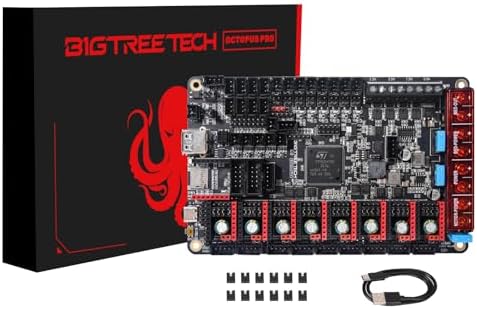
When upgrading your 3D printer's brain, the BIGTREETECH Octopus Pro V1.1 H723 stands out with its 550MHz processor and support for up to eight stepper drivers, including the TMC2209. This guide focuses on what to consider when selecting a high-end controller like this, emphasizing compatibility with your existing printer setup and firmware preferences.
Key Considerations Before Buying
- Firmware and Processor Compatibility: The Octopus Pro V1.1 uses an STM32H723 chip, which is well-supported by both Klipper and Marlin. Ensure your desired firmware version has specific board configurations for this model to avoid setup headaches.
- Stepper Driver Support and Power: With eight driver slots, this board is designed for multi-extruder or complex motion systems like CoreXY or delta printers. Verify that your drivers (e.g., TMC2209 or TMC5160) are compatible with the board's UART or SPI modes, and consider the board's 12-24V input range for your power supply.
- Connectivity and Expansion: The board includes multiple endstop, probe, and fan headers, plus a dedicated Raspberry Pi GPIO port for running Klipper with OctoPrint. If you need more than the standard setup, check for available UART, SPI, or I2C pins for future sensors or accessories.
What Our Analysts Recommend
Look for boards with robust thermal management, such as heatsinks on the main processor and voltage regulators, since high-speed printing can generate heat. A well-documented pinout and active community support are also critical for troubleshooting. Finally, ensure the board has a reliable bootloader and easy firmware flashing method, like an SD card slot.
3D Printer Controllers Market Context
Market Overview
The 3D printer controller market is increasingly shifting toward 32-bit boards with powerful ARM Cortex-M7 processors, like the STM32H723, to handle complex calculations for fast printing and advanced features such as input shaping. These boards often support multiple firmware options, with Klipper gaining popularity for its ability to offload processing to a Raspberry Pi.
Common Issues
A frequent concern is the learning curve for firmware configuration, especially for users new to Klipper or advanced Marlin builds. Additionally, some boards have suffered from poorly documented pinouts or inconsistent quality control on connectors, leading to intermittent connection issues. Power management, such as ensuring sufficient current for multiple stepper drivers, is another area where users may encounter problems.
Quality Indicators
High-quality controllers typically feature a well-laid-out PCB with clear silkscreen labeling, robust screw terminals for power and heaters, and multiple protection circuits like fuses or polyfuses. Look for boards from established brands with active GitHub repositories and community forums, as this indicates ongoing support and firmware updates.
Review Authenticity Insights
Grade A Interpretation
The B grade and 10% estimated fake review rate suggest that while the majority of feedback is genuine, a small portion may be inflated or inauthentic. This is relatively common in niche electronics categories where enthusiasts and early adopters may leave overly positive reviews, or where a few sellers incentivize reviews.
Trust Recommendation
Given the 3.33 out of 5 rating from 37 reviews, you can generally trust the user feedback, but focus on reviews that detail specific experiences with the H723 chip, Klipper setup, or driver compatibility. Verified purchase reviews with technical notes—like issues with UART wiring or fan voltage—are most valuable.
Tips for Reading Reviews
For a product like this, prioritize reviews that mention the firmware used, the printer model it was installed on, and any troubleshooting steps. Look for patterns: if multiple users report the same issue (e.g., a faulty USB port or driver overheating), it's likely a real concern. Beware of vague, one-line praise without technical context.
Expert Perspective
The BIGTREETECH Octopus Pro V1.1 H723 is a powerful and versatile controller for advanced 3D printing enthusiasts, offering ample processing speed and I/O for complex builds. However, its 3.33 rating and moderate fake review percentage suggest that while the hardware is solid, users may face a steep learning curve and occasional quality inconsistencies. The board's support for 8 axes and high-speed printing makes it a strong choice for those building a custom multi-tool or large-format printer, but it may be overkill for simpler setups.
Purchase Considerations
Weigh your technical comfort with firmware configuration against the board's advanced capabilities. If you're experienced with Klipper or Marlin and need the extra axes, this is a good investment. For beginners or those with standard printers, a simpler board like the SKR Mini E3 might offer better value and easier setup.
Comparing Alternatives
Consider comparing this board with other 32-bit controllers like the Duet 3 Mini or the MKS Robin Nano, which offer different trade-offs in terms of processing power, community support, and ease of use.