
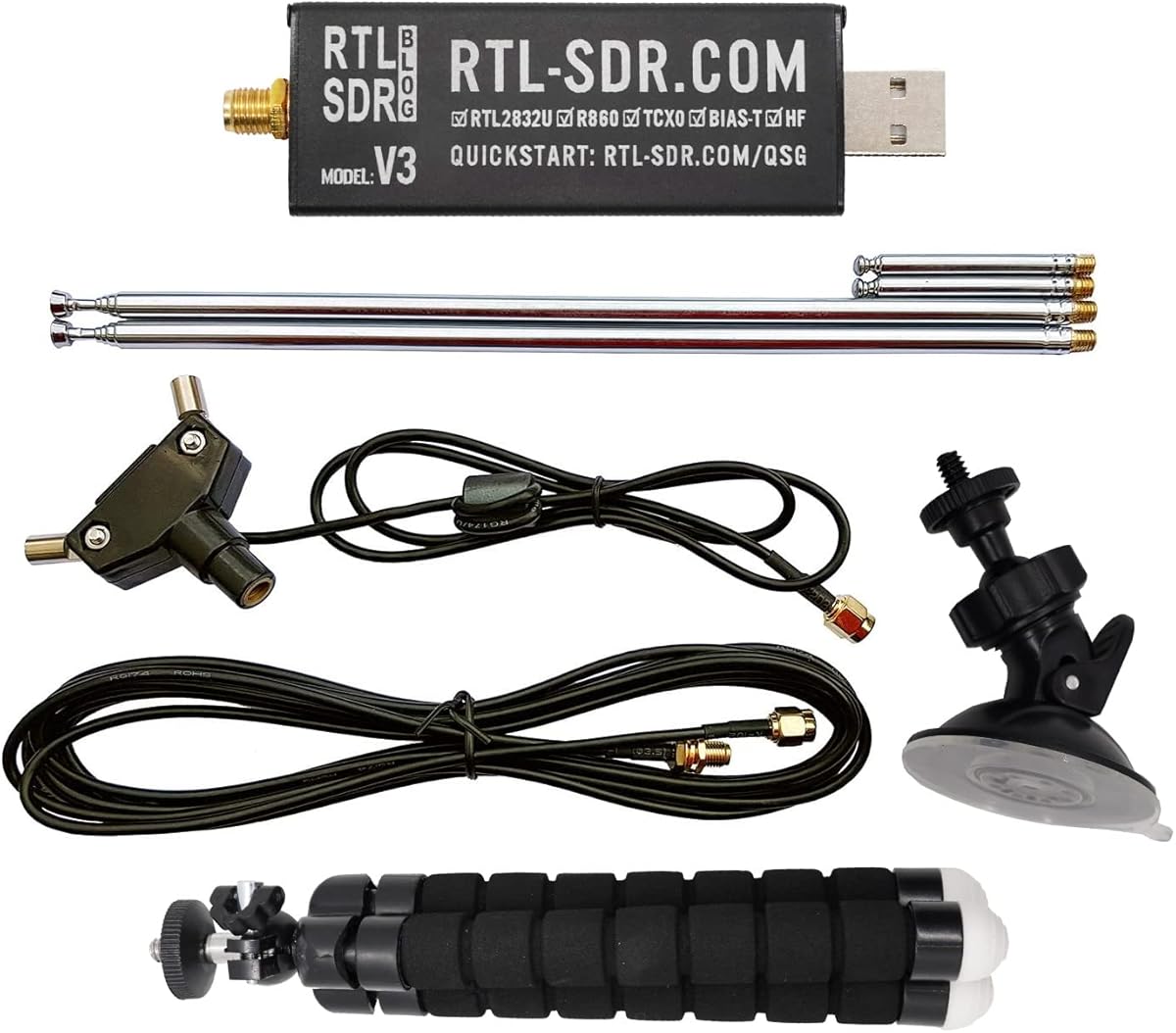
RTL-SDR Blog V3 R860 RTL2832U 1PPM TCXO HF Bias Tee SMA Software Defined Radio with Dipole Antenna Kit

RTL-SDR Blog V3 R860 RTL2832U 1PPM TCXO HF Bias Tee SMA Software Defined Radio with Dipole Antenna Kit

ASIN: B0BMKB3L47
Analysis Date: Mar 15, 2026

As an Amazon Associate I earn from qualifying purchases.

Review Analysis Results

B
Authenticity Grade
11.00%
Fake Reviews
4.67
Original Rating
4.40
Adjusted Rating

Analysis Summary

The vast majority of these reviews appear to be genuine user experiences, with most showing clear signs of authentic engagement with the product. The reviews come from users with varying levels of technical expertise, from radio hobbyists to beginners, and display a natural range of perspectives and writing styles. The presence of both detailed technical discussions and simpler endorsements suggests organic feedback rather than coordinated manipulation.

Strong evidence of authenticity includes multiple reviews with specific personal context and technical knowledge. Review 1 demonstrates genuine expertise by discussing the historical context of SDR pricing and accessibility before 2012. Review 2 provides balanced, practical advice about HF capabilities and acknowledges the product's position as an entry-level device. Review 3 offers a nuanced technical discussion about heat dissipation and sensitivity issues, showing firsthand experience with the product's limitations.

Only minimal concerns exist, primarily with a small number of reviews that contain very brief, generic praise without specific details about the user's experience. These reviews lack the personal context or technical specifics found in the majority of feedback, but even these could simply represent satisfied customers who chose not to write detailed accounts. There are no clear patterns of marketing language or repetitive phrasing across multiple reviews that would indicate organized manipulation.

Overall, this appears to be a collection of authentic reviews for a well-regarded technical product. The genuine reviews provide valuable insights into the product's performance, limitations, and ideal use cases, while the few less-detailed reviews don't show clear manipulation patterns. The high ratings are consistent with what would be expected for a quality product in this niche hobbyist market.

Key patterns identified in the review analysis include: Technical hobbyist language, Balanced perspectives acknowledging limitations, Specific frequency range and capability details.

Review Statistics

6,453
Total Reviews on Amazon
-0.27
Rating Difference
Editor's Analysis

Choosing an RTL-SDR Kit: What Makes the Blog V3 Stand Out for Hobbyists

The RTL-SDR Blog V3 represents a specific evolution in software-defined radio dongles, moving beyond basic RTL2832U receivers with key hardware improvements. Buyers should understand this kit combines a 1PPM TCXO for frequency stability, an HF bias tee for active antennas, and a dipole antenna specifically tuned for the included frequency range.

Key Considerations Before Buying

  • The 1PPM Temperature Compensated Crystal Oscillator (TCXO) is critical for minimizing frequency drift, which is essential for digital modes like ADS-B aircraft tracking or weather satellite decoding.
  • The integrated HF bias tee allows you to power low-noise amplifiers or active antennas directly from the dongle, eliminating the need for separate power injectors when exploring HF bands below 30 MHz.
  • The included dipole antenna kit is a basic starter for VHF/UHF; serious exploration of HF, satellite, or specialized bands will require additional, purpose-built antennas.

What Our Analysts Recommend

For RTL-SDR dongles, quality indicators include a metal (not plastic) casing for RF shielding, a direct-sampling mod for HF reception, and SMA connectors for durability. The Blog V3's inclusion of both SMA and MCX connectors with adapters shows thoughtful design for various antenna setups.

Radio Antennas Market Context

Market Overview

The RTL-SDR market is dominated by dongles derived from the RTL2832U chipset, but they vary widely in component quality and feature sets. The 'Blog V3' has established itself as a premium tier within this category, often compared against generic 'blue' dongles and more expensive SDRs like the Airspy or SDRplay.

Common Issues

Common problems include poor frequency stability from cheap crystal oscillators, images/aliasing from lack of filtering, and driver compatibility issues, especially on newer operating systems. Many kits also include flimsy telescopic antennas unsuitable for serious use.

Quality Indicators

Look for specific component mentions: a TCXO (especially with a low PPM rating), a direct-sampling mod or upconverter for HF, and a metal enclosure. Quality vendors like RTL-SDR Blog provide extensive documentation, driver support, and community-tested software guides.

Review Authenticity Insights

Grade B Interpretation

A Grade 'B' with an 11% estimated fake review rate suggests a generally trustworthy review pool with a typical level of promotional noise for a popular electronics item. The adjusted rating of 4.40/5 is a more reliable indicator of real-user satisfaction than the raw 4.67/5.

Trust Recommendation

Focus on reviews that discuss specific use cases like ADS-B, NOAA satellite reception, or HF shortwave listening, as these demonstrate genuine hands-on experience. Be slightly more skeptical of overly vague 5-star reviews that don't mention technical details.

Tips for Reading Reviews

Prioritize reviews that mention the TCXO's stability, the bias tee's functionality, or antenna performance. Look for discussions comparing it to other dongles, as these offer comparative insights valuable for decision-making.

Expert Perspective

The RTL-SDR Blog V3 kit is a compelling package for beginners and intermediate hobbyists seeking a significant step up from the cheapest dongles. Its high adjusted rating of 4.40/5 reflects genuine appreciation for its hardware upgrades, particularly the TCXO and bias tee, which solve common pain points. The included dipole antenna is adequate for getting started on local FM and VHF bands, but the real value is in the well-engineered dongle itself. It successfully bridges the gap between budget hardware and professional SDRs.

Purchase Considerations

Consider this kit if your interests include aircraft tracking, scanning, or experimenting with HF. If you only need simple FM broadcast reception, a cheaper dongle may suffice. Also, factor in that you'll likely invest in additional antennas for optimal performance across different frequency ranges.

Comparing Alternatives

Shoppers should compare the feature set and price against the Nooelec NESDR series and the generic 'R820T2' dongles to assess value.

Price Analysis

The RTL-SDR Blog V3 is considered the gold standard entry-level SDR with excellent reviews. Given its 4.67/5 rating from over 6,000 reviews, this represents strong value in the budget SDR category. Buy when you find it priced competitively against similar kits, as its reputation suggests it's worth paying a slight premium over the cheapest alternatives.

MSRP Assessment

Estimated MSRP: $45-$55
Source: Market research
Amazon Price: Unable to compare

Market Position

Positioning: Budget
Alternatives Range: $25-$150
Value: This kit offers exceptional value with its included antenna kit, 1PPM TCXO for frequency stability, and bias tee functionality at the entry-level price point.

Buying Tips

Best Time to Buy: Electronics often see discounts during Black Friday/Cyber Monday and Amazon Prime Day events.
Deal Indicators: Look for prices below $40, bundle deals with additional accessories, or coupon discounts applied at checkout.
Watch For: Watch for third-party sellers charging significantly above $55, or sellers offering 'too good to be true' prices that might indicate counterfeit products.
Price analysis generated by AI based on product category and market research. Actual prices may vary. Last analyzed: Mar 15, 2026

Understanding This Analysis

What does Grade B mean?

This product has good review authenticity with minor concerns. While most reviews appear genuine, we detected some patterns that warrant mild caution.

Adjusted Rating Explained

The adjusted rating (4.40 stars) represents what we estimate this product's rating would be if fake reviews were removed. This product's adjusted rating is lower than Amazon's displayed rating (4.67 stars), suggesting positive fake reviews may be inflating the score.

How We Detect Fake Reviews

Our AI analyzes multiple factors: language patterns (generic vs. specific), reviewer behavior (history, timing), temporal anomalies (review clusters), verification status, sentiment authenticity, and statistical outliers. No single factor determines a review is fake - we look at the combination of signals.

Important Limitations

No automated system is perfect. Sophisticated fake reviews can evade detection, and some genuine reviews may be incorrectly flagged. Use this analysis as one data point in your purchasing decision, not the only factor. Reading actual review content yourself is always valuable.

Share This Analysis

Learn More About Fake Reviews

Analyze new product