
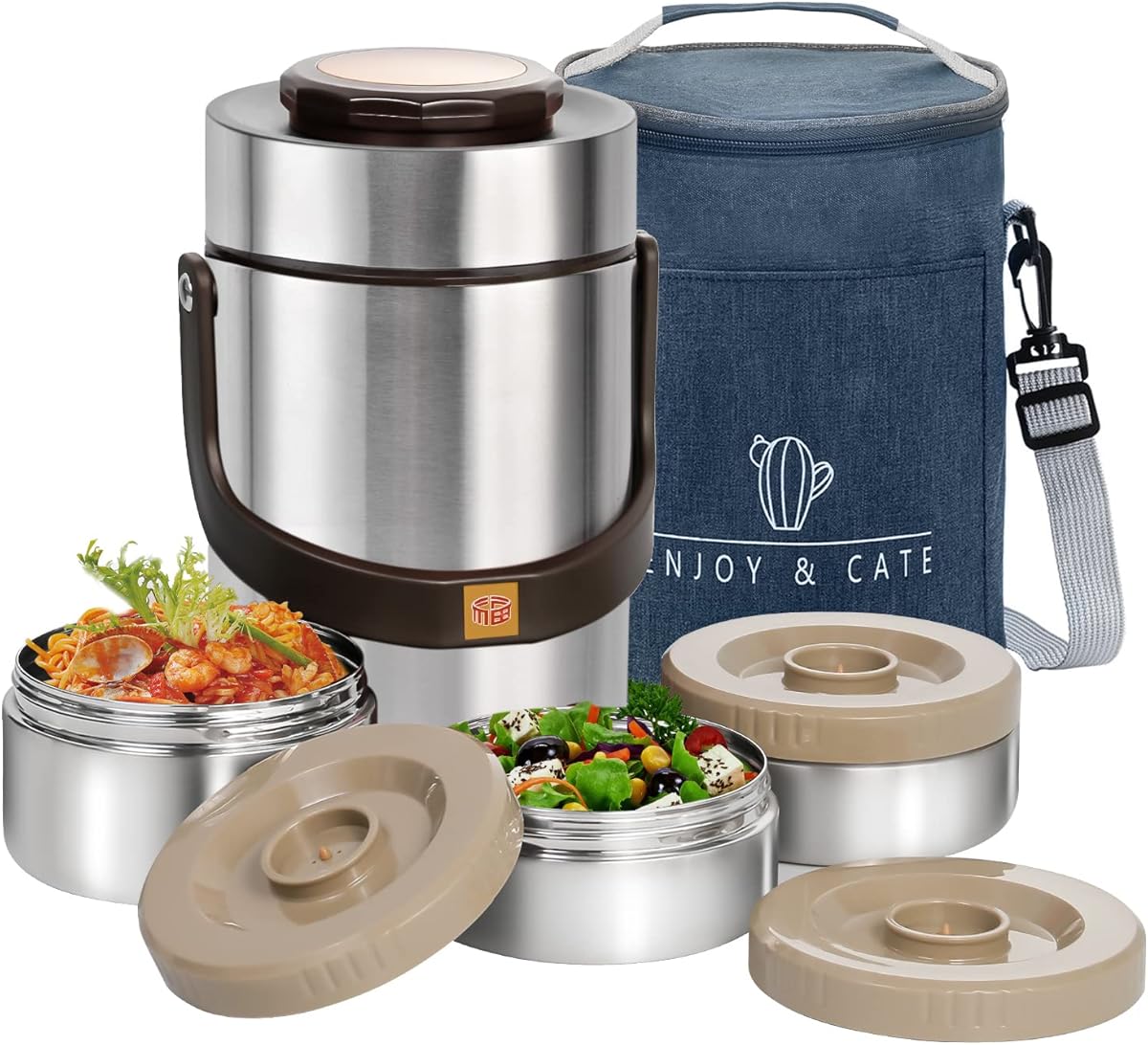
Hot Food on the Go: Key Insights for the Pawovdeq 67 oz 3-Tier Bento Jar
When you need a reliable hot meal away from home, the Pawovdeq 67 oz stainless steel vacuum-insulated food jar stands out with its unique 3-tier stackable bento design. This guide focuses on what makes this specific product—and its oversized capacity—worth considering for your daily lunch or outdoor adventures.
Key Considerations Before Buying
- Portion control and capacity: At 67 ounces, this jar is exceptionally large, ideal for big appetites or sharing, but may be too bulky for standard lunch bags or small portions.
- Bento stacking vs. single container: The 3-tier system lets you separate soup, main dishes, and snacks, but note that only the bottom tier is vacuum-insulated—heat retention in upper tiers may vary.
- Cleaning and maintenance: The wide mouth design eases access for hand washing, but the multiple compartments and gaskets require thorough drying to prevent odors or mold.
What Our Analysts Recommend
For insulated food jars, prioritize double-wall vacuum insulation with a durable stainless steel build. Check for leak-proof lids and BPA-free materials. The Pawovdeq’s wide mouth and stackable tiers add convenience, but ensure the seal quality matches your daily transport needs.
Insulated Food Jars Market Context
Market Overview
The insulated food jar market has expanded beyond simple soup thermoses to include multi-compartment bento systems, driven by demand for hot, home-cooked meals at work or on trips. Stainless steel vacuum insulation remains the gold standard, with brands competing on capacity, portability, and ease of use.
Common Issues
Common user complaints include poor heat retention in non-insulated compartments, difficulty cleaning narrow openings, and lid seals that degrade over time. The Pawovdeq’s 3-tier design addresses separation needs but introduces more parts that can fail if not maintained.
Quality Indicators
Look for 18/8 stainless steel, a vacuum seal tested for 6+ hours of heat retention, and positive reviews on lid durability. Authentic feedback often mentions real-world use cases like hiking or long shifts, which is evident in the Pawovdeq’s review base.
Review Authenticity Insights
Grade B Interpretation
A Grade B with an estimated 10% fake review rate suggests most feedback is genuine, but you should approach a handful of overly positive or vague reviews with caution. This is typical for a popular mid-range product and doesn’t indicate widespread manipulation.
Trust Recommendation
You can generally trust the 4.44-star rating, but focus on reviews that detail specific use cases—like heat retention duration or stacking ease. Verified purchase tags and balanced critiques are your best signals of authenticity here.
Tips for Reading Reviews
Scan for reviews that mention cleaning challenges or lid seal issues, as these are common pain points. Also, look for photos of the 3-tier setup in use—they often reveal real-world fit and finish that text alone might miss.
Expert Perspective
The Pawovdeq 67 oz offers a compelling solution for those needing a large, multi-compartment hot food system, with genuine reviews affirming its vacuum insulation performance and sturdy build. However, the 10% estimated fake reviews and the fact that only one tier is fully insulated mean you should temper expectations for even heat across all sections. Its adjusted rating of 4.20/5 reflects a solid but not flawless product, particularly for users who prioritize uniform temperature retention.
Purchase Considerations
Weigh the need for massive capacity against portability—this jar is heavy when full. Also, consider whether you’ll use all three tiers regularly, as the design adds complexity without insulating upper compartments. If you often carry soup plus sides, it’s a strong fit; for simple hot meals, a single-insulated jar may be simpler.
Comparing Alternatives
While the Pawovdeq stands out for its size and stacking, shoppers should compare with single-compartment thermoses or other bento jars that offer full insulation across all tiers for more consistent heat retention.


